The impact of Covid on our projects in Zanzibar

We hear so much about the devastating impact of Covid-19 in the UK, Europe and America but there’s very little in the news about the impact in Africa. It’s as if our imaginations can’t cope with any more sadness. From what we’ve learned from our friends in Zanzibar, the situation is pretty bad. The President of Tanzania has some crazy ideas on disease prevention and the government in Zanzibar is probably under-reporting the incidence of Covid. However, the incidence of infection and death appears to have been relatively low in spite of the lack of precautions taken by local people and the haphazard approach to lockdown. Our contacts at the Rotary Club of Zanzibar, Stone Town, say that they don’t know of any incidence of Covid amongst locals or ex pats. Due to short life expectancy there aren’t many people over 60 combined with a general acceptance of death as a fact of life (people just die and the cause is not important) and even the high temperatures may have minimised the impact of Covid. But what is hurting is the lack of tourist and the money that usually filters through the island. About 80% of Zanzibar’s foreign income earnings come from tourism..

Gasica reports that at Zanzibar Learning 4 Life Foundation most of the donations came from Europe and North America and former students who are employed in tourism (eg as tour guides) and tourists who visited ZL4LF projects. Those donations have dried up because everyone has been hit by Coronovirus and are not able support our projects. 
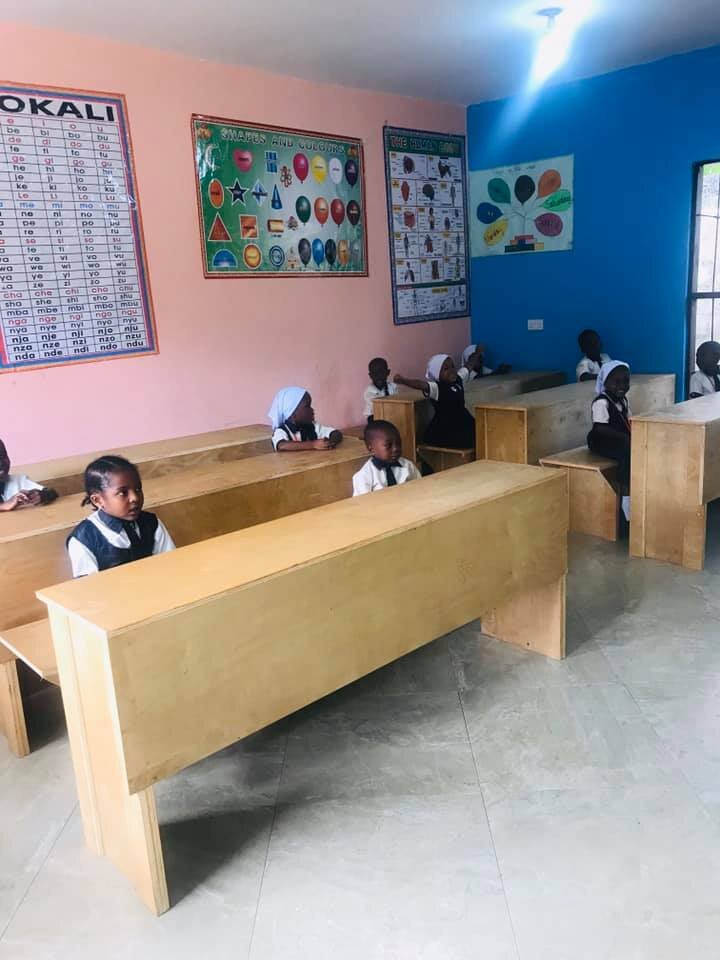
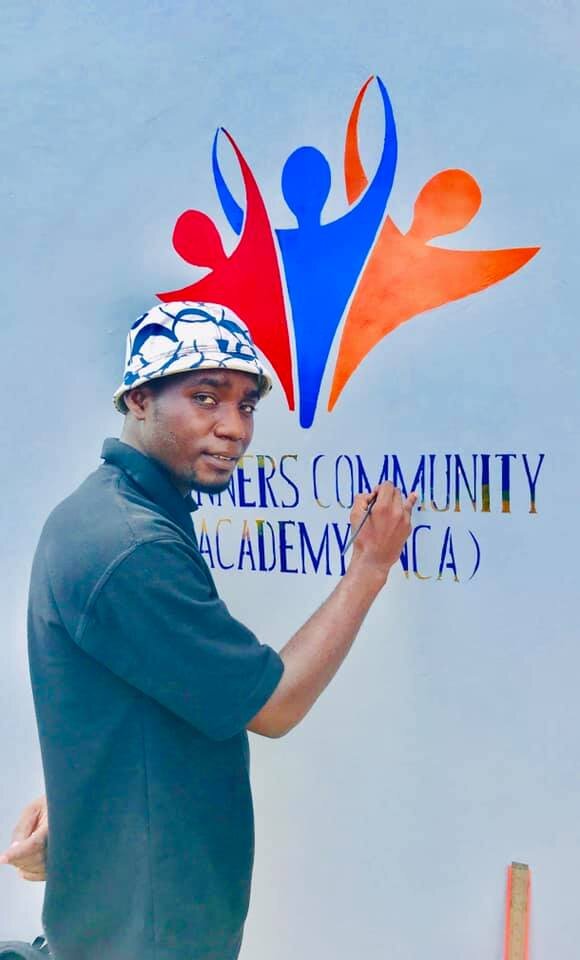
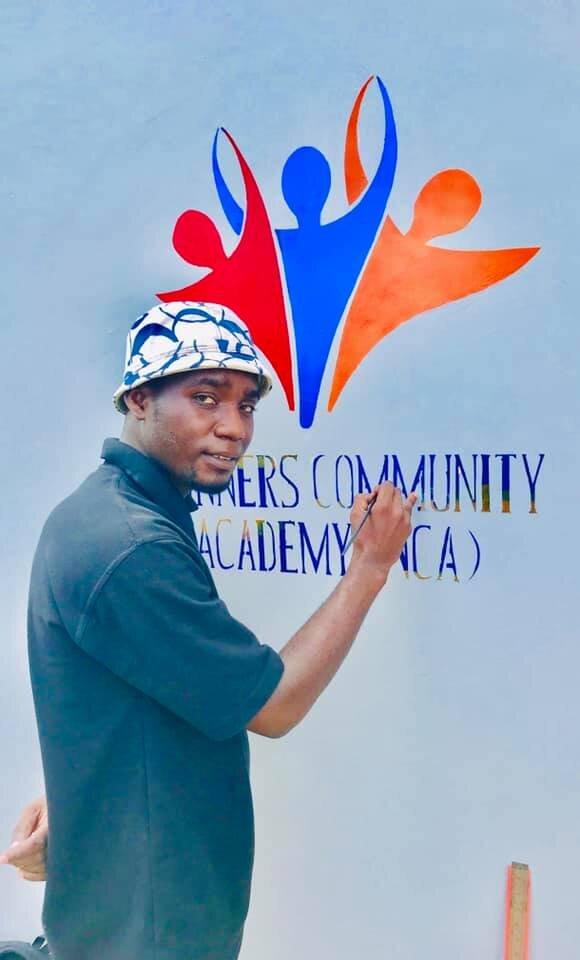
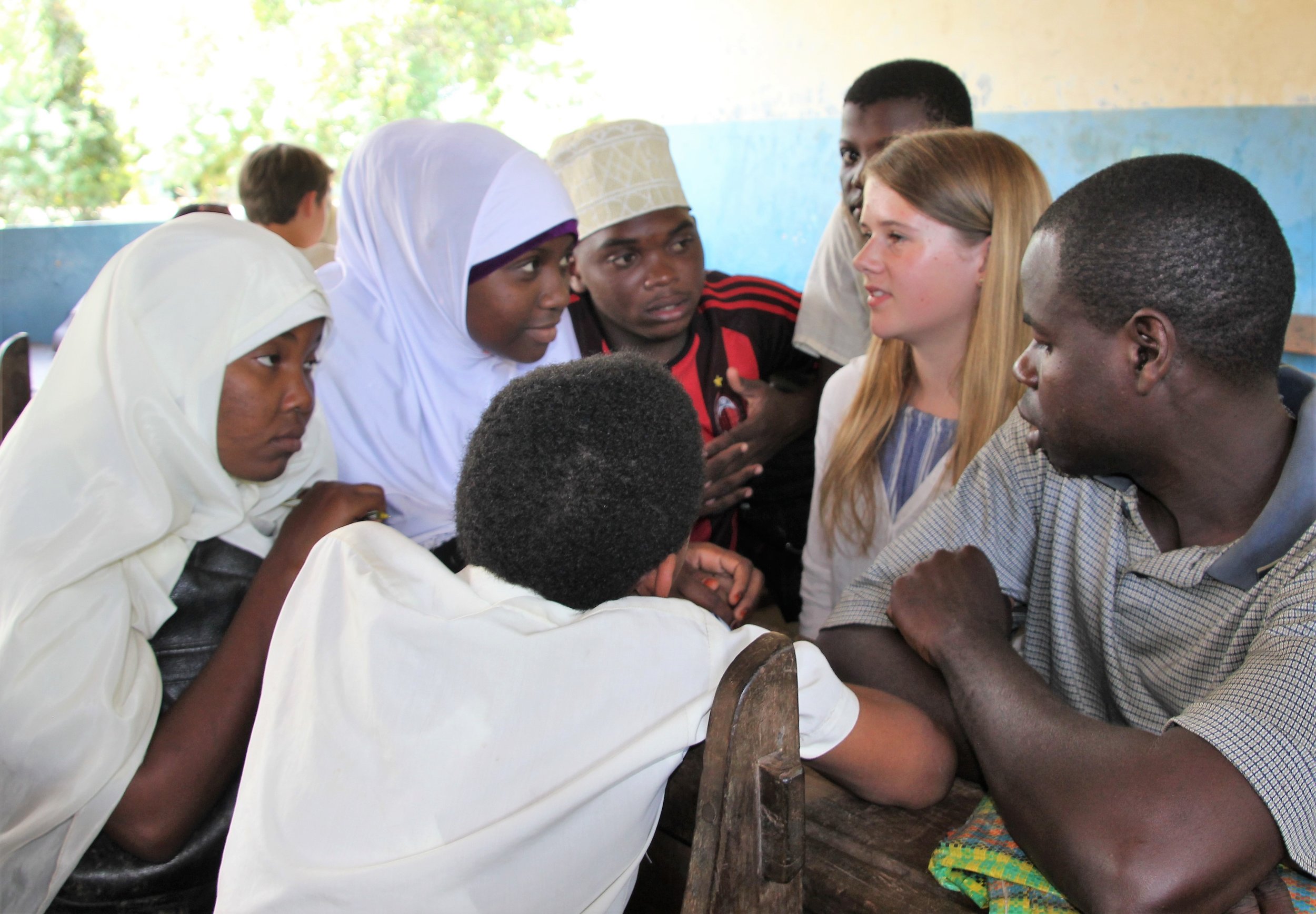
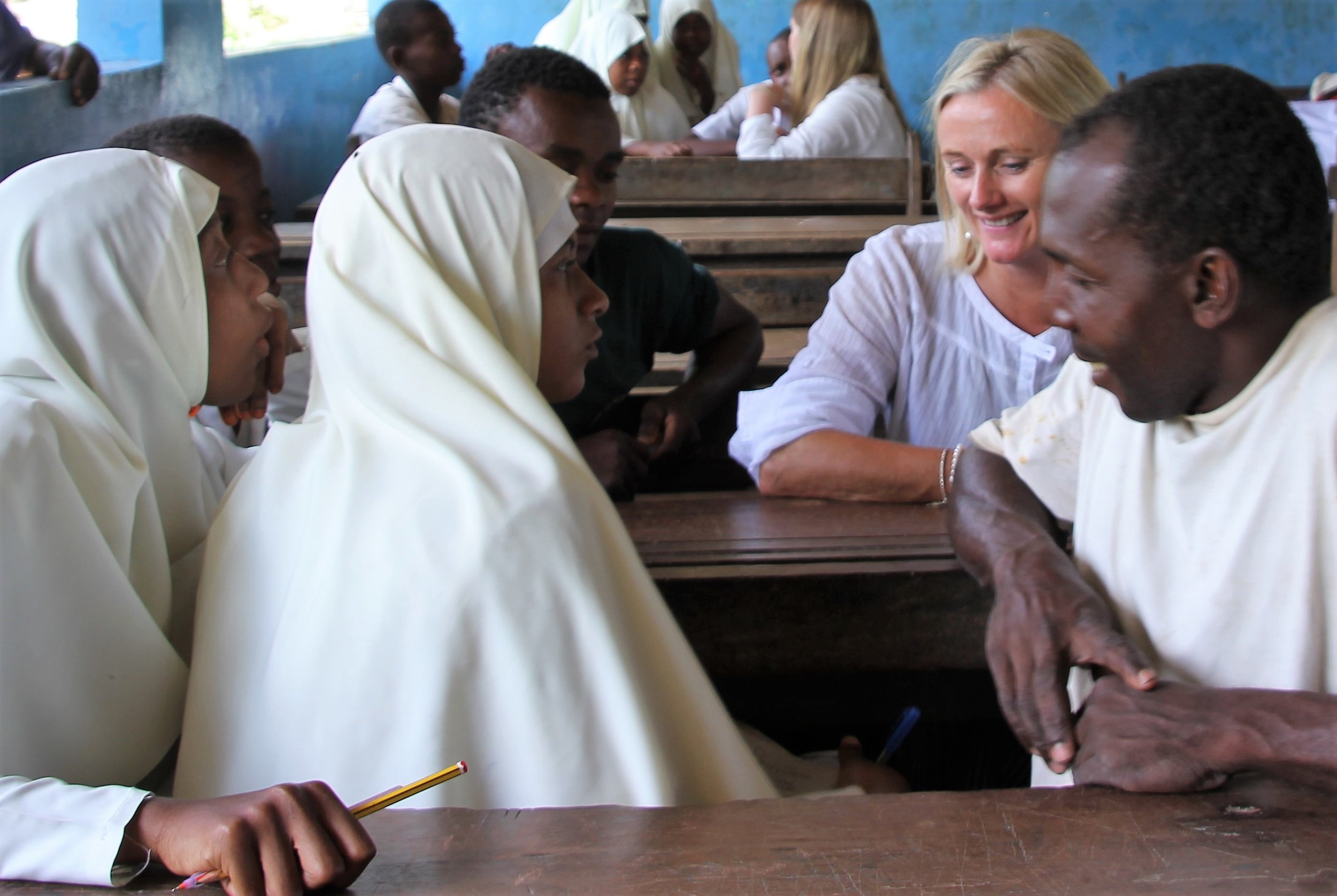
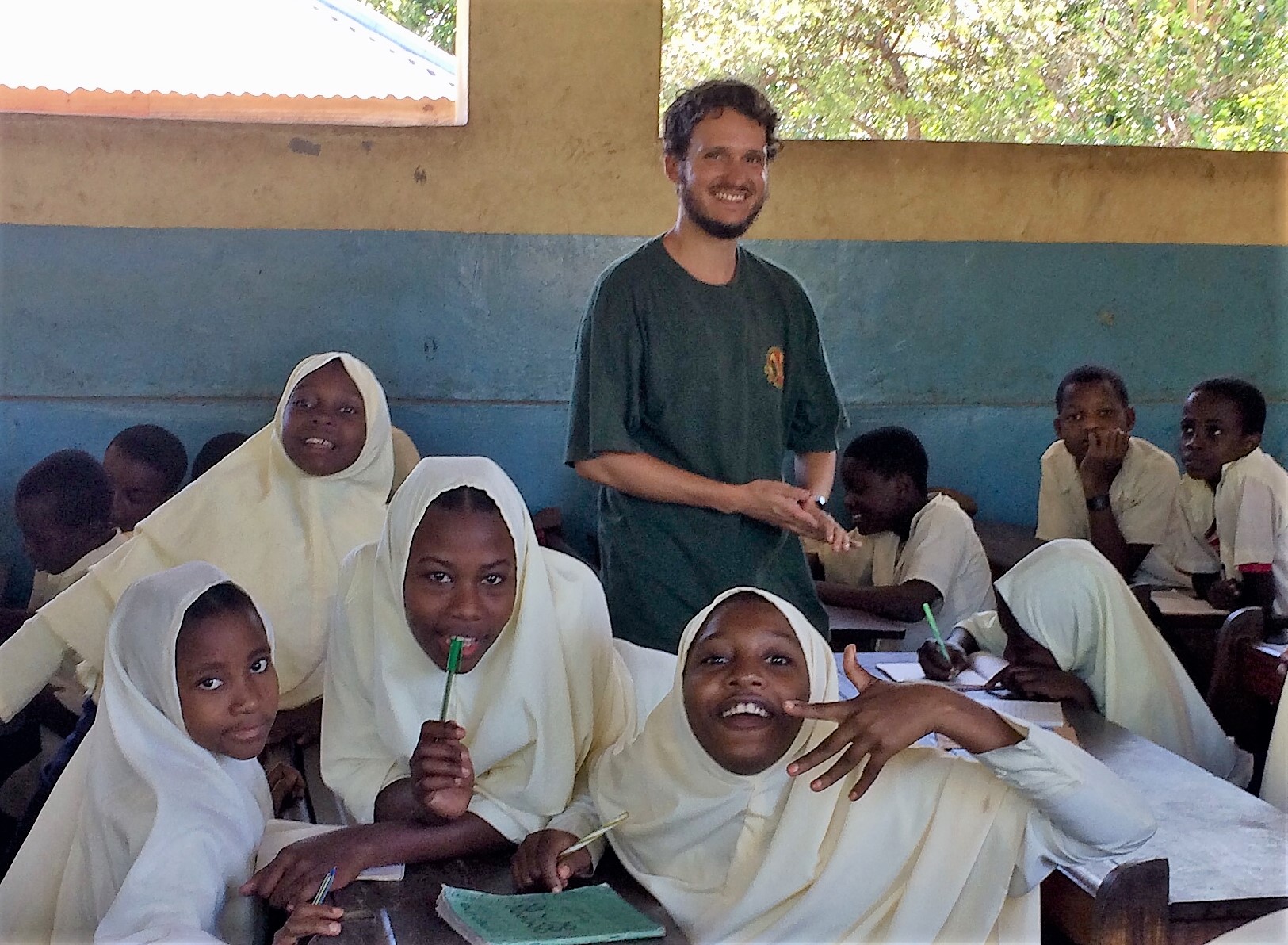
ZL4LF was reopened last week and due to limited with the space, the teachers are now working 7 days a week so that the classes can be smaller. At the associated school, the Winners Community Academy  (WCA), families are not able to pay school fees which means the teachers can’t be paid their full salary.

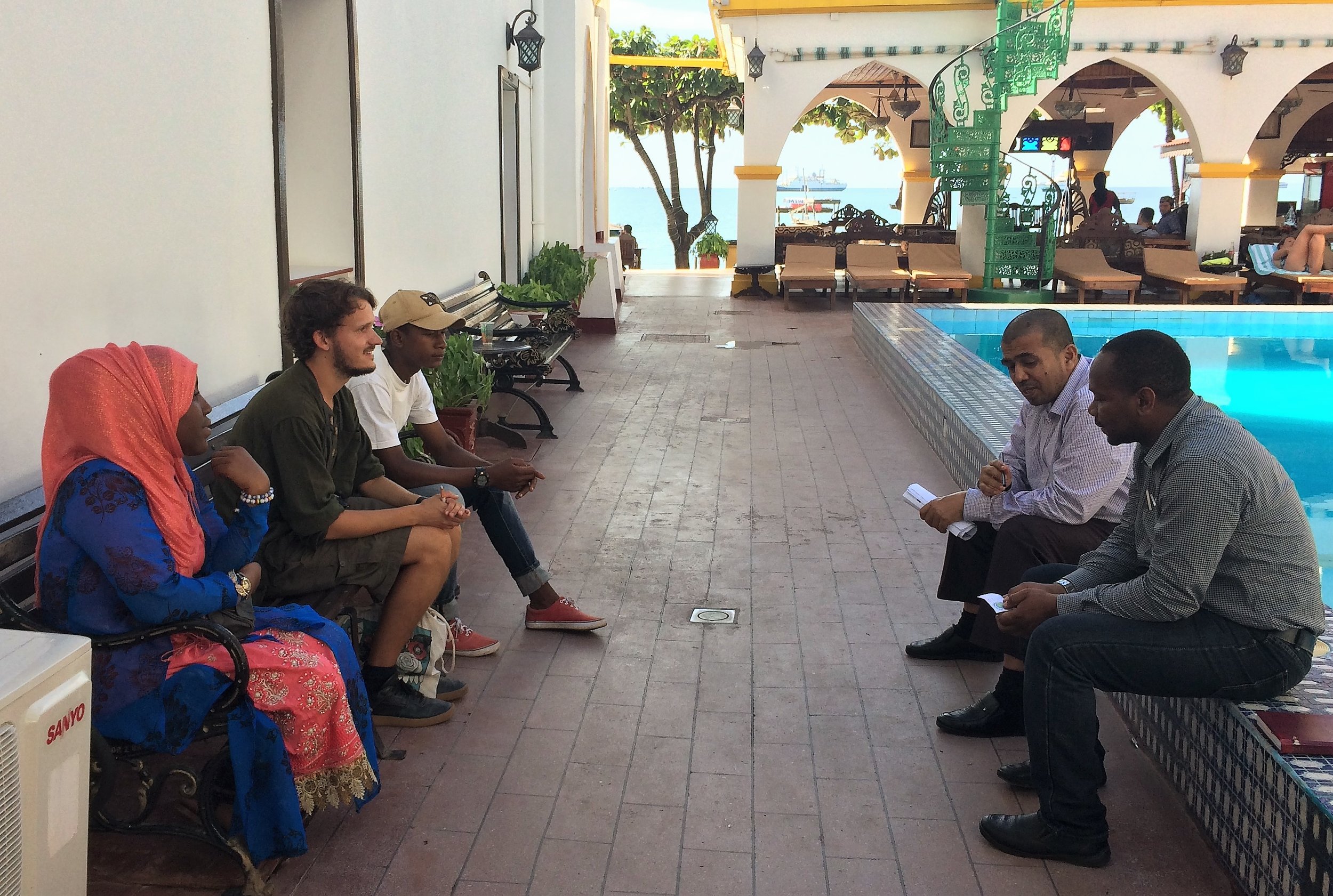
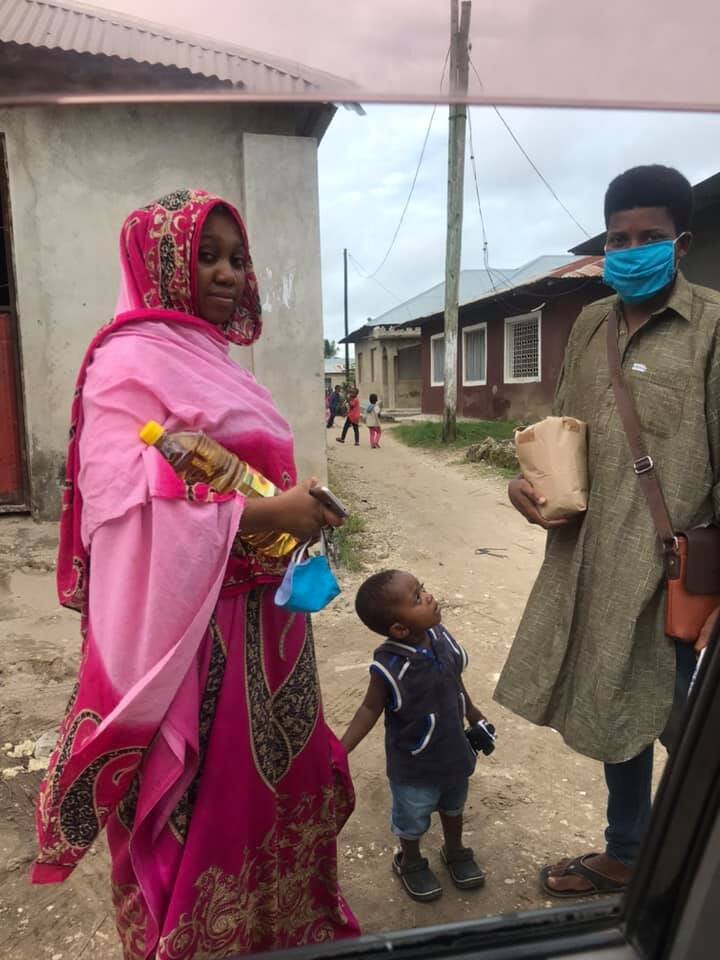
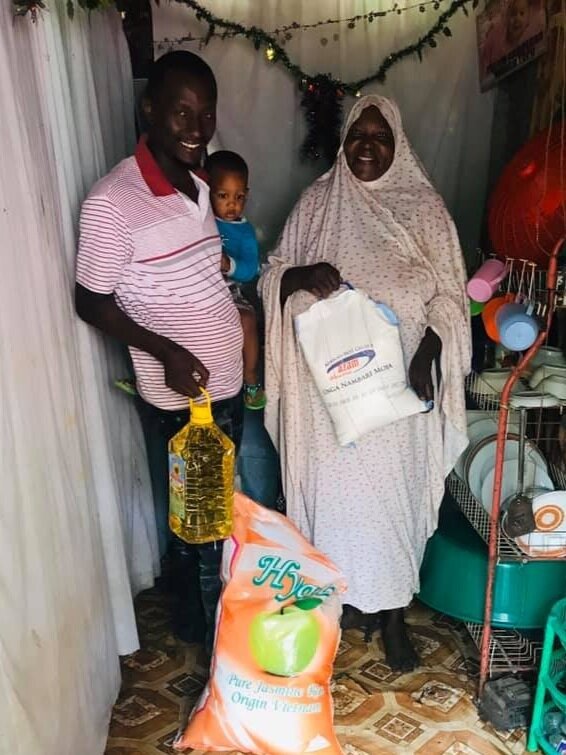
Gasica’s time and attention was channeled into helping keep his community fed. He’s been able to raise funds to feed more than 200 families within the Fuoni community Fuoni and more than 100 from Magomeni, Mgeni Haji, Uzini and Unguja Ukuu. He says “We are so proud of what we have achieved and how many people we have helped.”
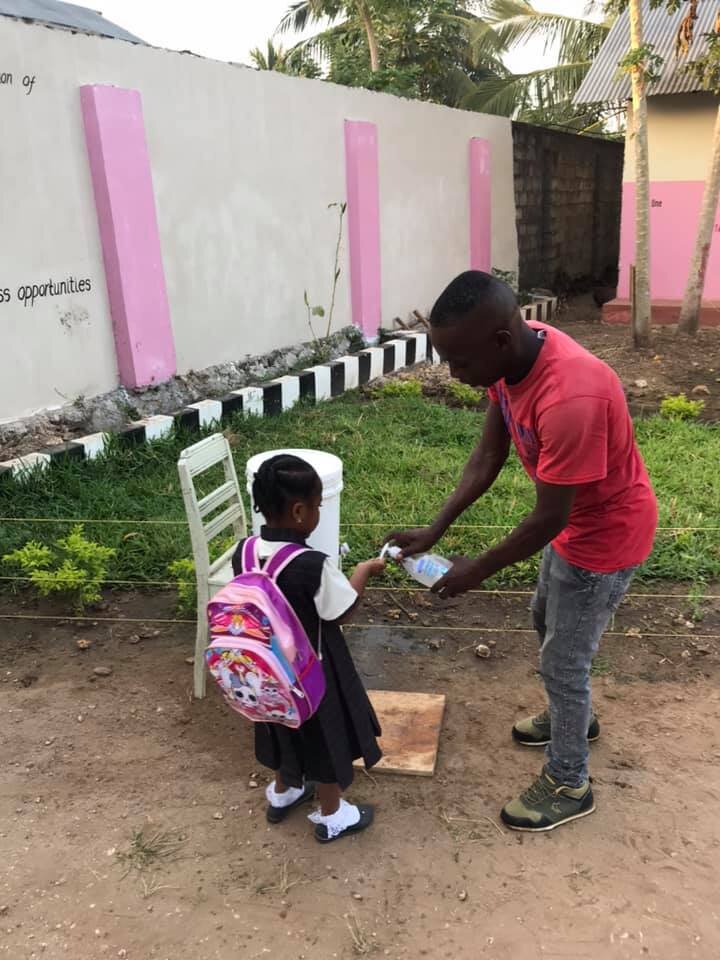
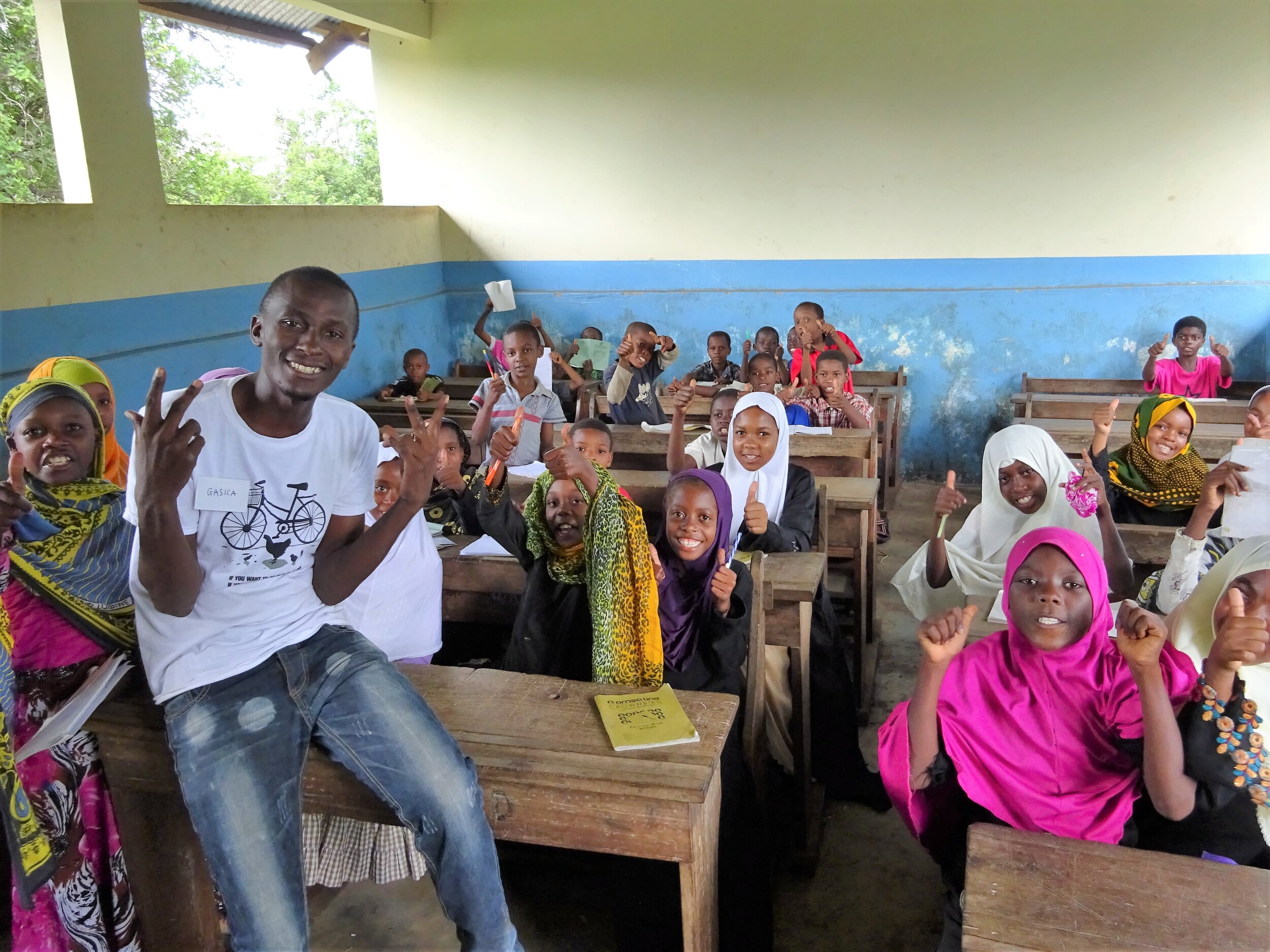
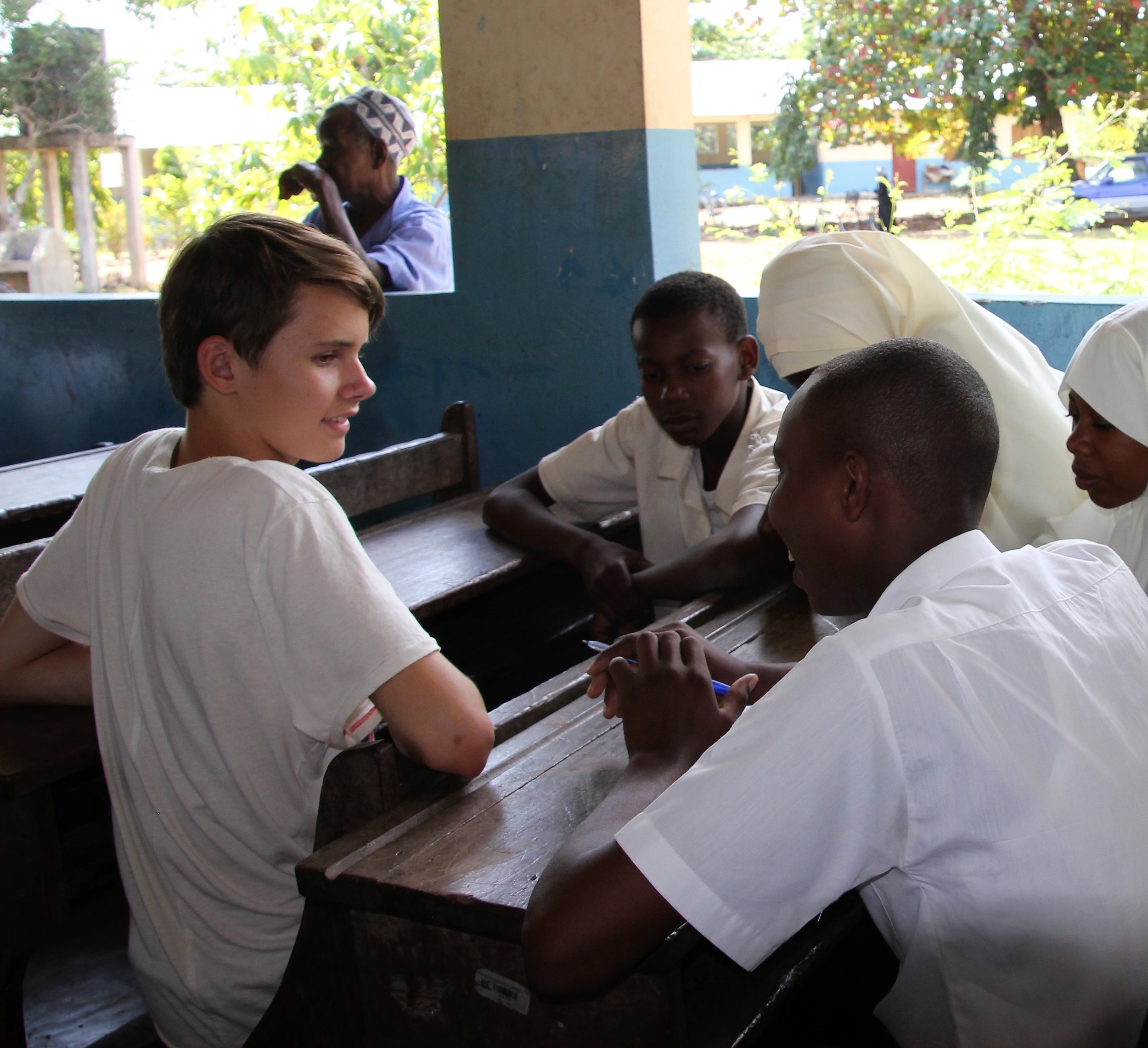
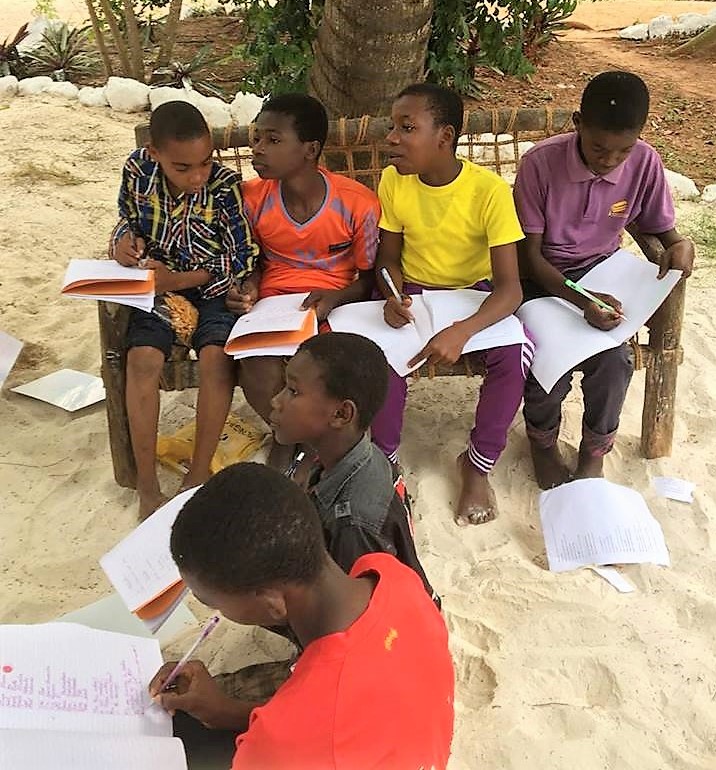
WCA is now back and the teachers have started to help the children understand more about Coronavirus, how it spreads and how to fight it so they are aware of what is been happening in the world and how to keep safe. Gasica says that they were very fortunate to have made the desks when the schools were shut because it’s made it much easier to keep social distance in the classroom.

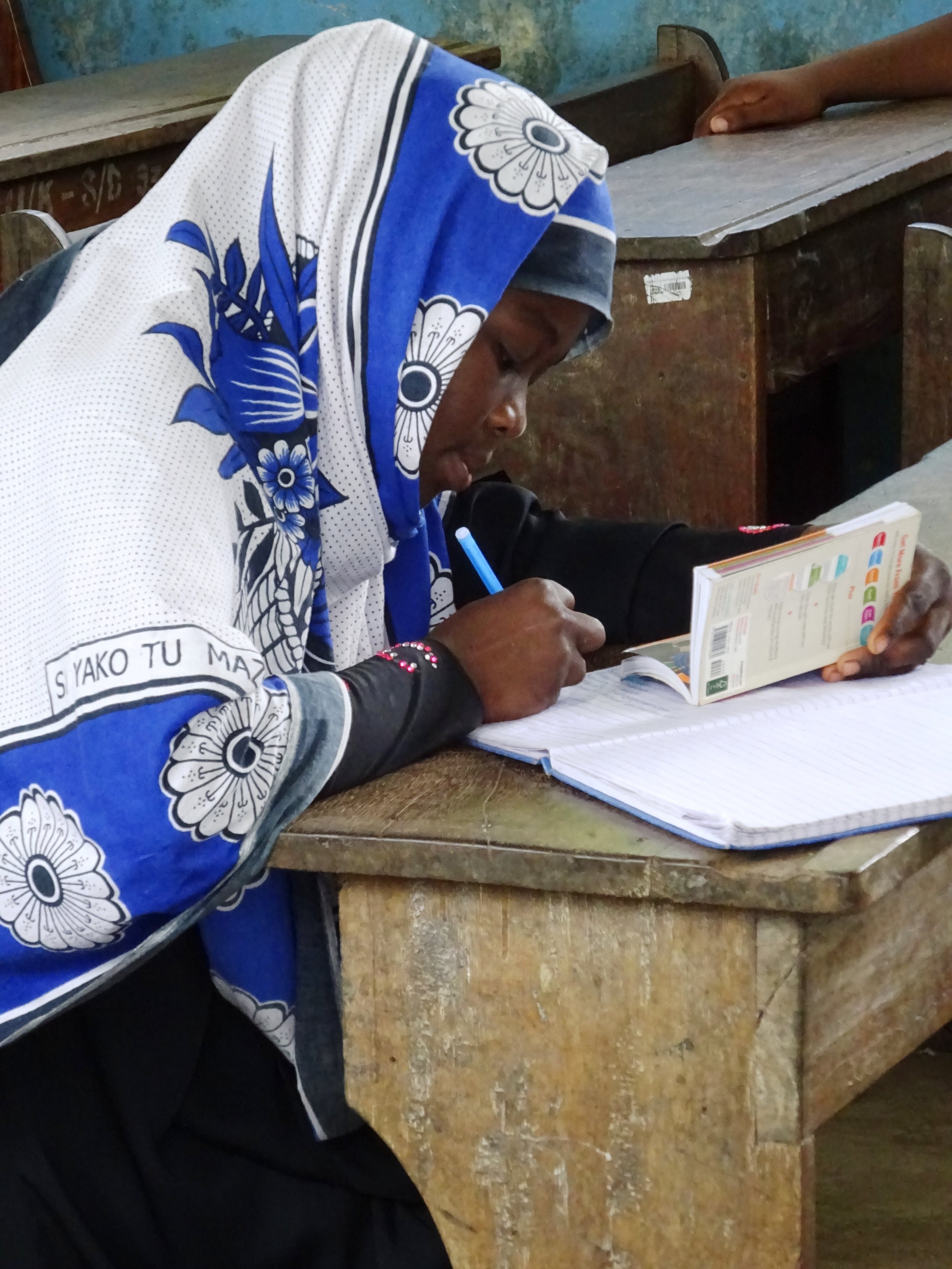
Zanzibar Schools Project is delighted that the young people who were part of our original teaching programme are doing well. We are now funding 4 students in higher education as well as helping 5 students who are still in school. Salama write this update about her course in business administration. “I’m develop my skills and learning how to become a professional, learning how to lead my best life, motivate myself and others. I'm enjoying in my studies and hope to get a job in the private or public sector. My parents are so proud of me and want to thank Safari English Clubs for building my dreams and motivating me to work hard. I’m the first person in my family to go to university. I promise to teach others in my village computer skills when I graduate in 2021 because I have something I need to teach others.”

Thanks to Gasica, Salama and Safari Blue in putting together this report.  Also thanks to Ipswich Rotary Club for raising funds to help with Gasica’s feeding programme as well as the Rotary Club of Zanzibar, Stone Town, who contributed $16,000 to combat Covid, the highest of any Rotary Club in East Africa. The funds were mainly spent on wash-stations around the island and PPE.

Our fund-raising has also suffered during this period as we haven’t been able to run our usual fund-raising events.  We have just set up a new fund-raising page and for the month of August all donations will go to Gasica to help him pay salaries and provide supplies for children at his new school.

https://www.kindlink.com/fundraising/Brighton-Hove-Soiree-Rotary-Settlement/3167
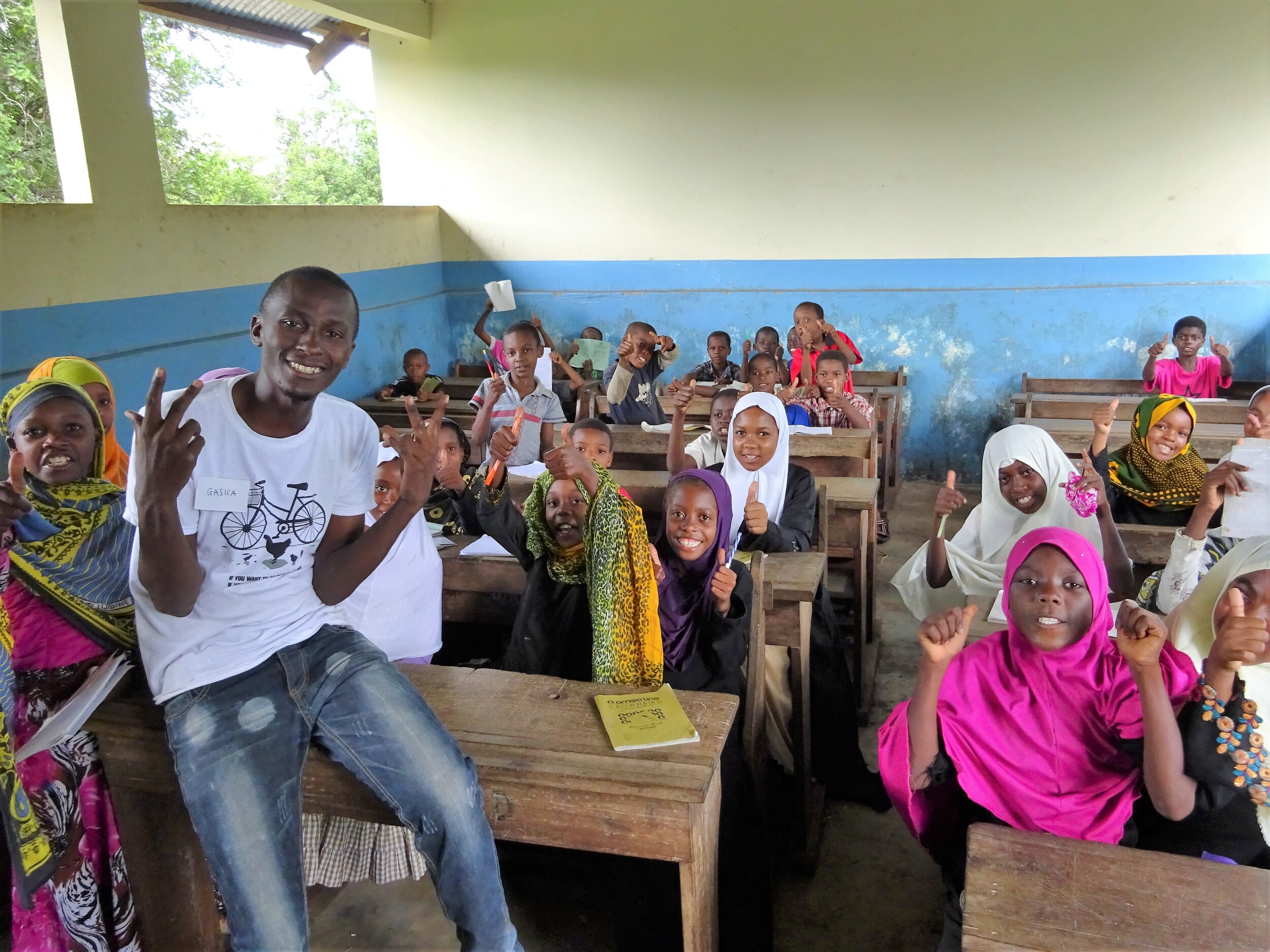
From Chicken Farm to Winners Community Academy

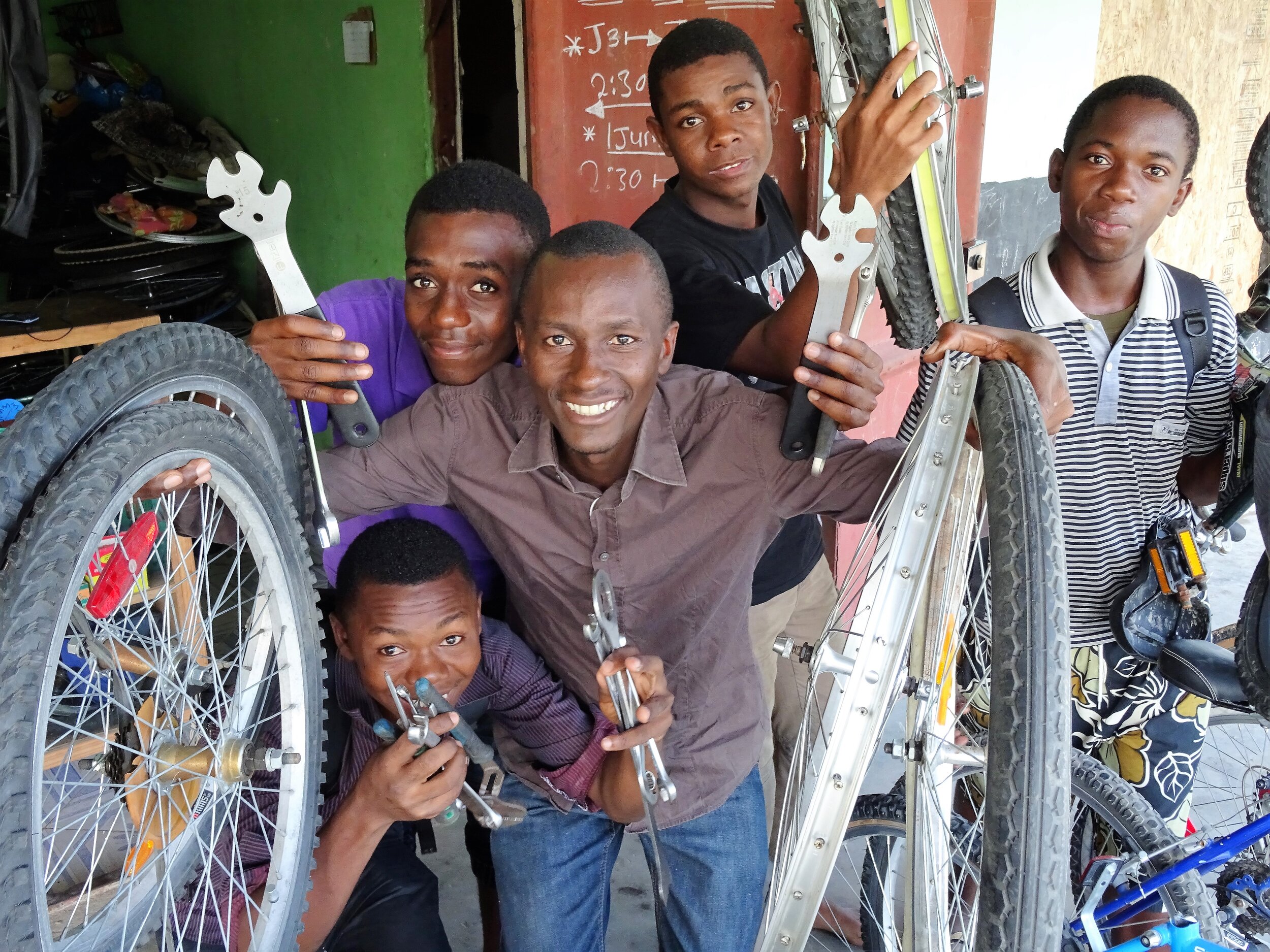
“You can change your life for the better and you can learn from every experience and setback.” That’s the view of Gasica, the young teacher in Zanzibar who is about to see his dream of opening a primary school become a reality. In January 2020 The Winners Community Academy opens its doors to 30 children aged up to 6 years old. Since 2015, Gasica’s organisation Zanzibar Learning 4 Life Foundation (ZL4LF) has been running after school classes in English, Maths and Computer studies as well as offering young people apprenticeships in bicycle repair, micro businesses and chicken farming. Some of those businesses some have been more successful than others. Zanzibar Bicycles 4 Life brings in a steady income and has given more than 60 students the opportunity to learn bicycle repair skills. They recently launched Sully Mobile Service, which imports and reconditions mobile phones for resale in Zanzibar.

In 2015 ZL4LF set up a chicken farm with the help of the Daraja Foundation (Canada) on land near the main road that runs across the island, between Fuoni and Unguja Ukuu. But in spite of their assistance and that of CoCo’s Foundation (from the UK) ZL4LF encountered insurmountable setbacks in chicken farming. The main problem is the prevalence of Newcastle disease which is an acute, rapidly spreading viral disease of the respiratory system that causes high mortality, and impedes egg laying in mild cases. Although there’s a vaccine, it must be repeated every two months and it isn’t always effective. There are also many other diseases that affect local chickens so the decision was taken to shut the chicken farm.

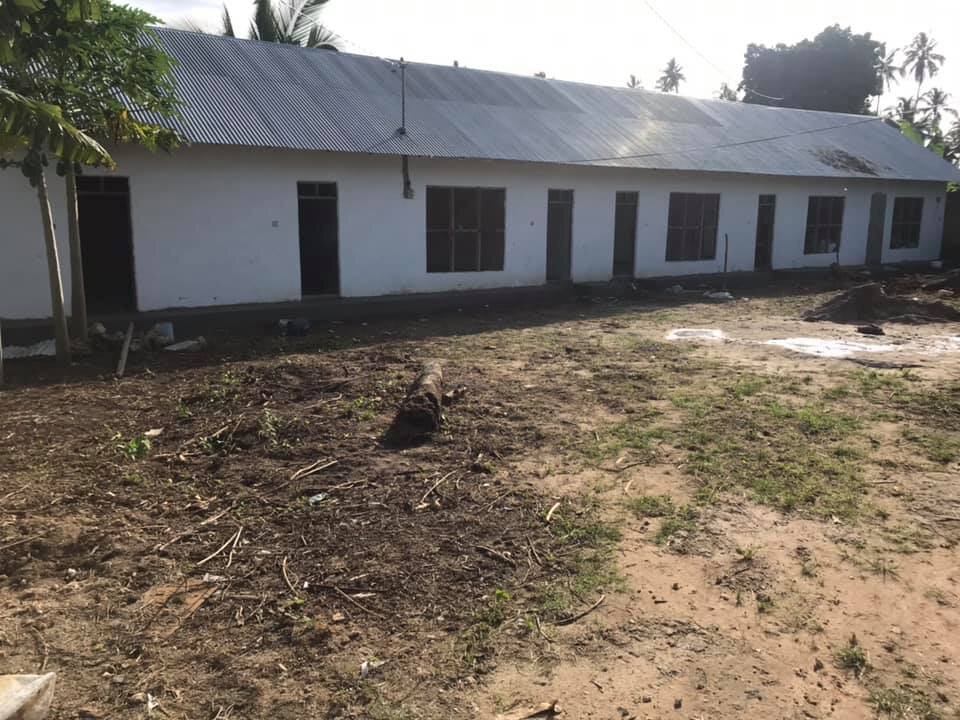
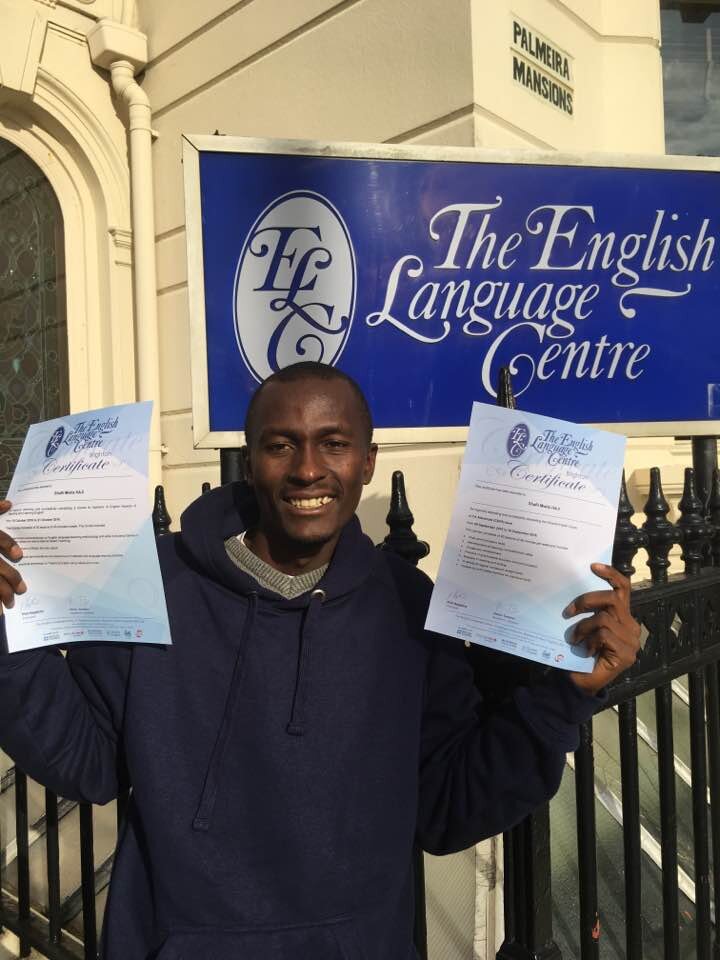
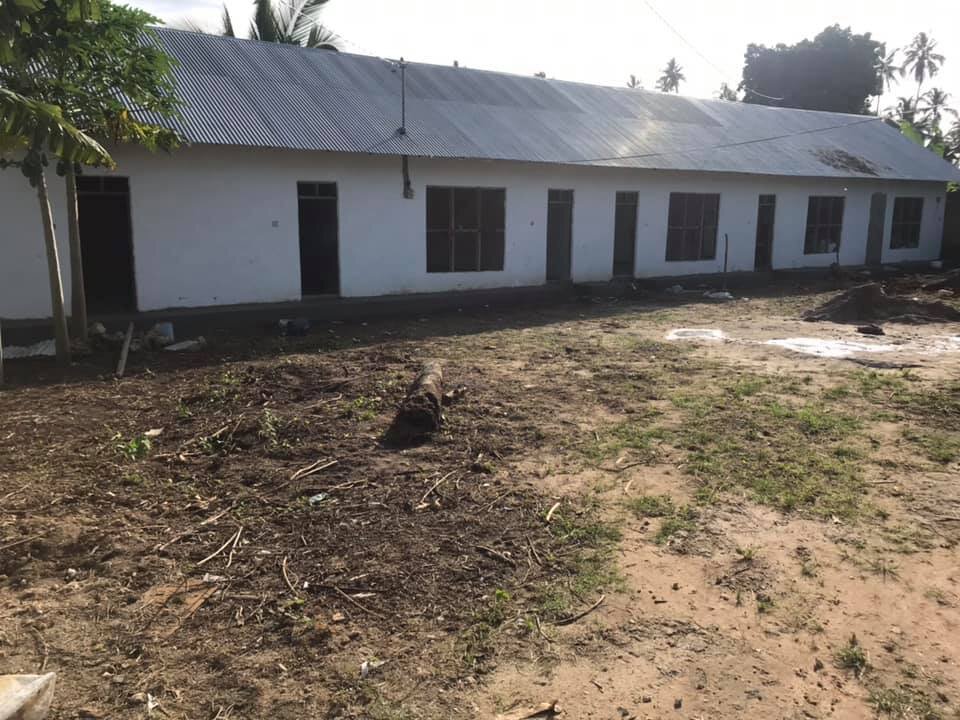
So Gasica decided to learn from the setback and to refocus on the core offering of education and convert the chicken farm buildings into classrooms.  Due to an excellent reputation in teaching English, Maths and Computers, there’s demand from parents for ZL4LF to provide nursery and primary education. Gasica is grateful to Rotary Clubs in the UK and Zanzibar as well as the Goodall Foundation, for supporting his further education in the UK and in Tanzania. These experiences and qualifications enabled him to secure a provisional licence from the Zanzibar Department of Education to open the school.

The Winners Community Academy has support from schools in Canada, Australia and Germany to provide ongoing funding which will enable them to offer scholarships to deserving children. And local parents are prepared to pay small fees to help cover our teaching costs.

School Objectives
The main objective is to improve the quality and effectiveness of primary education offering in this area of Zanzibar. ZL4LF hopes to raise the quality of education so that students will be able to develop their life skills and realize their potential as citizens. The organisation is also dedicated to improving the education and training of teachers. The school will give equal opportunities to girls and vulnerable groups such as children with special educational needs and will offer a safe and child friendly school environment that’s free from discrimination, abuse and harassment.

School students and curriculum
The school will start with 50 students (25 students per class). Each year there will be an intake of at least 50 students until all year groups are full at which point 25 students will join each year. Ultimately the school will take children up to the final year of primary school (aged 13). The objective is to enrol 150 children in 6 classes from Kindergarten to Standard VI (end of Primary school). Better nursery and primary education will improve children’s chances at secondary school level and subsequently enable some to enter tertiary education. The core offering of the school will be the government proscribed primary school curriculum which includes English, Maths, Geography, Science, ICT, History (all taught in English), Kiswahili, Religion (taught in Kiswahili) and Arabic (taught in Arabic). In addition, the school will ensure the children; especially girls have the opportunity to participate in sports such as swimming, football and netball.  

Teaching staff
The academy aims to be well run with adequate funding of teacher salaries and professional development. The teachers will be well-trained in modern teaching methods and will be encouraged to use them. The school is only recruiting teachers who are Upper Intermediate in English and they will be expected to commit to 1.5 hours of English language lessons per week to improve their language skills. All teachers will be qualified according to Zanzibar Department of Education standards. The first 4 recruits are at the top end of the skill scale and offer expertise in English and Maths. As a community school the organisation is permitted to supplement well-qualified local teachers with International volunteers to enhance the curriculum, for example in offering art, music and drama as well as providing additional opportunity to practice spoken English.

Long term plans
The Winners Community Academy is planning to develop a sister school in Unguja Ukuu to serve the local community at primary and secondary level.  Plans for this site were delayed due to problems with establishing land ownership, but this has now been resolved. It’s anticipate that the first phase of this development will start in 2021 and will include accommodation for volunteers and some of the money generated by this will help support the schools. Long term both schools will encourage small business development within the immediate community contributing towards transforming Fuoni and its neighbourhood into a society able to meet the challenges of the changing environment. The local community will benefit by having access to equipment and computers. The school has funding from “Tools for Reliance” (a UK charity) to purchase equipment (https://www.twam.uk) and already has 4 sewing machines that are used by young women who are starting to earn a living making clothes and selling them in the community. The school will provide education and support to these young business people with the aim of launching their careers and as they move on, new youngsters can come in and take their places.

Notes on school facilities, construction and maintenance
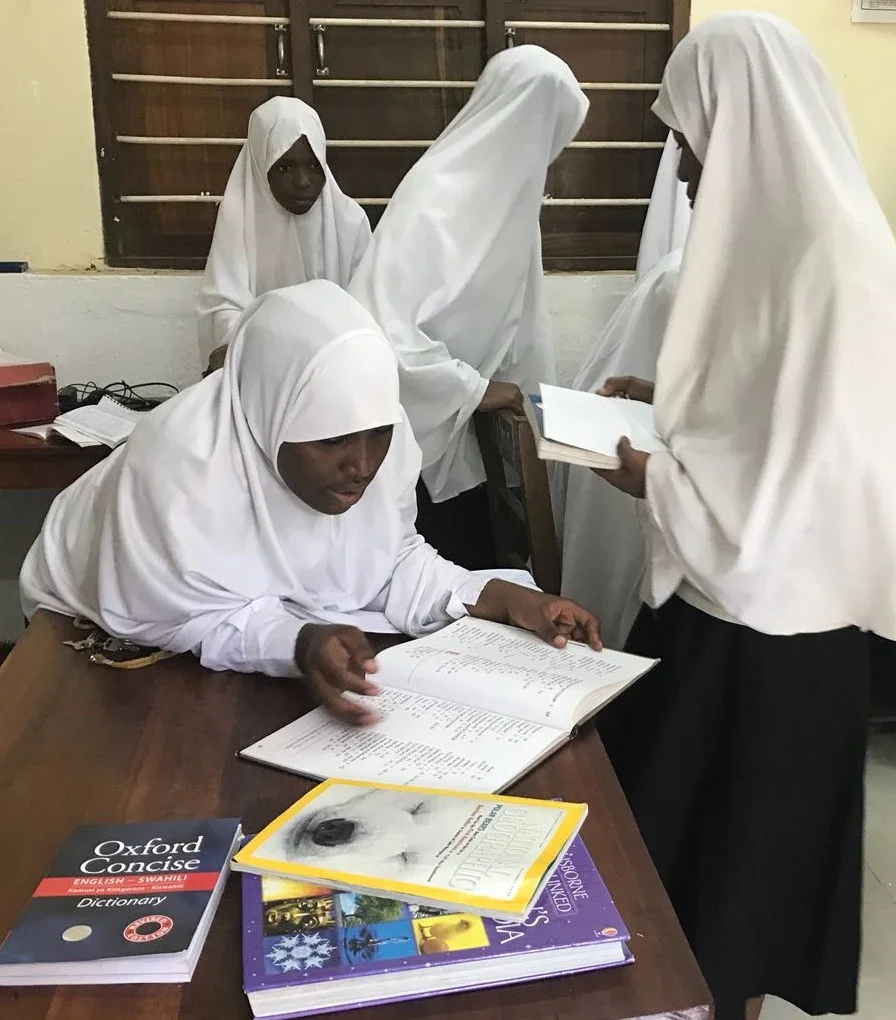
The school will be relatively low maintenance as it’s been built from robust local materials. The school has 3 classrooms (equipped with chairs, tables and benches), a staff room, a computer classroom, a library and an office. There is a planned donation of computer equipment (from St James in Canada) and SALT (a company in Dubai) which will be maintained by a specially recruited and trained computer technician. Parts are readily available in Zanzibar and are not expensive. All computers will be serviced every 6 months. The computer equipment will be kept in a specially-designed classroom which has a tiled (sealed) floor and with glass windows to minimize damage from dust and humidity. In the library we have reading books, text books and dictionaries.


Big changes in Zanzibar

For those of you with good memories, you’ll remember we started Zanzibar Schools Project in 2015, focusing on improving English language teaching in the small fishing village of Unguja Ukuu through an after school club, mostly helping students aged 11-13 who were in the final 2 years of the Primary School to prepare for their public exams. The local teachers said this was the biggest need as the school had very poor exam results compared with other schools around the island. Public exams are conducted in English and children fail due to poor language skills as their teachers are at best, lower intermediate level. Imagine learning Maths via the medium of English when neither you or your teacher can speak it! Teaching takes place in large classes and consists of rote learning backed up with corporal punishment. Of course, the logical approach would have been to improve the skills of the local teachers, but as we learnt, they have many other priorities in their lives and improving English was low on their “to do” lists.  

Safari English Club was born and thanks to many outstanding volunteers as well as fund-raising from Rotary clubs in the UK, Zanzibar and other countries, we were able to keep a car on the road to take volunteers between accommodation in Stone Town and the village of Unguja Ukuu. We also had support from CoCo’s Foundation, funding school lunches to feed hungry students who stayed for after school classes. For the first time ever, the village school had some notable successes in the public exams and the older students worked hard at English so they would pass their exams and thus they could stay in school.

During our first week in Zanzibar, we met Gasica, a dynamic self-taught teacher who was running a successful after-school club in Fuoni, a residential area just outside Stone Town. Unlike the local teachers, Gasica is motivated, excellent at speaking English and dedicated to giving children and young people life chances. We sponsored him to attend further education courses in the UK and a management course in Arusha run by the Goodall Foundation. As a result, Gasica decided to build his own school and we’re delighted that in January 2020 his dream is going to come true (see “From Chicken Farm to Primary School” to see how he did it).

So, the start of 2020 finds us with both bad and good news. Sadly the car that’s ferried up to 3 children and 5 teachers at any one time has run out of steam. The sponsor for the school lunches can’t continue to support us and the volunteer teacher we’d hoped would be in Zanzibar this year isn’t well enough to travel. And, of course, Gasica will be focusing on his new community school. This has led us to reconsider our project in Zanzibar and to suspend the English classes in Unguja Ukuu in order to focus on Gasica and his new school.

Money donated by our friends at the Rotary Clubs in New Malden, Kiel and Amersfoort is being used to buy a photocopier and other office equipment to help set up the administrative side of the school community school.

But we’re still committed to the students from Unguja Ukuu who have worked so hard. We’re supporting 3 youngsters from the village to attend school in Stone Town and improve their English.  These teenagers are from the original group that passed their exams, but their circumstances are such that without help they aren’t able to take advantage of the educational opportunities that they’d fought for. It looks like they’re on track to go to higher education, which costs approximately £850 for a 2-year course and we‘re saving money so we can help them on the next stage of their journeys. And you may remember that Salama is in her second year of business studies – she was one of the first students to come to our classes.

It’s hard to express just how much the achievements of these young people mean to the village. They‘re role models to younger students and when they’re older will support their families in the village. We‘ve committed to help any successful students from Standard VI that we‘ll fund school uniforms and text books (approx. £40 per student).

We‘d also like to support children from UU attending Gasica’s school – the cost for this is $600 per child, per year from the village ($300 if a local child in Fuoni).  This includes transport and school uniform. If we pay $3,000 in school fees per year, Gasica will enrol 7 children from the Unguja Ukuu.
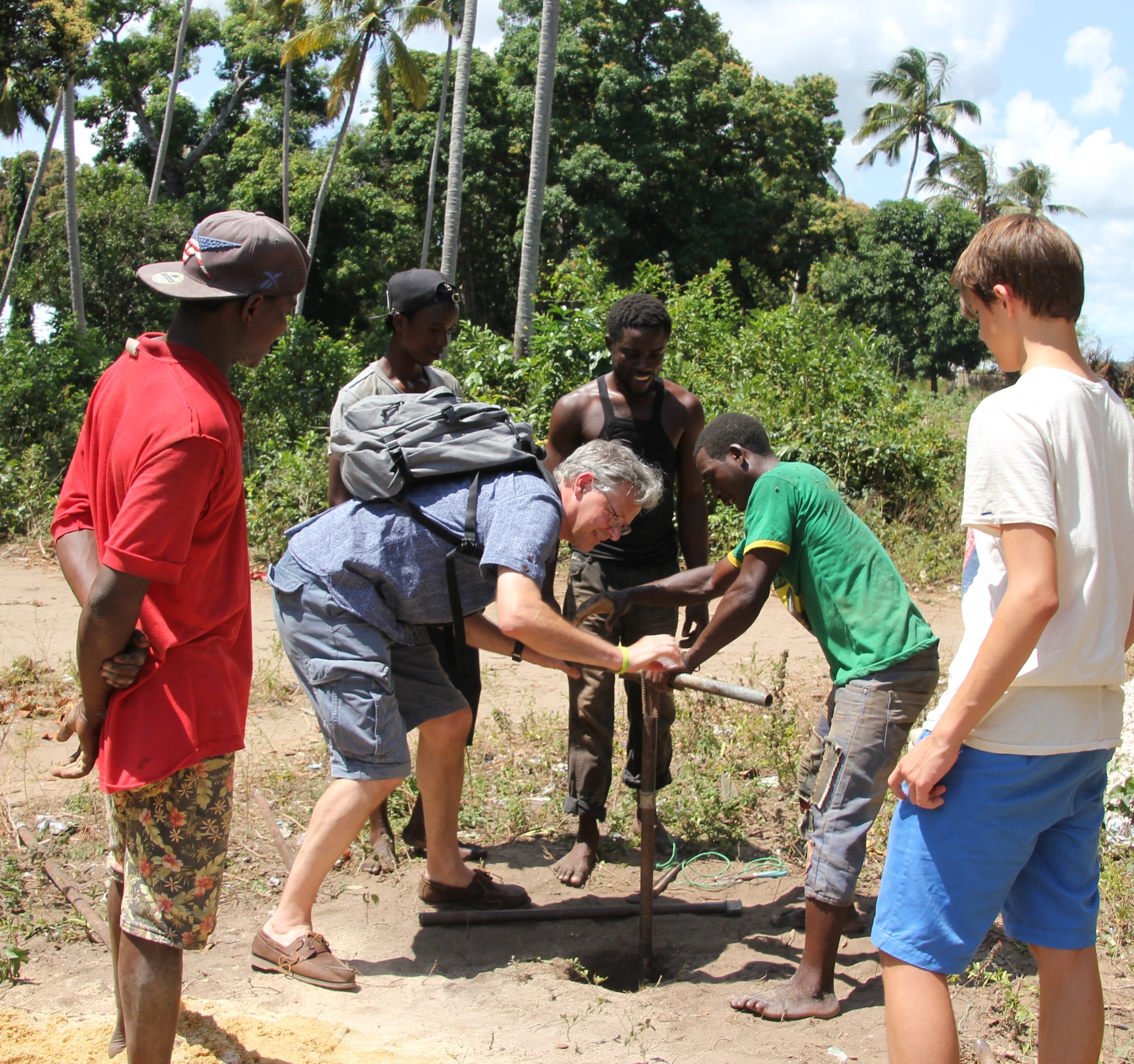
We’ll continue to run our Zanzibar Schools Project website and social media pages as a way to generate interest in Zanzibar. We will always give advice about visiting Zanzibar as volunteers and also direct people to help at the new Winners Community Academy.

And Caroline and I hope to visit Zanzibar in January 2020 to help in any way that we can with the new school and to reconnect with the amazing students from Unguja Ukuu who are growing up into such amazing young people. So thank you for all your support and stand by for more news about the Winners Community Academy over the next few months!

Prison Island: It’s not a goodbye just see you later by Viktoria Schäfer

Our after school club is called “Safari English Club” because the Swahili word “Safari” means to go on a trip. The children rarely leave their village and never visit any of Zanzibar’s historic locations, so we arrange occasional visits for them as part of our mission to broaden their education. Most recently our volunteer Viktoria arranged a visit to Changuu (known as Prison Island), a small island near Stone Town.

The island got its name as it was intended to be a prison for rebellious slaves in 1860s. The British First Minister of Zanzibar, Lloyd Mathews, built a prison there which was never used. The British were worried about disease epidemics affecting Stone Town, then East Africa's main port. So Changuu was turned into a quarantine island and the old prison was converted into a hospital. Quarantine cases (mostly yellow fever) were taken from ships and monitored on the island for before being allowed to progress with their journey. 

Slide1.JPG

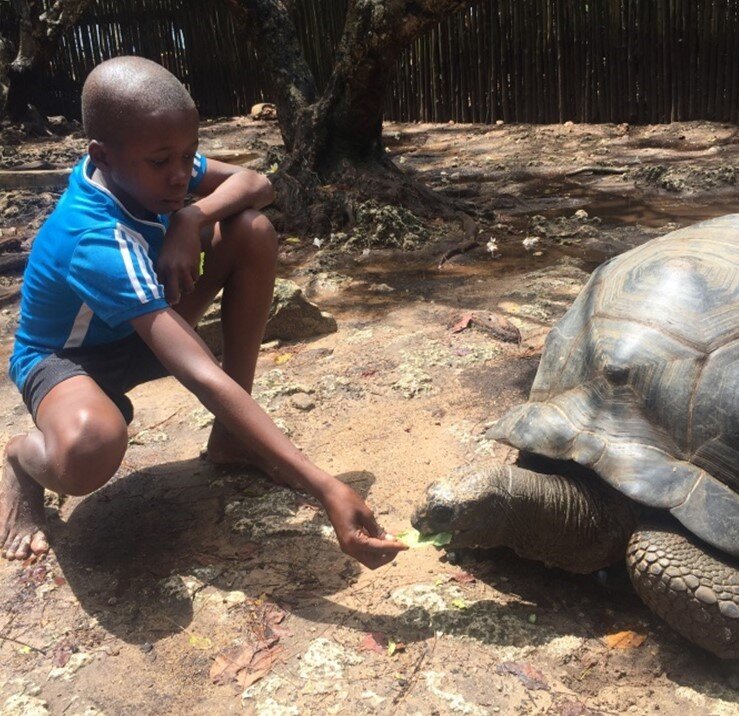
In 1919 the British governor of Seychelles sent a gift of four Aldabra giant tortoises to Changuu. These tortoises bred quickly and by 1955 they numbered around 200 animals. However people began to steal the tortoises for sale as pets or food and their numbers dropped rapidly. Now there’s a large compound to keep them safe and the numbers are slowly recovering.

Viktoria’s time as a volunteer are coming to an end and so it seemed a good time for her to arrange a celebration for her class that they’d never forget. Here’s her report:

“I thought about buying everyone an individual gift but instead decided to plan a fun field trip. As they’re interested in animals, love swimming and playing in the water, I quickly decided to take them on a boat trip to Prison Island as it would be an adventure as well as a treat.

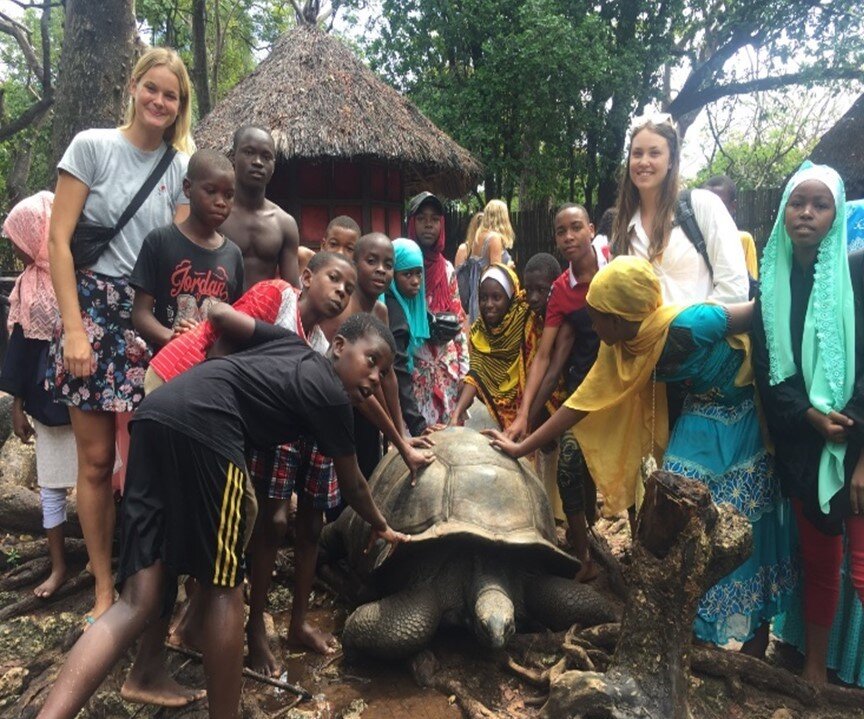
I arranged everything from the bus to take them to Stone Town, the boat to reach the island and food to keep them going. I didn’t want them to worry about anything on that day. With the help of the local teachers, everything worked perfectly. They arrived in Stone Town and we were off on the boat. They really enjoyed being on the sea and as soon as we reached Prison Island, some of them were in the water within seconds. But first, we wanted to go see the famous tortoises. The kids had never seen this type of animal before and they loved the chance to feed them and touch them.

Slide3.JPG

After a brief walk around the island, it was BEACH TIME! We ran into the water and within moments, I had 10 of them splashing me. We all really enjoyed our time at the beach, playing fetch games and so on.

When it was time to say goodbye, they all gave me a big group hug as it was the last time we would be spending time together as my work here is coming to an end. I’m so grateful for the experience here in Zanzibar, the people I’ve met who let me into their homes like old friends, the kids who will forever hold a special place in my heart. I will for sure come back!”

Slide4.JPG

Lost in Translation by Viktoria Schäfer

I’m a 24 year old German Student who is studying at the Technical University in Cologne and volunteering in Zanzibar for 4 months. I arrived at the end of July - here are some highlights of my time here so far:

A lot has happened in this short time. When I first got here, I was quickly introduced to the lifestyle of “pole pole” – it translates to “slowly” but it means so much more than that – it’s used to get visitors to slow down and lower their expectations about anything ever happening. The first example is that we didn’t have school my first week here but we only found out the night before as no one was really in the picture!  However, this gave Rubina and me some time to plan and gather everything we would need for the Immersion Camp that was to take place in Kizimkazi. We went out and bought exercise books, pencils, pens and tons of candy to give to the kids whenever they finished a station at the camp successfully.

When the camp came around, we all enjoyed it very much, not just the kids. It was the perfect mix of working and teaching/learning English and free time that gave the kids time to explore the beach, swim in the pool, have dance parties with us and watch movies. I’m hopeful that this weekend will stay in their memory for a long time, not just the learning English but also as a lifetime experience as many of them have never experienced anything like this before.

 At school in Unguja Ukuu, it takes some time to get used to the way of teaching and learning. Most times, you have to switch to a different plan because maybe you have no students as they’re on a field trip or the topics are still too advanced. I find it tough to make proper lesson plans as no one really knows what the kids have been taught already as there are no overall lesson plans and curriculums. So we just go day by day and try to improve their overall level of comprehension and also encourage them to speak in front of the class.

This is something I want to challenge them with every day, so every day I have them write something in the beginning and then everyone has to read it aloud for the class to hear. I’m hoping this will boost their confidence in speaking up and being more comfortable in speaking English.

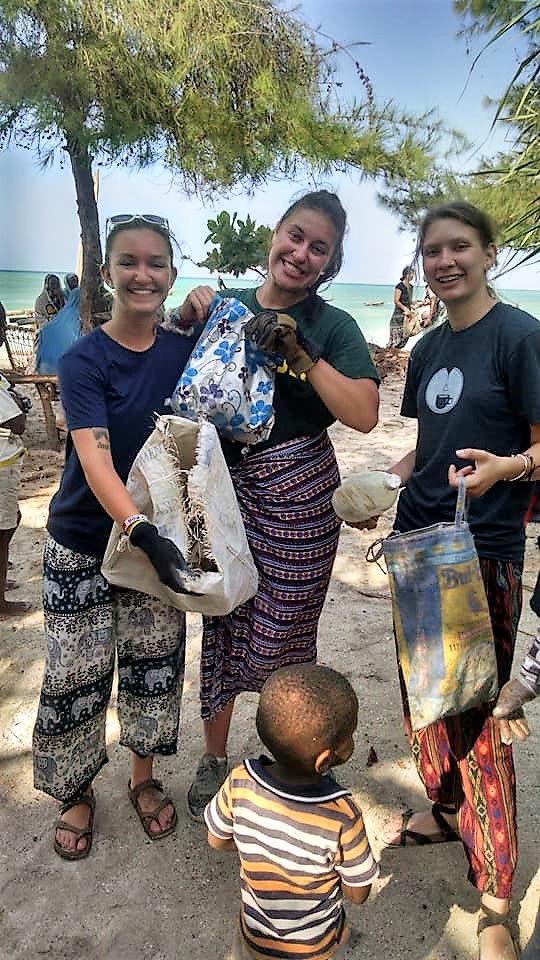
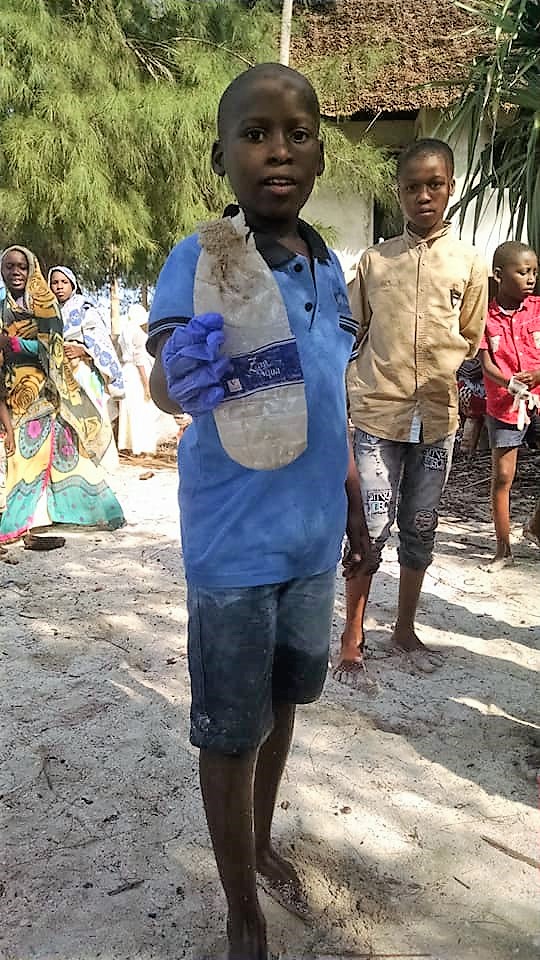
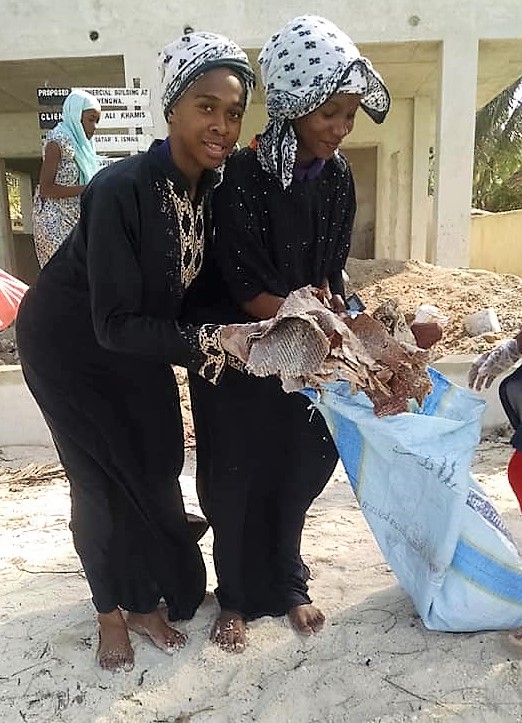
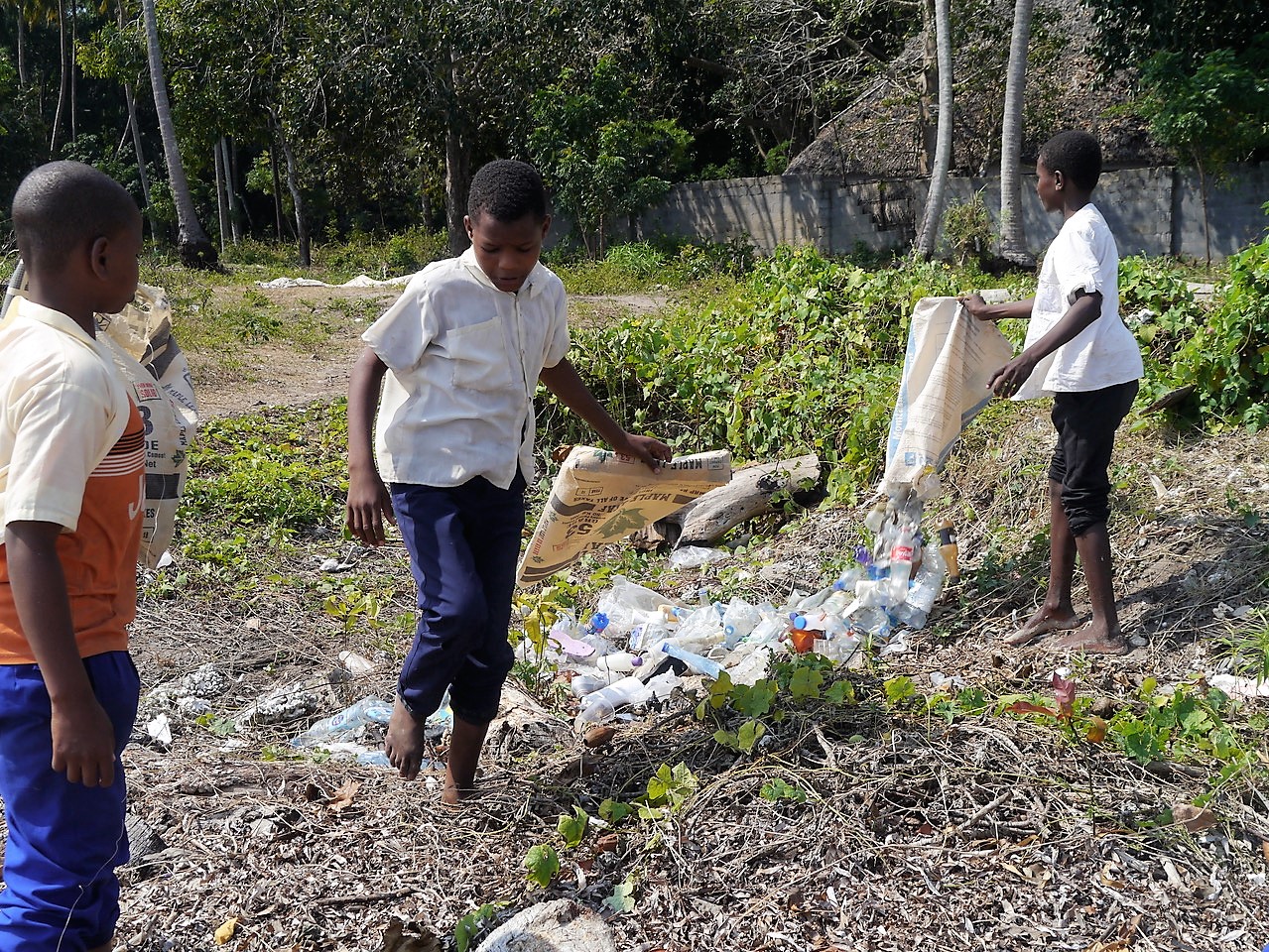
We also did a Beach Clean Up in Nungwi and Kendwa during last week which was a lot of fun. As the beaches up north are pretty clean of plastic and other rubbish to begin with, we just made our way around the villages and picked up trash on the sideway. We all enjoyed it very much.

Volunteering or vacationing? Anna Vincent and Rosie Seabrook

Rubina, Rosie and Anna are volunteering with Safari English Club.  Rosie and Anna are from Ipswich and are on a gap year between school and university…this report is their thoughts now they’ve been in Zanzibar for just over a month… (more from Rubina next time!)

It’s very different volunteering somewhere as opposed to just coming for a holiday. You learn so much more about the everyday lives of the people, such as how their religion, education system and even relationships work. And it’s been really special to develop closer bonds with some of the local people which you’d never do on a holiday.

64702424_679497992520166_8014641332066713600_n.jpg

The children are all very sweet; having started off a little shy they are now very confident around us - the girls are particularly fascinated with us and love stroking our hair! They’ve been teaching us some Swahili, like the days of the week and questioning us with their phrase book! Their English ability can vary quite a bit, especially in Rubina's class, however this has meant some of her students to translate for her. The older students are also very keen to practice using their English, so come after lessons just to chat to us which is lovely. Whilst the children are often very excitable, behaviour in, and out, of class is generally very good. In class they are all eager to learn so will listen well and concentration usually manages to last for the full 90 minutes! They do sometimes like to go off topic to teach us Swahili, or to laugh at our attempts at Swahili. 

 In preparation for volunteering we did a TEFL course.  This has proved helpful, especially when the teachers wanted to learn phonetics, and when we were given past papers from another teacher who wanted help, again with phonetics. These papers were for exams he was taking to get into university to do English - and we both thought they were very hard! Learning about the tenses was also useful as I don't remember ever being properly taught this myself! However, other aspects were perhaps less useful as we are more limited on resources and, therefore, activities we can do with the children. Still, activities and materials suggested on the TEFL course act as a good base to adapt lesson plans from to suit our resources and the students' abilities.

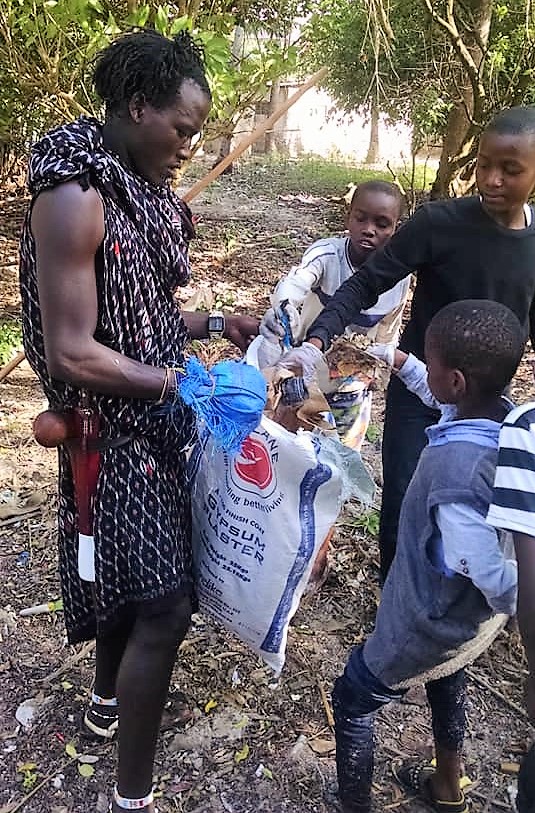
The beach clean-up was a great experience to meet other people our age. It was also so good to see what learning English, and therefore getting into the better further education in Stone Town, enables people to do. Haroun went to Safari English Club and has now got funding from WCS (World Conservation society) to help him develop his Zanzibar Ocean Protection Foundation. Not only does he organise the beach clean-ups as fun days out for the group, taking a particular pride in the number of girls that attend. He’s also very concerned about making sure children get educated about the reasons for protecting the ocean and environment. One of his friends is in the process of setting up his own foundation looking at how to reuse and recycle some of the things they collect on the clean-ups. 

We’ve been very lucky in making friends here. One girl in particular, Namira, used to be a tour guide so has taken us on lots of tours and boat trips and introduced us to all the local food – Chipatis have become a daily favourite! This has been a great way to see things from a more local perspective, as she’s introduced us to many of her family and friends. Again highlighting the difference between our experience, living and volunteering here, and a holiday.

Overall, we’ve thoroughly enjoyed our time here and are incredibly grateful to everybody at Safari English Club and Zanzibar Learning 4 Life for enabling us to have such memorable experiences. Good luck in the future, we can't wait to hear how everyone is getting on! 

66724529_2781257228611453_92742220959973376_n.jpg


We're growing up

We love hearing from Safari English Club students as they grow up…as they move away from Unguja Ukuu to pursue their studies they have access to the internet and write to us. We’re very proud of Salama, who was one of the students who inspired us to start Safari English. During our first few days at Safari English Club she requisitioned our Swahili/English phrase book and asked to borrow it overnight. The next day she returned having learnt all the expressions in the “Getting to know you” section and asked Caroline and me about ourselves, including “Do you like social dancing?” We were so impressed by her hard work and initiative. The photo on the left was taken in December 2015 and the one on the right shows her recently starting at University where she is one of only 8 students studying Librarianship.

Also growing up is Orla who visited Zanzibar with her family in 2016 as a 12 year old and met students from Safari English Club who were the same age as her made a lasting impression. She particularly remembers the girls asking her which day she does her washing! Now aged 15, she and her family have decided to go back to Zanzibar and run an Immersion Camp for 32 children from Standard VI. So Orla, her family and friends are busy raising money to fund accommodation, food and transport. Orla’s father is a member of Ipswich Rotary Club, so he’s an experienced fund-raiser and Orla’s mother is a teacher, who’s learnt the art of baking cakes to help with fund-raising.

Volunteer Chloe came up with the idea of the Immersion Camps that are conducted entirely in English and have a high ratio of native English speakers to students. This year the camp will include some other important topics such as maths, science and IT. The students really benefit from the intensive attention, the opportunity to put their English into practice and have fun broadening their horizons. Their daily lives don’t give them time to “just be children” as they have long walks to and from school, responsibilities in looking after younger siblings, making money and finding ways to supplement their meagre food. (For example when I asked how many students “go hunting” all the boys said they have catapults so they can catch birds and eat them.).

As part of the preparation for going to Zanzibar, Orla, her parents (Paul and Karen) and friend Betty met up with Carole who ran the most recent Immersion Camp. Like Carole, The planning involved reviewing past exam papers.  The students are expected to sit the majority of their exams in English and there was much consternation at the way some of the exams are phrased.  A great advantage is that Orla’s mother Karen is a teacher and her father has travelled overland from North Africa to South Africa. They have a love cemented in Africa having got married in the Masai Mara!.

Three new volunteers (Rosie and Anna from Suffolk, recommended by Paul from Ipswich Orwell Rotary Club) and Rubina (from Canada) who have just started with Safari English Club.  They arrived at the end of Ramadan and are just finding their feet. Standby for more reports as they get dug in! Rosie and Anna are on their gap year before heading to university in October and Rubina is very experienced in working with young people through the YMCA and as a training co-ordinator through the Royal Canadian Air Force. 

A big thank you to all for helping the children in Unguja Ukuu.

Creative Consciousness in Zanzibar by Bryan Reynolds & Gosia Lorenz

Initially, we planned our trip to Zanzibar so that we could research the island’s unique history of occupation, slavery, music, and religion for a book Bryan is writing with Mark LeVine on the role of highly politicized artistic production, circulation, and consumption in the transformation of political subjectivities in Africa, the Middle East, and South Asia. Paramount to the book project is the role of children in interventions made by political groups in response to various forms of oppression and discrimination, such as made by children’s theater groups in Port Harcourt, Palestinian refugees in Jordan, and youth Maoist activists in West Bengal. In preparation for the trip, we began looking into the educational institutions in Zanzibar and different NGOs who are doing valuable work there to improve education for youths and for women in both urban and rural areas. This exploration eventually led us to Zanzibar Schools Project and to Gasica of Zanzibar Learning 4 Life Foundation. After learning what extraordinary work both institutions are doing, we asked if we could offer as a collaborative component to our research trip (something Bryan and Mark often do at their research locations), what could be characterized as a “very advanced” acting workshop for the K-12 students and a Women’s Empowerment Workshop for teenagers and older.

Bryan is a Professor of Performance Studies and Theater at the University of California, Irvine, and Artistic Director of the Amsterdam-based Transversal Theater Company, which runs outreach projects with educational institutions in developing countries. He ran the acting workshops, which are not “acting” classes per se, but rather an organized sequence of exercises designed to build group trust, encourage intimacy, increase bodily and proprioceptive awareness, expand imagination, and, through guided meditation, help students situate themselves  self-reflexively in their life journeys. Gosia works worldwide as a life coach, with focus on personal development, resolving social issues, and achieving healthy and joyful living, professionally and spiritually. She ran the empowerment workshops in which the participants learned a number of consciousness-activating, self-perception, and energetic tools by which to better comprehend their own remarkable gifts and how they can share and apply them socially and professionally in the interest of both fulfilling their aspirations and contributing valuably to lives of others.

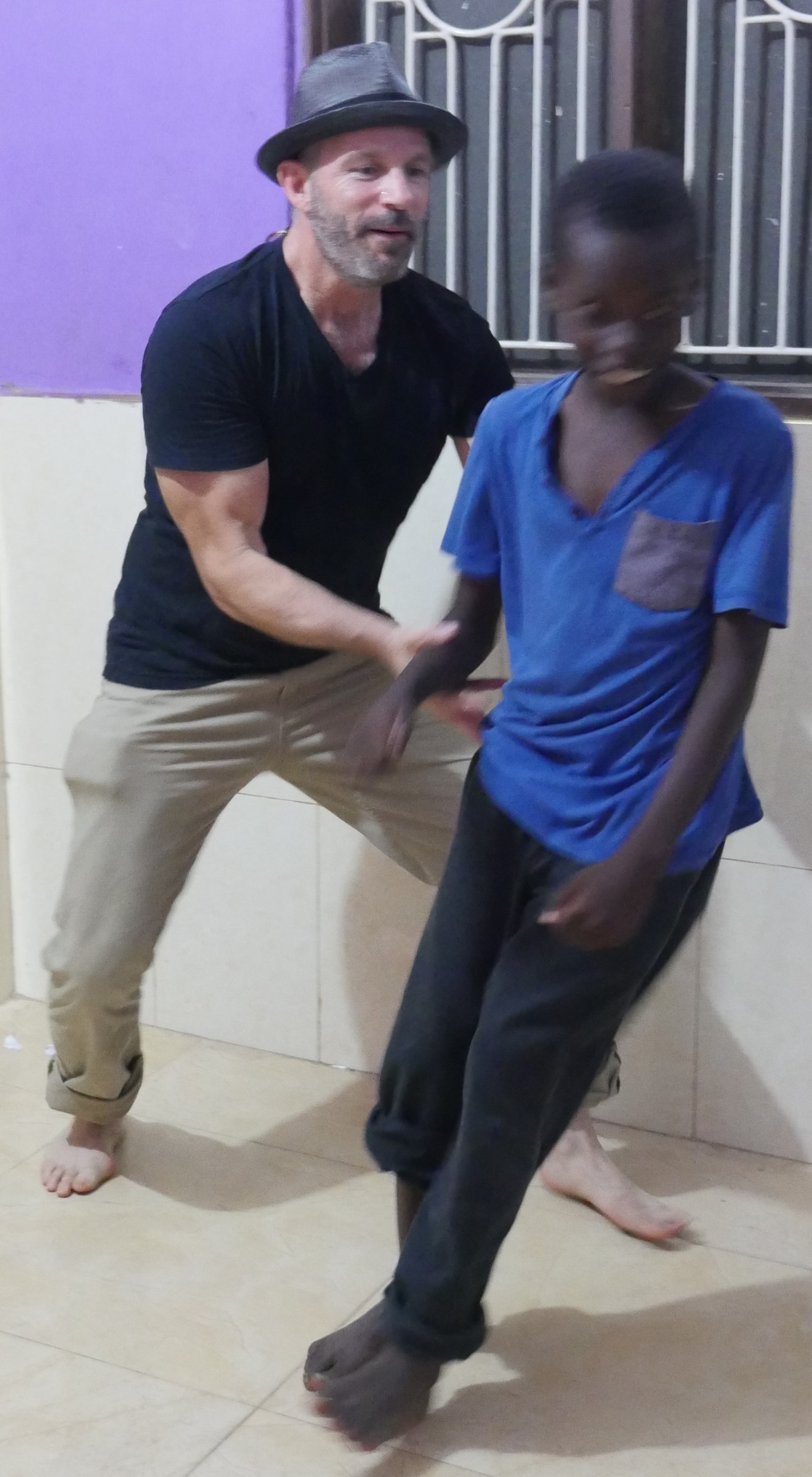
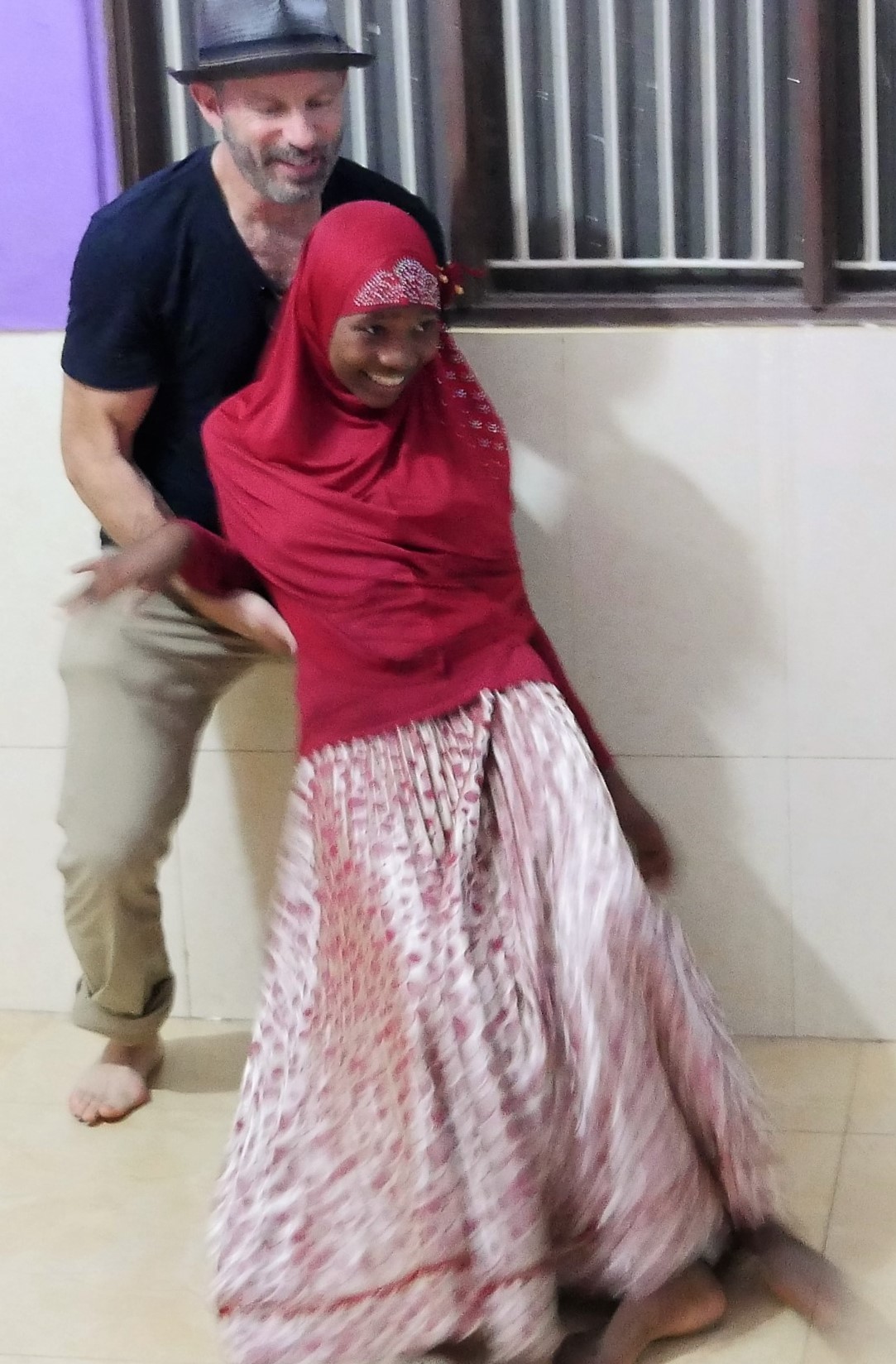
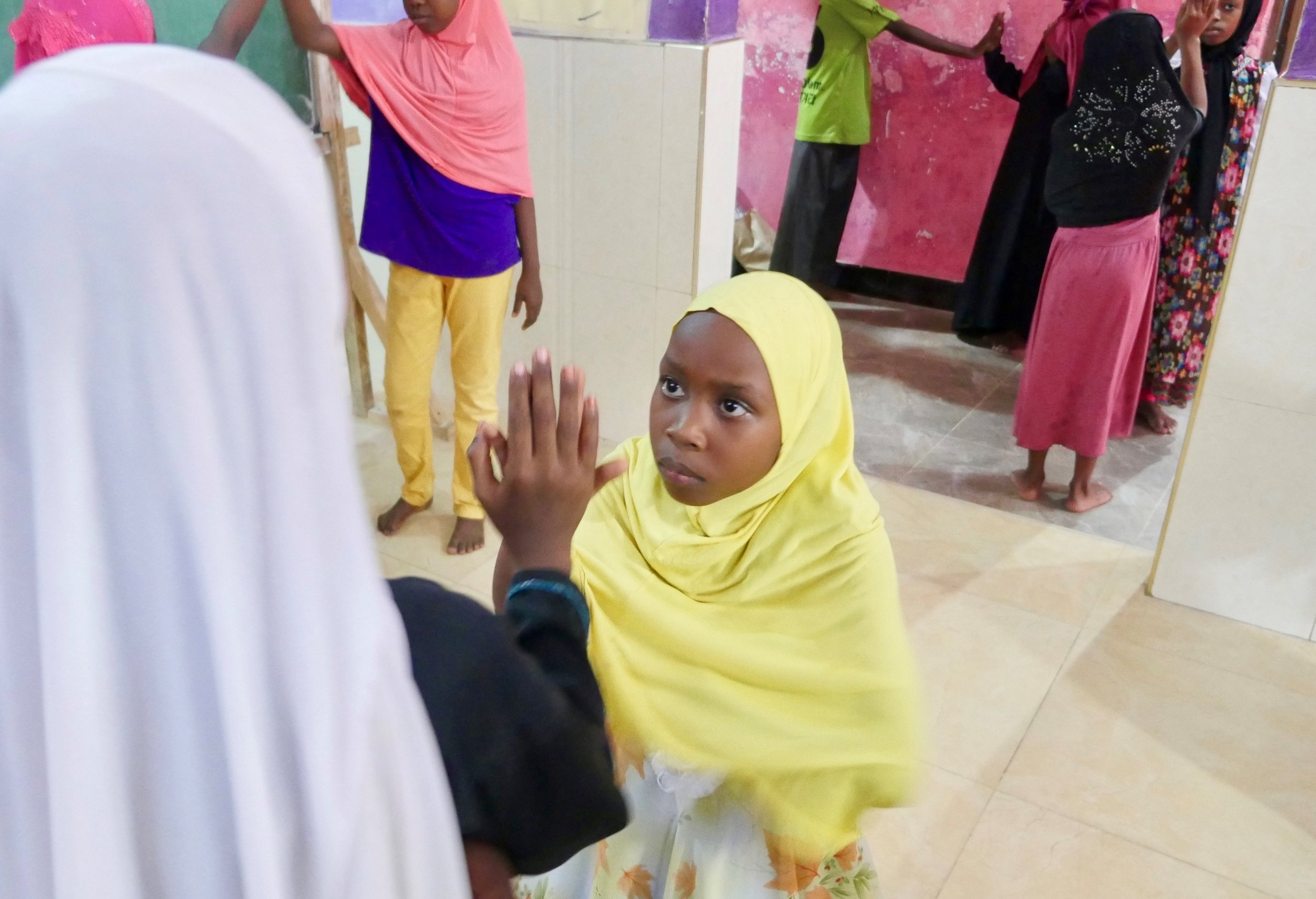
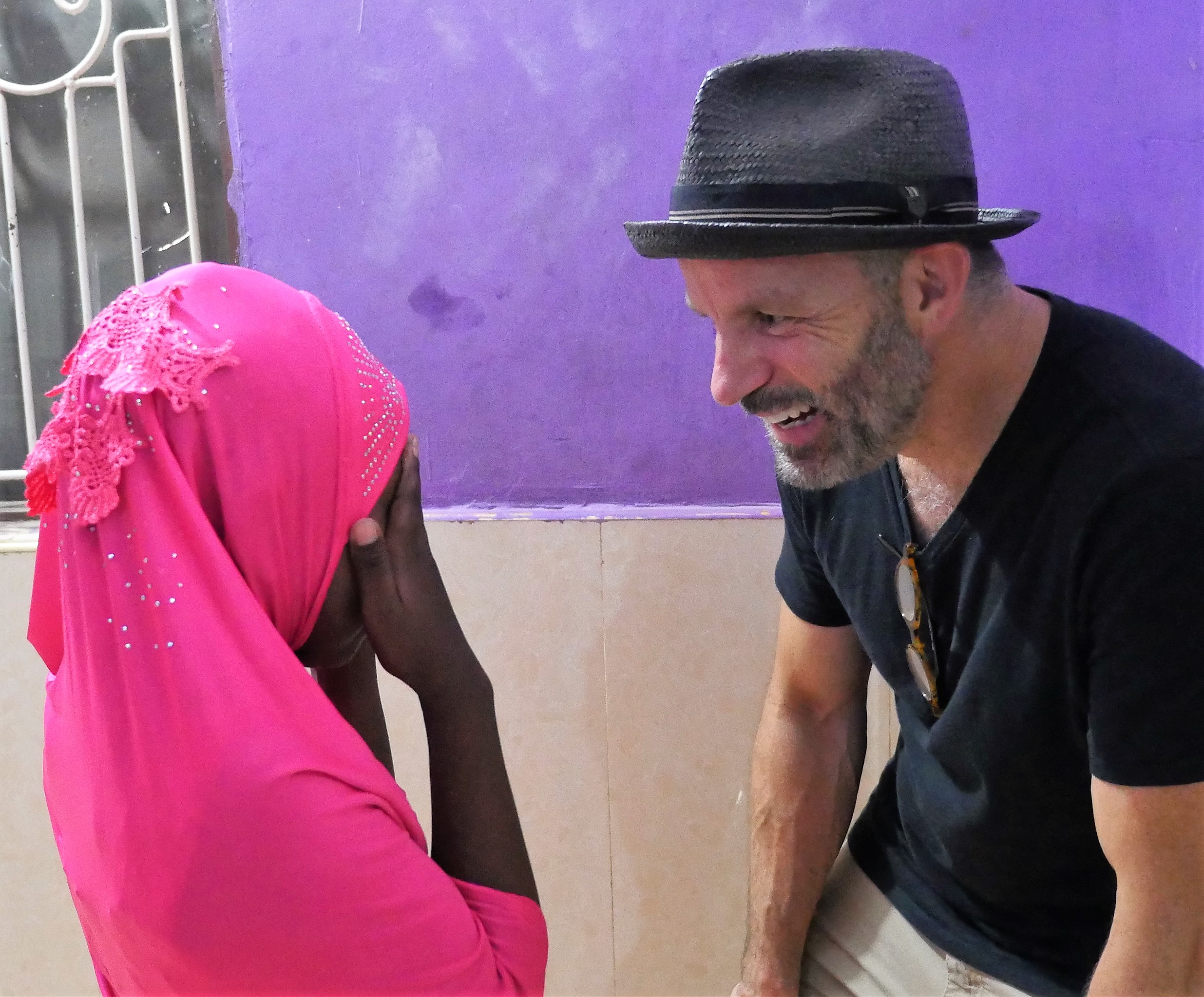
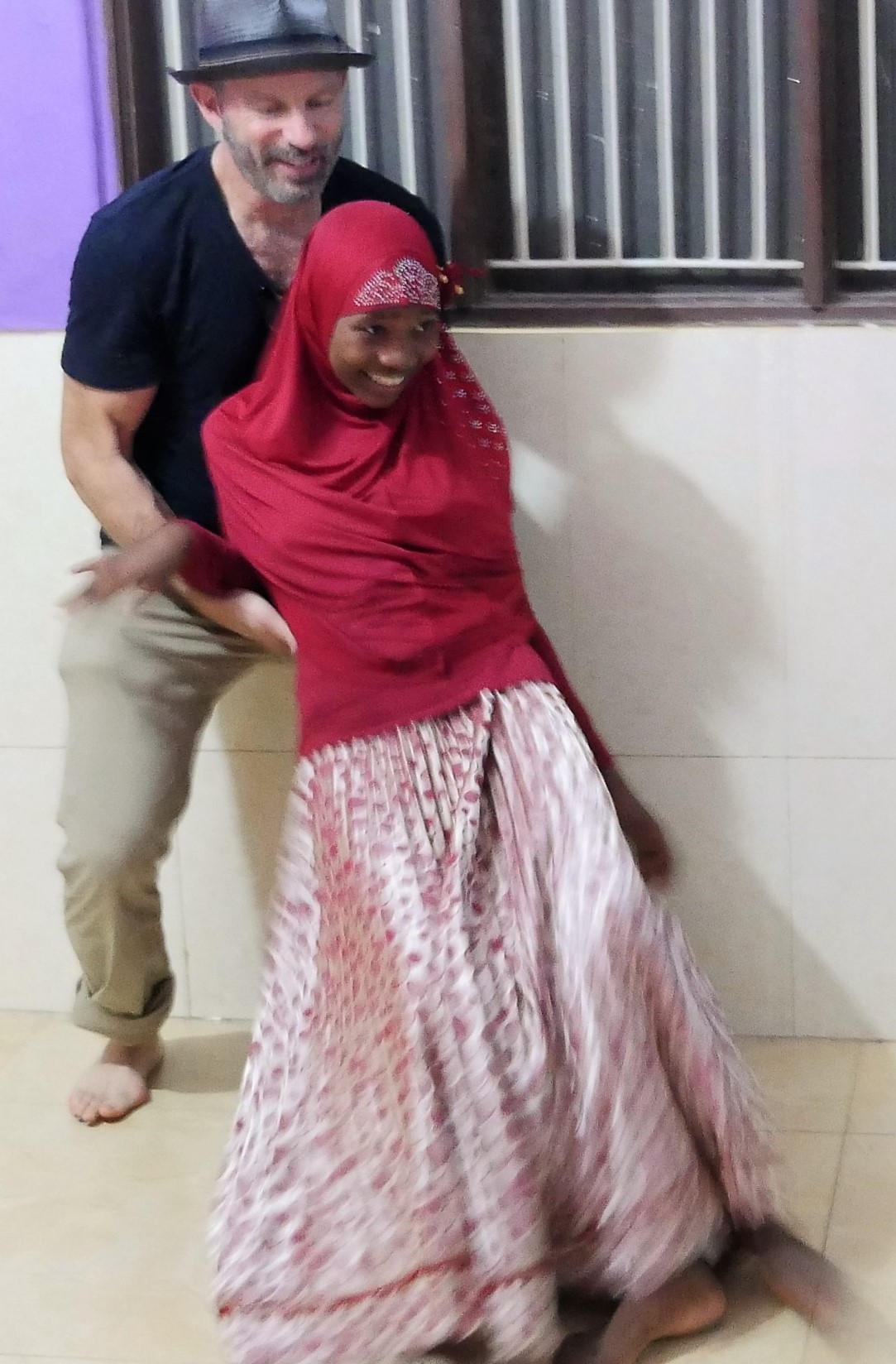
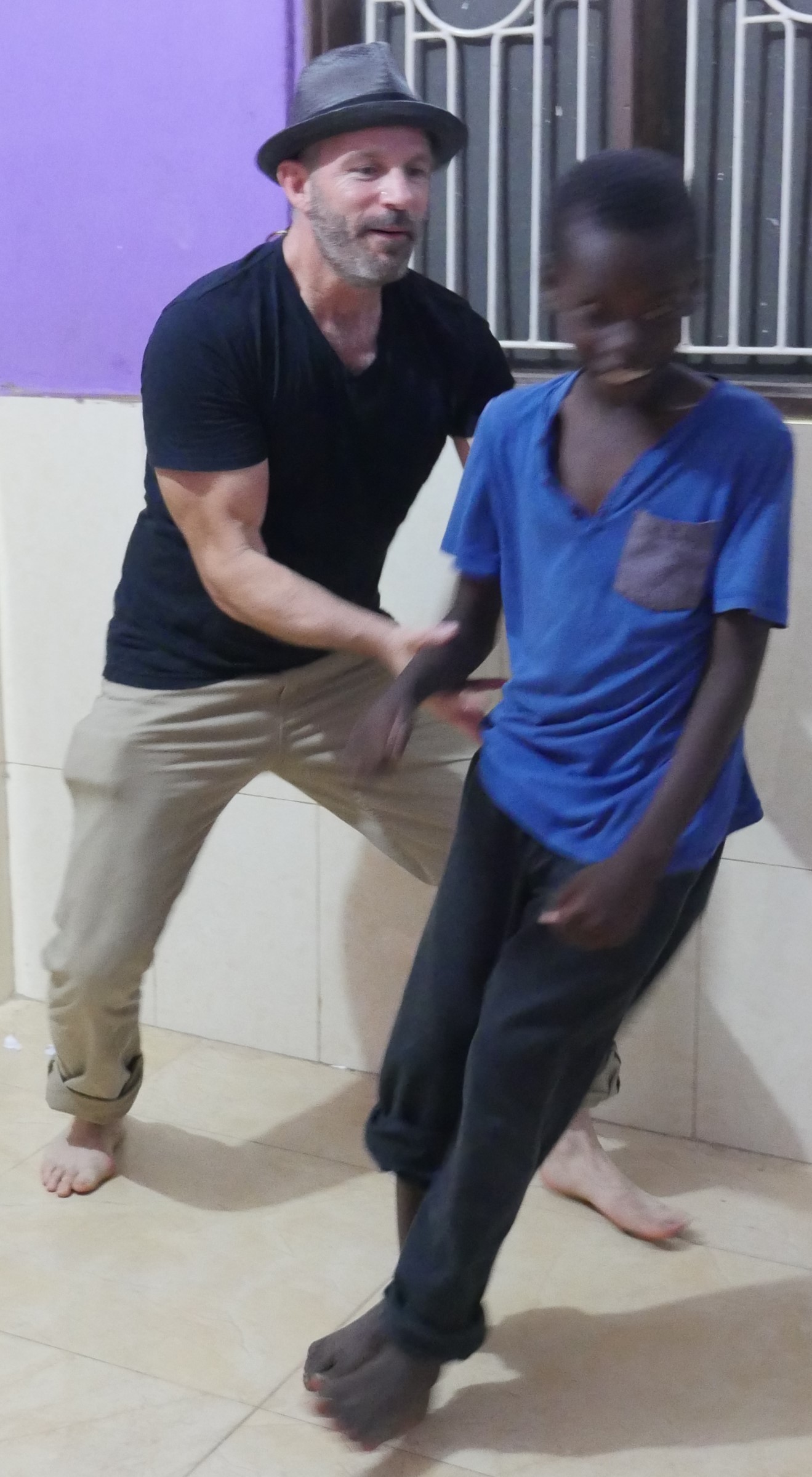
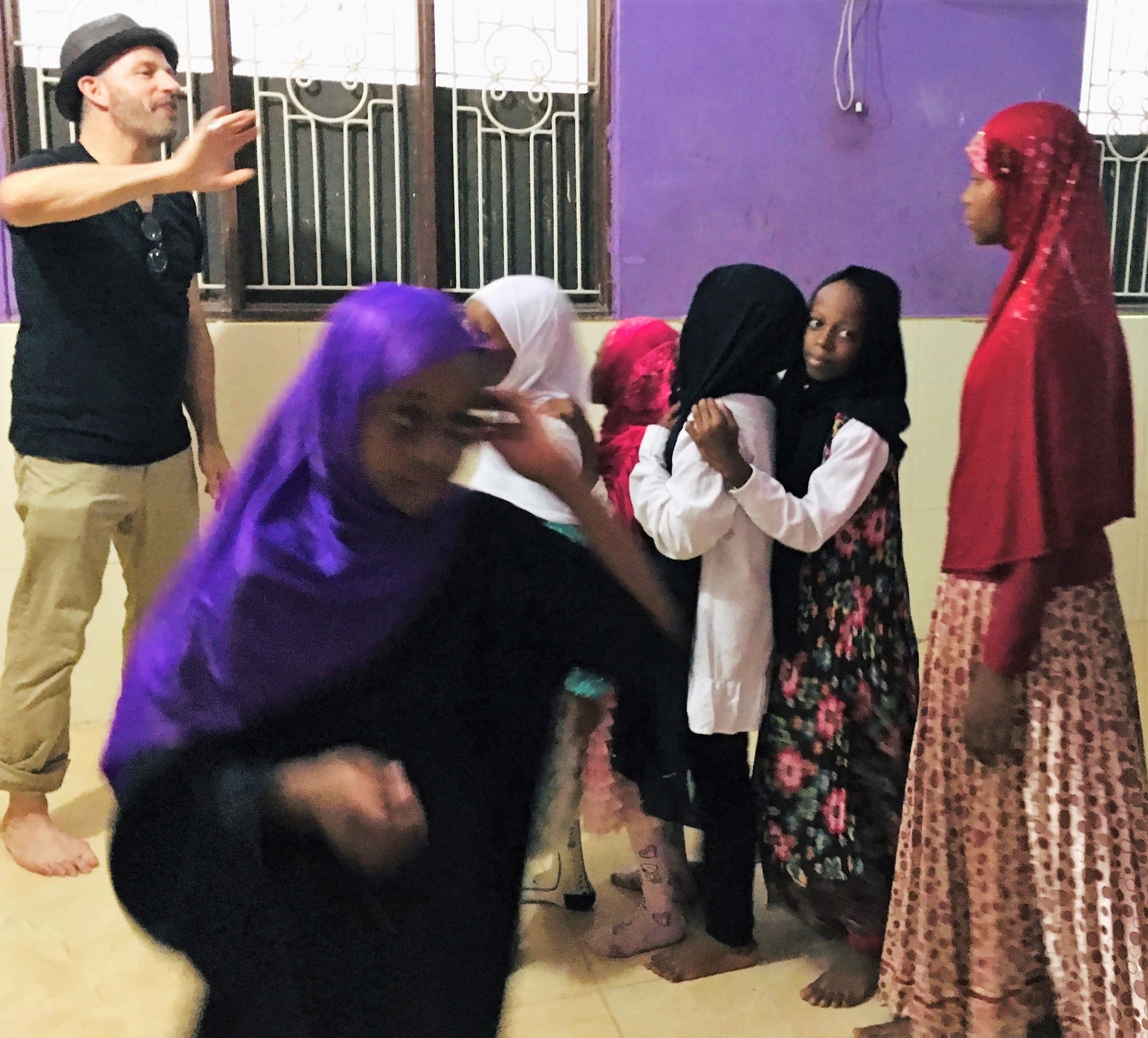
Given the young ages of some of the students, Bryan was concerned that the intensity and length of the workshops might discourage the students from fully committing to the exercises. For instance, in one of the exercises, pairs of students put one of their palms together, crossing their bodies, and while looking into each other’s eyes continually as they either attempt to give something, energetically, or resist what is being given, first giving while the partner resists, then switching, then both receiving. This goes on for 20 minutes. In another exercise, the students run toward Bryan with their eyes closed until Bryan tells them to stop or he catches them before they run into the wall behind Bryan. Bryan worried that his meanings might get lost in the simultaneous translation, from English to Swahili, or that the translation might not keep up with his pace. This is especially important during the guided meditation exercises.

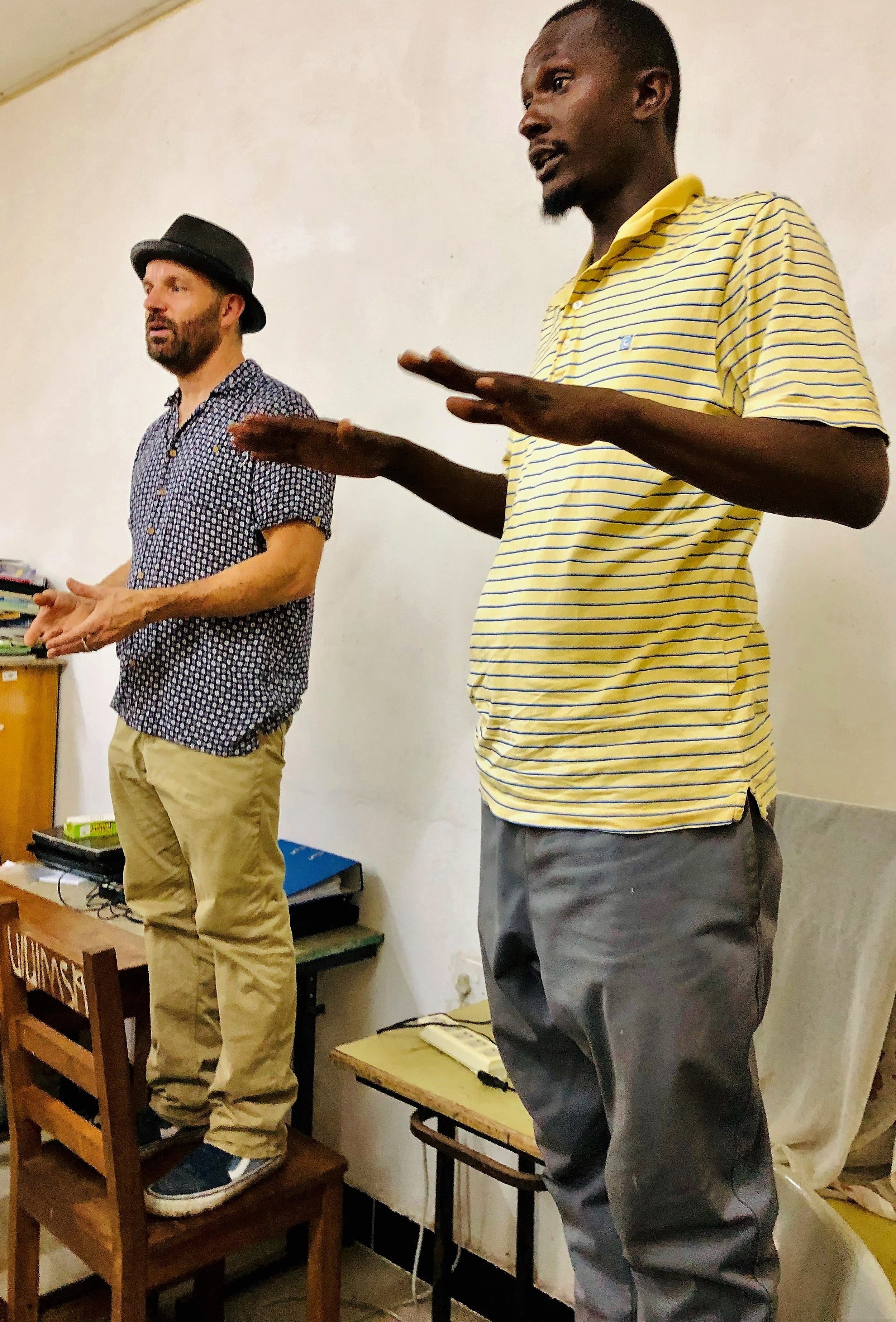
As it turned out, Gasica was able to translate Bryan brilliantly and all of the students maintained their focus and commitment for the entire workshops. Moreover, our worry over how the girls and boys would work together, given the cultural codes with regard to gender difference, proved to be unfounded. Bryan had encountered some difficulty with boys and girls working together in other Muslim communities where dress codes were strictly enforced. In Zanzibar, we were not only hugely impressed by the ease, humility, and decorum with which all the students performed, we were happy to see that the girls proved significantly more adventurous than the boys when doing the trust and meditation exercises. The girls wanted to repeat the exercises more and ran faster than the boys. During the guided meditation, in which the students imaginatively transform into several different species, such as fish and lizards, the girls were more illustrative in their becomings, allowing their bodies to more fully perform the characteristics associated with the creatures. The students performed with their eyes closed, so they were not performing for anyone but us, Gasica, a few others who kept their eyes open, and most importantly for themselves.

This showed much creativity, wherewithal, and self-confidence on their part. All the students, the boys as well as the girls, impressed us so much that we decided to return to Zanzibar to collaborate on a larger theater project that would give the students a chance to take their performance skills, creativity, and confidence to higher levels. We are returning this June/July 2019.

Z 07 (1).jpg
Knowing little about Zanzibari culture, Gosia wondered how the cultural differences would affect her workshops. Since her workshops are more conversational, and ask the participants to reveal publically their weaknesses, strengths, fears, and dreams, negotiating social codes and personal inhibitions are sometimes her biggest challenges when working in communities unfamiliar to her. Moreover, beyond the conversational, Gosia asks the participants to do a number of body processing and energy attuning exercises that can resonate deeply with their sense of well-being and personal goals. She taught them several energetic tools that would increase their self-trust, clarity and confidence in simple and more complicated life choices. Gosia was surprised that even the younger women already had specific goals, such as becoming teachers, doctors, lawyers, journalist, and guides. It is unusual for her to encounter teenage girls with such clear ideas of what they want to do in their lives. All of the participants learned how to communicate with their bodies through simple muscle testing. They were amazed by how easy it was for them to listen to their bodies, and to experience the flow of energy through their bodies as they did “energy pulling” exercises, which is a method for fostering open communication and positive connectivity with others. One of the groups was a little shy and apprehensive at first but became more and more open and curious when listening to descriptions of the technique that allowed them to disconnect from negative experiences in their past. After they tried the technique, they became more relaxed, trusting, and eager to learn more. They all lit up after Gosia guided a meditation in which she invited the participants to discover their inner brilliance, beauty, and uniqueness. So much joy radiated from the teenage girls and women after discovering their hidden “super powers.” Gosia enjoyed their openness, curiosity and warmth.

Z 08 (1).jpg

We are very much looking forward to returning to Zanzibar this summer. Thank you Ann and Gasica for giving us this opportunity to collaborate with you and your students, and thank you to the Donald Bren Foundation for supporting our research.

The truth about volunteering: Carin and Stina

How long have you been volunteering in Zanzibar and what’s the ideal time to spend there?

Carin: I did a 3 months project in Kenya and now I’m in Zanzibar for 3 months. There are a lot of similarities, but also differences. What’s the same? Well first of all, the climate! Don’t underestimate the effect of the climate on your body!! Take time to adjust to the heat and drink plenty of water! And you have to slow your normal speed, and I’m not talking about the traffic 😊. You get tired easily and can’t expect to do the same amount of work as you’re used to at home. This is also because in Africa there is a whole different mentality. It’s pole pole, which means ‘slowly slowly’...you have to be patient when you want to get something done. For example I had to go to the garage with the car and they start by saying that is a half days work and that you can pick up the car tomorrow (that was on a Tuesday) but in the end the car was actually fixed on Saturday! It can be frustrating sometimes!!

Stina: I’ve been volunteering at Safari English Club (SEC) for 5 months and I feel lucky to be able to spend a long time on the project, but I know it’s not always possible. In my experience, I’d say the ideal time to spend on the project is at least 2 months. However, all help is valuable, for example we had someone for a short time who helped us in an assistant capacity.

What were the highlights of your time in Zanzibar?

Carin: A big difference between Kenya and Zanzibar is that Zanzibar is generally much safer. I’ve access to a car here (provided by the project)  and I can safely drive to Stone Town in the evening. There are more roads than in Kenya, although many roads in Zanzibar also have large potholes. When I was in Kenya I didn’t have a social network outside of the project. In contrast, in Zanzibar I’ve been introduced to the Rotary club and they involve me in their activities. I helped with a Golf event and met many people there. And you meet other volunteers and really work together.  I’m staying in Mbweni, just outside Stone Town, a nice area, close to the International School, with a large swimming pool that you can use for a very reasonable price. Some other volunteers stay in Town in a kind of hostel, can also be great (depends on ones budget, Mbweni is a bit more expensive).

Zanzibar is like a big village actually, before you know it, you know many people who either live here, or are volunteering just like me.  Volunteering with SEC is a good mix between work and ‘holiday’…  4 times 1 hour and a half doesn’t sound as if you have much to do, but you have to prepare lessons and it takes me some hours to make a good lesson plan. But it’s also very rewarding as you can see you students grow in self-confidence when it comes to speaking English! And when the boys give you flowers and some girls give you a kiss and a hug when they leave the classroom, well….. it makes me happy 😊

Stina: For me, the highlights were the opportunity to work with the kids in a creative way and to take them on school trips. These students come from families with few resources, which makes the volunteering even more worthwhile. Especially when we can offer them trips that take them places they would never otherwise visit. I enjoyed working together with the kids over a long period of time, which gave us the opportunity to get to know one another very well.

Also, it gave me the chance to see how the children develop. My goal was to challenge their creativity and inspire them to use their imagination or express their own opinions. This is very challenging because most kids aren’t allowed to express their own opinions in school or at home. For example, if I asked the more advanced students a very simple question (what I define as simple!) such as what they would like us to do in the future with SEC, most of them really struggled. Even though we might talked about examples it could still be challenging for them to really understand or to express what they actually like to do. But the advantage for me being at SEC for so long was also that the kids got used to the way I tried to challenge them and I could see that they actually got better and better at expressing themselves in one way or another.

What were the highlights of your time when you weren’t volunteering?

Carin: Zanzibar has beautiful beaches, good food, plenty of things to do and very friendly people.

Stina: I spent my free time in Kendwa, in the North of Zanzibar, with my boyfriend who has a house there. Unguja Ukuu is too far away to commute from Kendwa, so I chose (with advice from Ann – and she was right 😉) to get a room in Stone Town. I’m very happy about this decision because I moved into a volunteer house, where I stayed with Jack and Lucie (two other volunteers at Safari English Club). Also, I got to know the other people who lived in the house and we became very good friends. All in all, I’ve really enjoyed my time in Stone Town with my friends and the escape to Kendwa at weekends, so I could enjoy time on the best beaches in Zanzibar.

What kind of person do you think this volunteering opportunity is suitable for?

Carin: You have to be independent. You’re preparing your own lessons;  there are some resources available at the school, but sometimes they aren’t really suitable. I enjoy that combination of freedom and responsibility. Every day 30 pairs of eyes look at me and expect me to teach….😊. From that perspective the Kenya project was ‘easier’ as I worked in a Rescue Centre, where kids could be sheltered for a year and my job was to help them to forget about their problems through play. If I compare that with teaching English, the teaching is much more challenging but gives me a greater feeling of satisfaction. (TEFL is a must, if you ask me!)

Besides being patient, you need to be flexible, switch to plan B of even C… (eg last week we planned to watch a movie with the students and just 5 minutes before, there was a power cut). In both countries they speak Swahili and the people really appreciate when you can say some words/sentences in their language. I’m taking Swahili lessons and that helps me to realize how my students must feel when I teach them English.

Stina: A good volunteer is someone who is really interested in getting to know the country and its culture. In addition, volunteers need to be open-minded, outgoing and not afraid to show leadership. Respect and humility are important qualities.

Volunteering is also selfish because it makes people feel good about themselves, which I see as a natural thing, and not necessarily a bad thing. But it’s important for people who volunteer to do what is best for the group they choose to work with, and don’t get carried away of the idea of living in paradise. Because there is also a reality to the paradise most people see when they live in Zanzibar, and that can be challenging for people who don’t know about the deprivation in Zanzibar.

In general it’s important to remember that when someone chooses to get involved with a sensitive group like SEC, they also must leave again and go back home. Educated or not, I still believe that this is a subject all volunteers should be aware of. We can make an impact on the target group that we’re with (and vice versa) but we need to be able to prioritise what’s best for the students and put aside our own needs.

How does the strong Islamic culture impact you?

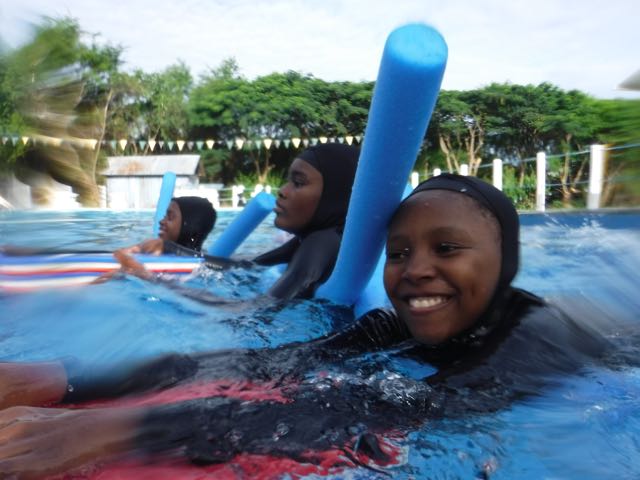
Carin: Before I went to Zanzibar I was a bit worried how the culture would affect me.  When I got there I was surprised by the atmosphere of tolerance, acceptance and mutual respect. They did’t expect me to wear a scarf. The village is even more traditional than the city and we wanted to respect their beliefs, for example we wouldn’t smoke or drink alcohol in public, we covered our shoulders and knees and when we took the students to the beach or swimming pool I decided to wear the same burkini as the girls did.

Stina: This doesn’t really bother me. It’s very different to my own beliefs, but I’ve learned not to judge. I tell people to think this: who is right and who is wrong? People are different and have different beliefs, maybe what is the right way in our eyes, isn’t right in their eyes. But does it even matter? I think adapting and respecting the culture you choose to be in, even though it’s another mind-set to yours. As long as nobody force anything on me and respects my way of living my life, then people can believe in the God they choose. I had some few episodes doing Ramadan with people who was too nosey and a bit judgemental about the fact that I was not fasting even though I didn’t drink or eat anything in public, but that was only a few people. Also, I don’t really like the fact that young girls are kind of forced to cover themselves in a very young age and I get the impression that the people in this culture don’t get the opportunity of choosing their own path. If they want something else in life they get cut out of the family.

What are the challenges/negatives that people have to be prepared to face?

Stina: If it’s your first time in Zanzibar or Tanzania, people need to prepare themselves for a cultural shock. Of course, it depends on your personal experiences. Last year I was in Tanzania for the first-time and I got quite a big cultural shock. I’d travelled in Thailand, central America and lived abroad for 6 months, but I’d never experienced feeling “real” cultural shock before I arrived in Mwanza, Tanzania. Coming from Denmark, I found it overwhelming just going for a walk in the city, taking the bus and shopping.

I believe that people who come to Zanzibar will not have the same shock as staying in a big city as Mwanza, but they should still be prepared that the cultural differences can seem overwhelming at times. The culture is very outgoing, which can seem a bit much if you are from a place like Scandinavia, where people are the complete opposite (don’t talk to strangers, personal space etc.)

In general people in Zanzibar are very nice people, and volunteers need to be careful about one thing…  they’ll get addicted to the island and won’t want to leave again 😉


Jack's perspective on Safari English Club

My time volunteering at Safari English Club was really so memorable and worthwhile. Zanzibar in itself is incredible! I had previously been to 6 countries in Africa, and can safely say there is nowhere quite like the islands. What Zanzibar Schools Project have going on in Unguja Ukuu is also amazing and I hope it continues to grow with the help of volunteers and local teachers.

I loved living in the bustle of Stone Town and driving to Unguja Ukuu each day. The drive is very beautiful once you’re out of town and we usually picked up a delicious sweet potato chapatti wrap along the way for 500 shillings (17p!) The journey was always filled with good chat amongst the volunteers and Zanzibarian teachers, and of course great Swahili music played at the volume it’s supposed to be played (loud!)

Once at the school, it was time to help the students of Standard 5 with their English. There were fun times, challenging days, eye-opening moments, and a lot of laughter. The class was everything a class of that age should be and more; intelligent, charismatic, witty, musical, energetic and humorous. Having located the syllabus I identified the topic of animals (‘wanyama’ in Kiswahili) which proved to be enjoyable and with a lot of language to teach in order for the students to be able to describe animals by size, characteristics, habitat, and more. It’s amazing that even when teaching a seemingly universal topic you still discover cultural differences, for example the children of Unguja Ukuu made it very clear to me that dogs are not “tame”, but “DANGEROUS!”, and that goats are “friendly”.

I also realised that occasionally I’d use English vocabulary that they didn’t know, and this was causing some confusion. “Teacher Jacky, es-cellent?” a number of students asked, much to my bemusement, until I realised that my positive exclamations of “excellent!” to a correct answer or good attempt in class were not being understood. This was very amusing, but also great because it created an entire lesson around these types of words; excellent, brilliant, good, bad, etc. It became necessary for all answers, whether verbal or in their exercise books, to be proclaimed as “excellent!” for ever more (even incorrect ones!)

I also taught ‘telling the time’ in English. This turned out to be unexpectedly complicated because in Tanzania and Zanzibar they use an alternative ‘Swahili time’, meaning each time had to be converted from Swahili time to ‘dunia’ (world time) before being translated into English. Nightmare! This topic also exposed me to the children’s musical side and how naturally rhythmic they all are. I took it upon myself to make a (very) basic drum beat on a laptop, and started playing it in classes while displaying a time on a clock. “What’s the time?” I asked, “quarter to two!” they chanted back in perfect unison to the beat, dancing under the table in some cases. It was great and I think it really helped them engage with the topic in a fun way, even if they gave my beat a thumbs down!

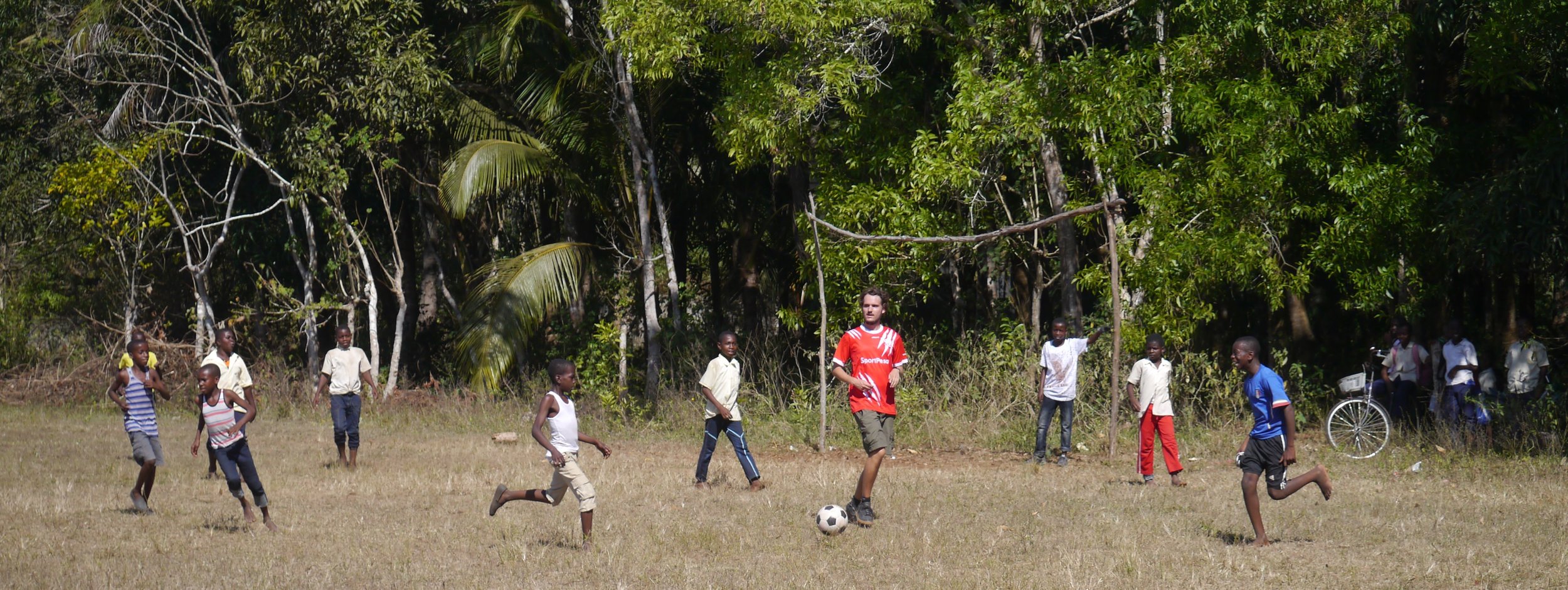
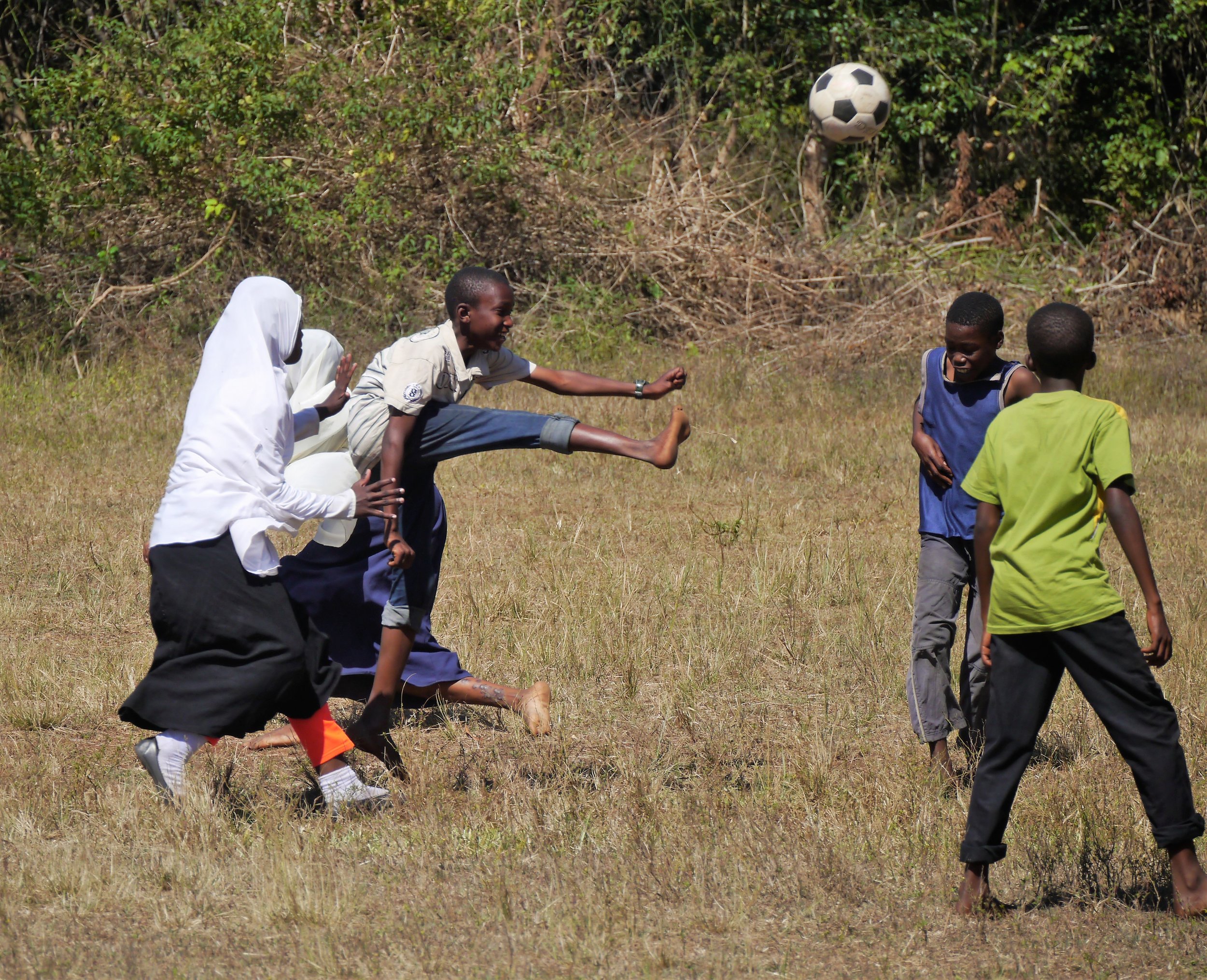
Before leaving we managed to organise a sports day where I played on a football team in a mini-tournament with some of the students in Standard 5. It was lovely and I was so impressed by their skills.

Overall it was a fantastic experience, and the main downside that springs to mind was that due to circumstances I could only volunteer for just over 2 months. My rapport with the children, as well as my Swahili, was building and I think the lessons would have only gotten better if I could’ve been there for longer. Hopefully I’ll be back one day!


Inspired by Nature...and volunteer Stina

I’m at the end of my internship as a volunteer at Safari English Club. Most of my time is spent with the advanced class and I particularly enjoy working with alternative learning, such as working with different subjects or issues in a creative way, although it can be challenging sometimes. I have found that quite a lot that the kids find it difficult to use their imaginations. However, having said that, I definitely see a development from when I first met them until now.

Recently, I met a volunteer Lina from Germany who is working with the young people in Fuoni, at Zanzibar Learning 4 Life Foundation. When I found out that she is an art student, I saw the opportunity to invite her to run some creative classes at Safari English Club (using plenty of English, of course!) and she gladly agreed to come. The students don’t often get to do this kind of creative work, but they really enjoy it as a change from the more academic school subjects.

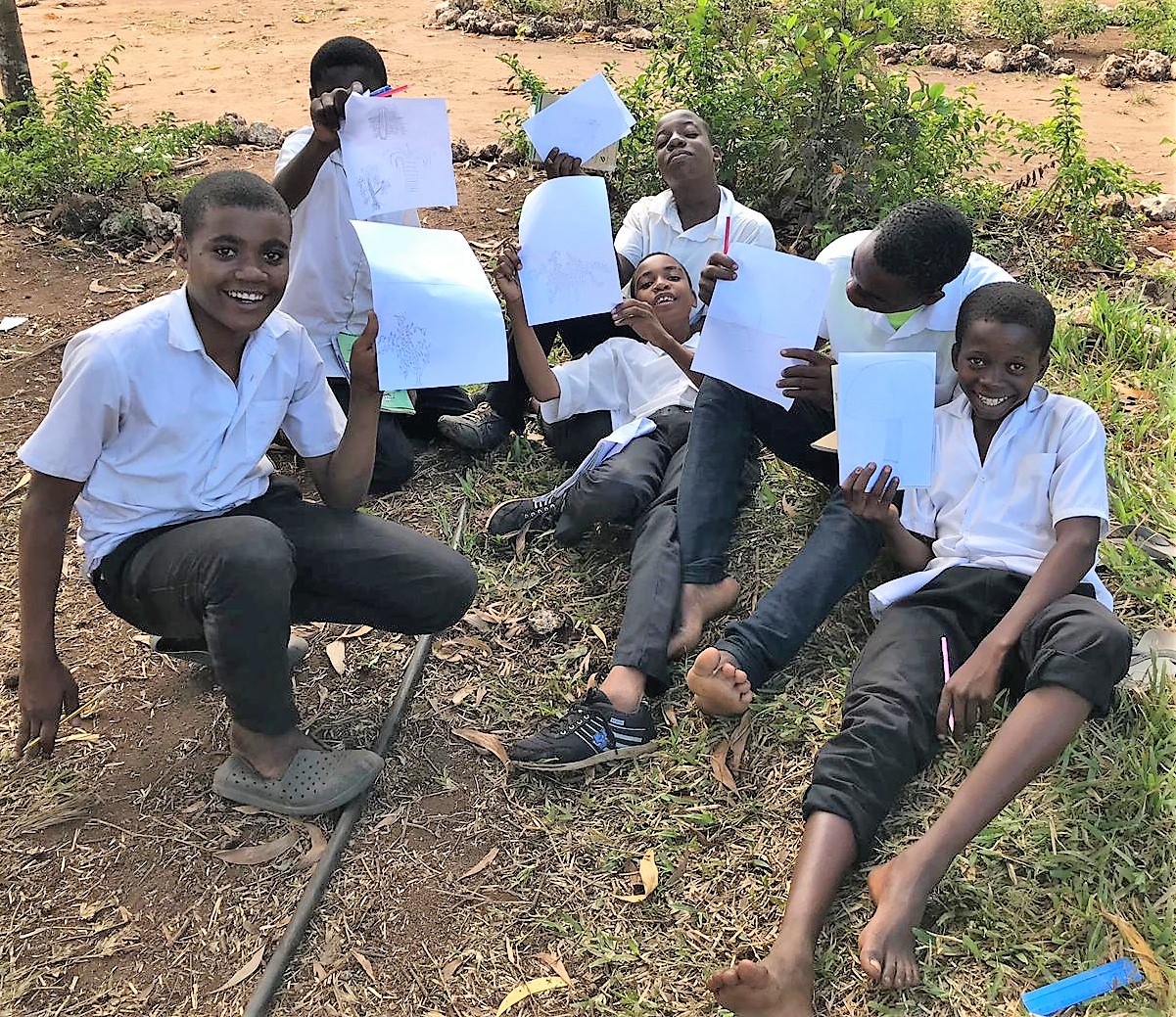
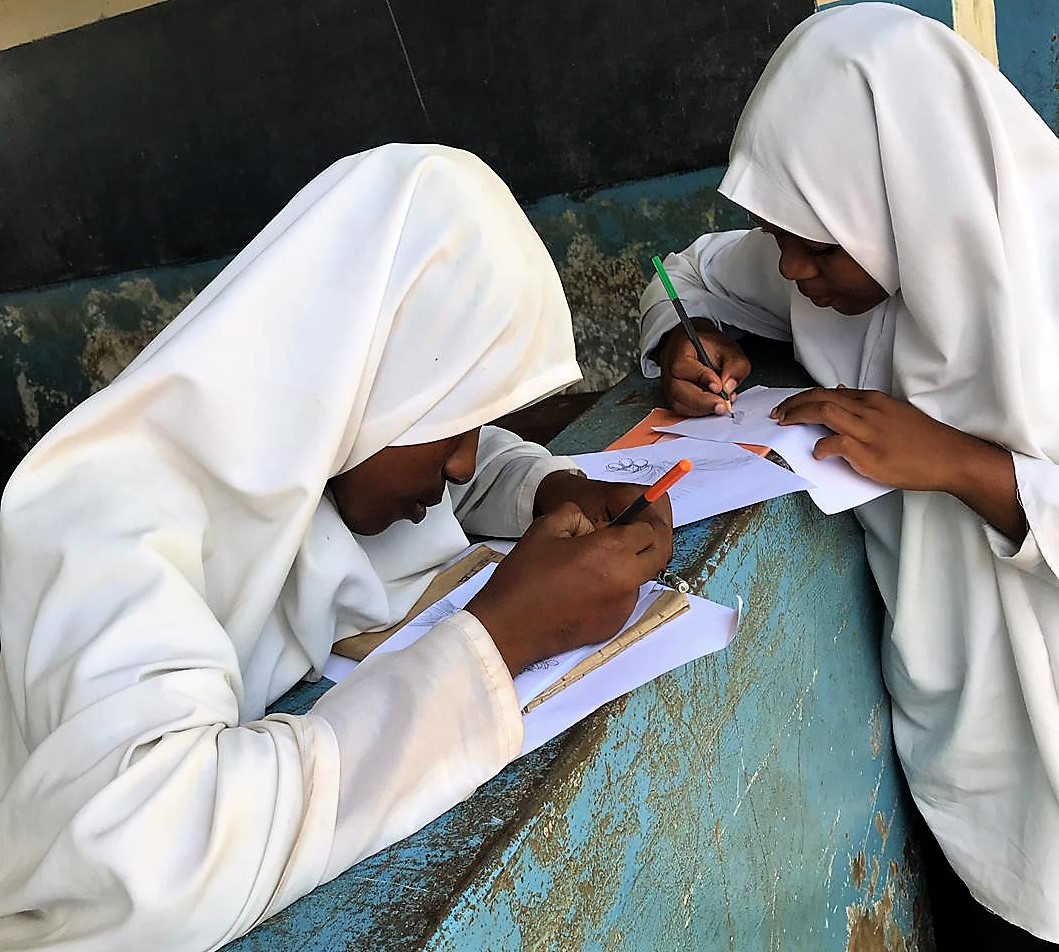
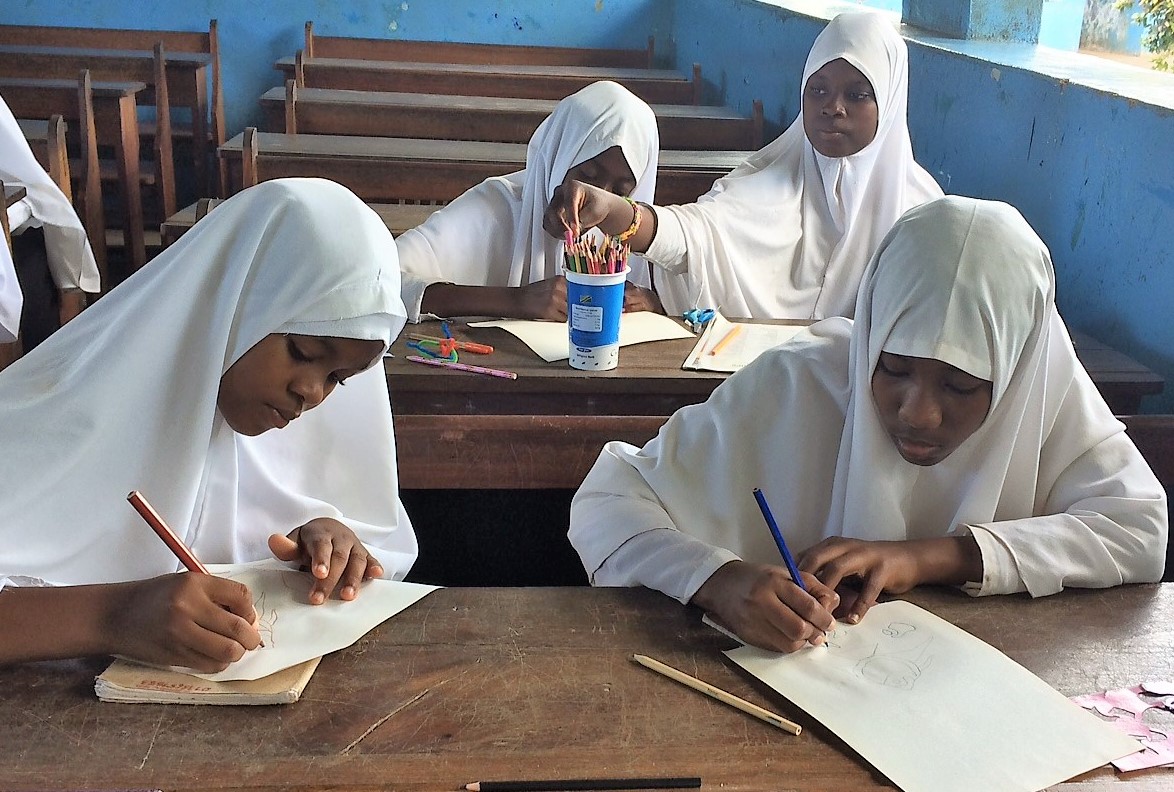
We planed the art project together and ran it over 3 days. It started with Lina introducing different styles of art.  She showed some of her art, and made the students practice some different techniques in pairs by drawing each other’s faces. This activity was a great way to introduce sketching, and the classroom were filled with laughter, which really showed the kids had a great time even though they had been really concentrating.

The second day was about the idea of nature as inspiration.  The students were able to sit outside and to draw what they found beautiful and interesting.  They really enjoyed it and I really enjoyed being with them in a different context. 

The third day we finished with the idea of “free imagination”.  We were working with nature as our inspiration.  The students could draw whatever they wanted also using colour. And at the end of the class they had to talk about their drawing.  The art project was a great success and the kids really enjoyed the three days.  And some of them are really talented artists!

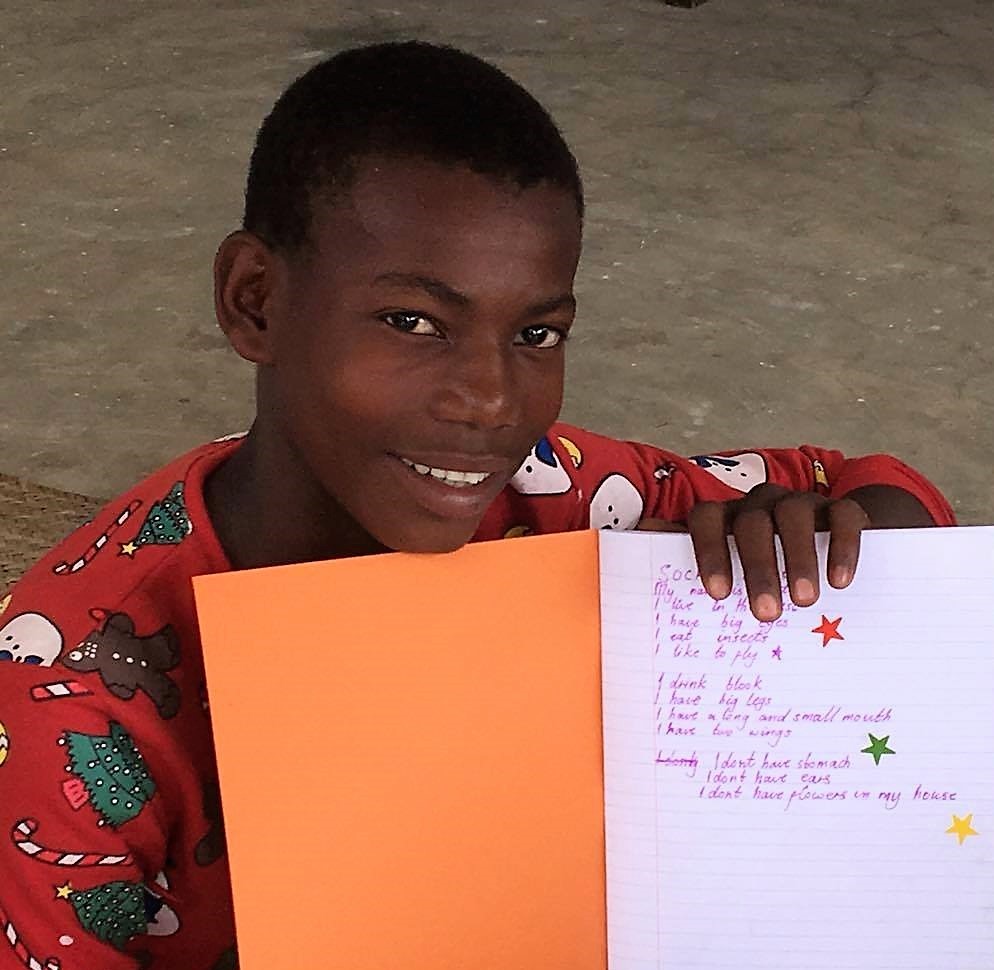
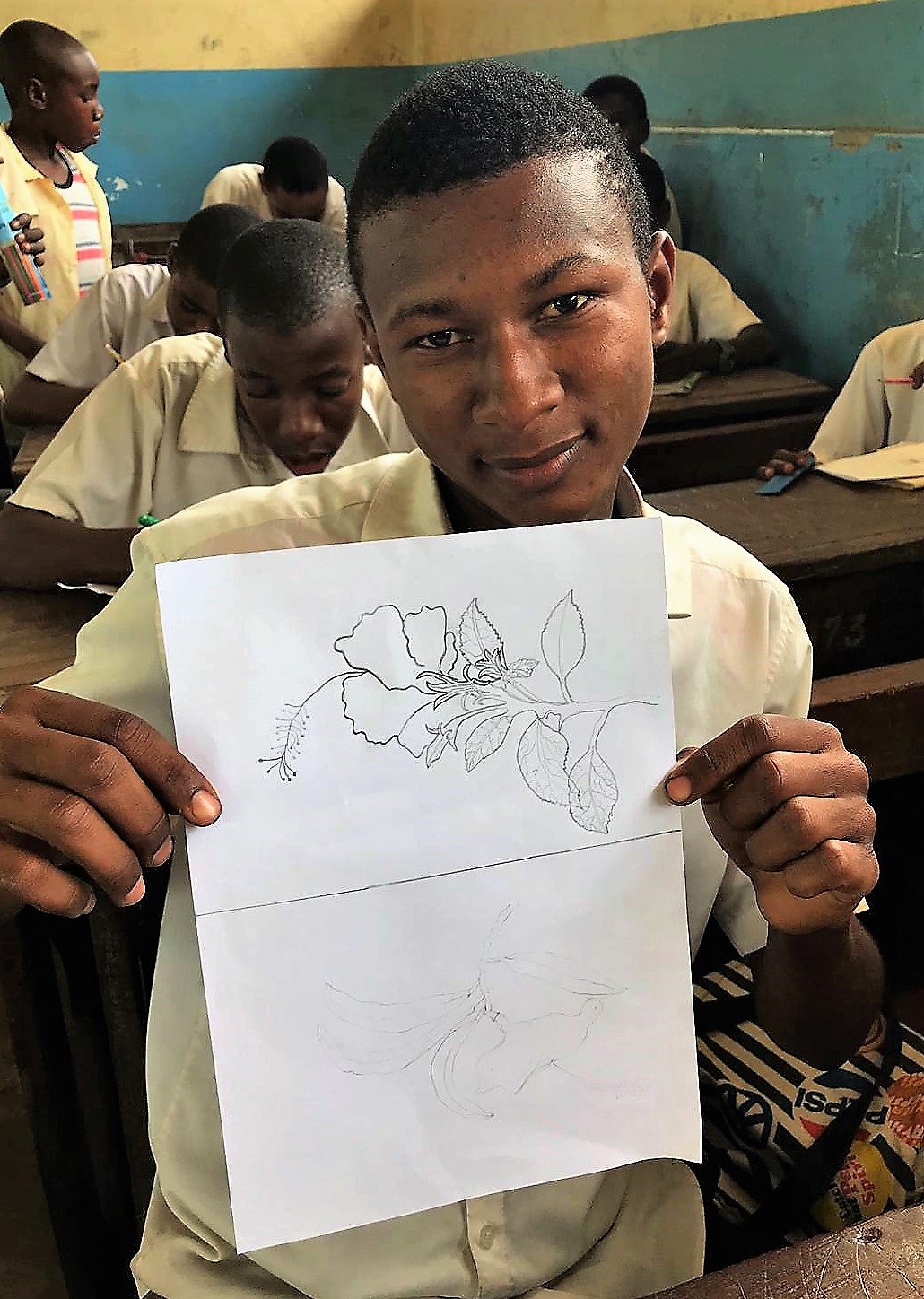
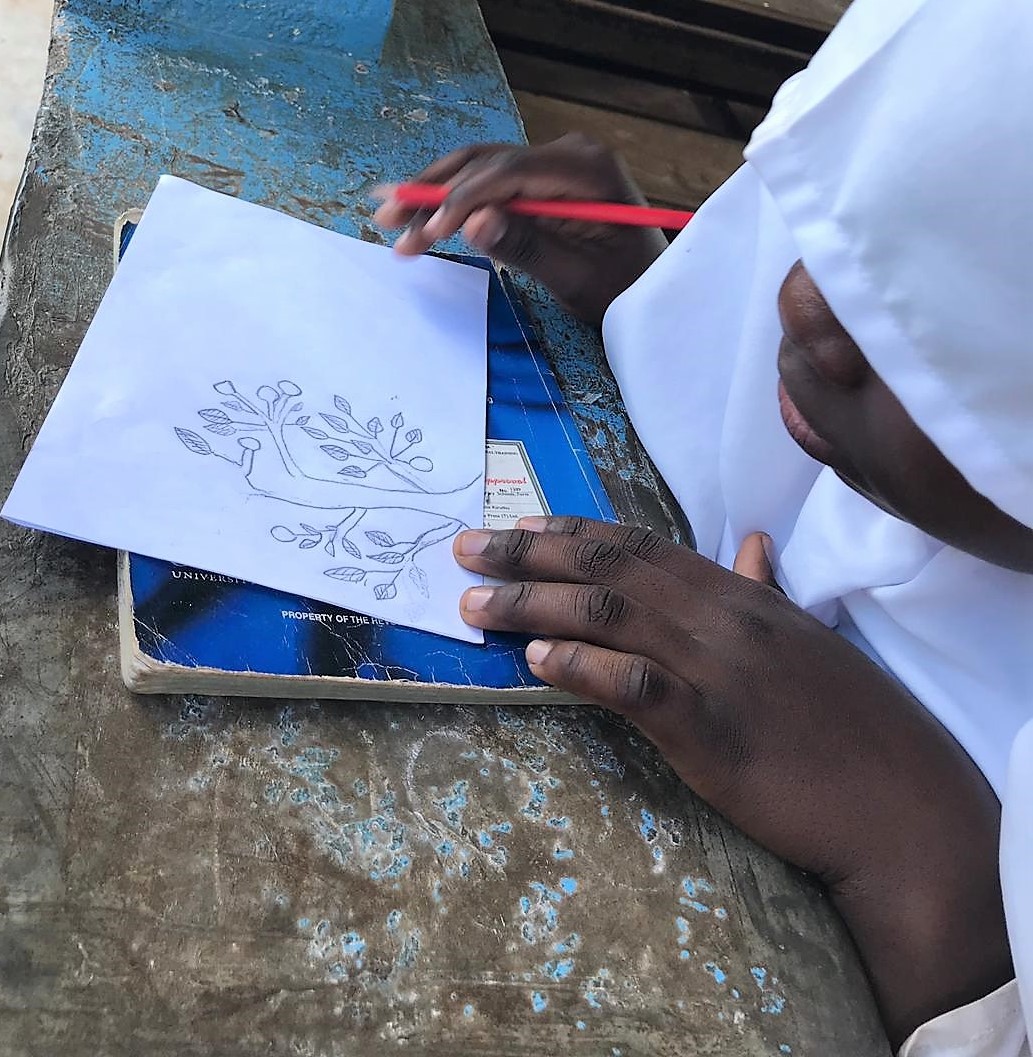
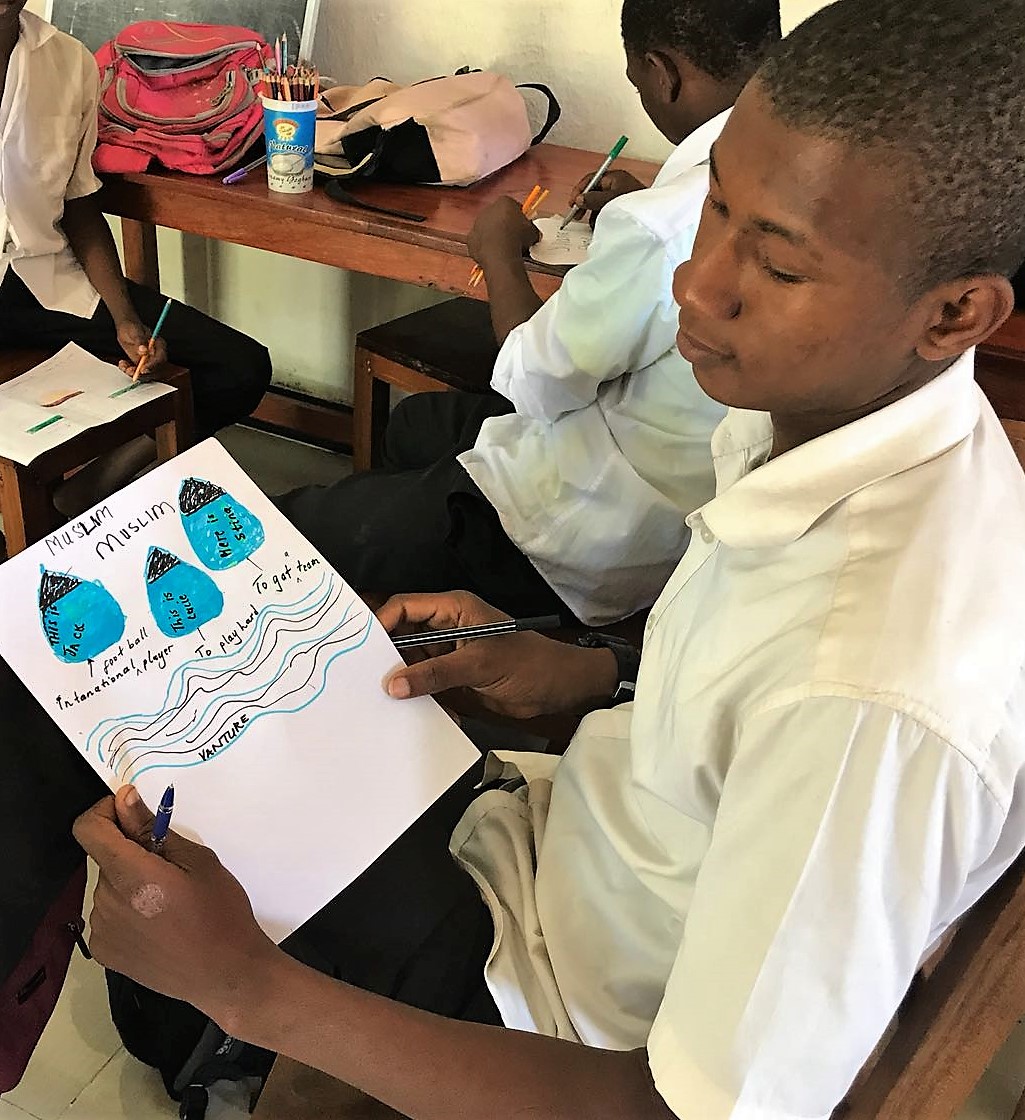
Yesterday Muslim came to me, he wanted to show me the sketches he has been working on since the class ended on Thursday. He’d been spending time around the village drawing different flowers, trees and even a bicycle. He is such a talented boy (as you can see in the last picture) and this really proves the importance of working with creative processes combined with practising English, that can inspire young people and help them see their potential.

PHOTO-2018-10-18-13-37-36.jpg

Finding Nemo with volunteer Carin

I’ve been volunteering with Safari English Club for 4 weeks now and I’ve been teaching Standard 5 for most of that time. Generally there are between 24 and 30 students in the class and the first week I had to work hard to remember all their names, matching them with the appropriate faces.  I still make mistakes, but they appreciate it when I do know them by their names.

Every day, Monday to Thursday, I pick up Stina (the other volunteer) in Stone Town and on the way to Unguja Ukuu, Sadiq the local teacher joins us. On our way to school we talk about our lesson plans. Since teaching isn’t my profession, and my Swahili is ‘kidogo’ (very little), teaching at Safari English Club is an adventure every day. I make good use of the TEFL course that I did earlier in the year.  I really appreciate the great materials that I was given by some friends, like flashcards, a quartet game covering the alphabet and memory cards with wildlife animals. And the internet is a great source of inspiration. Besides the fact that I’m not a teacher, it’s sometimes hard gauge the students’ level. Sometimes they know more than I expect and the next time they know so much less than I was hoping for… flexibility, patience and a talent for improvisation are the skills required from my side.

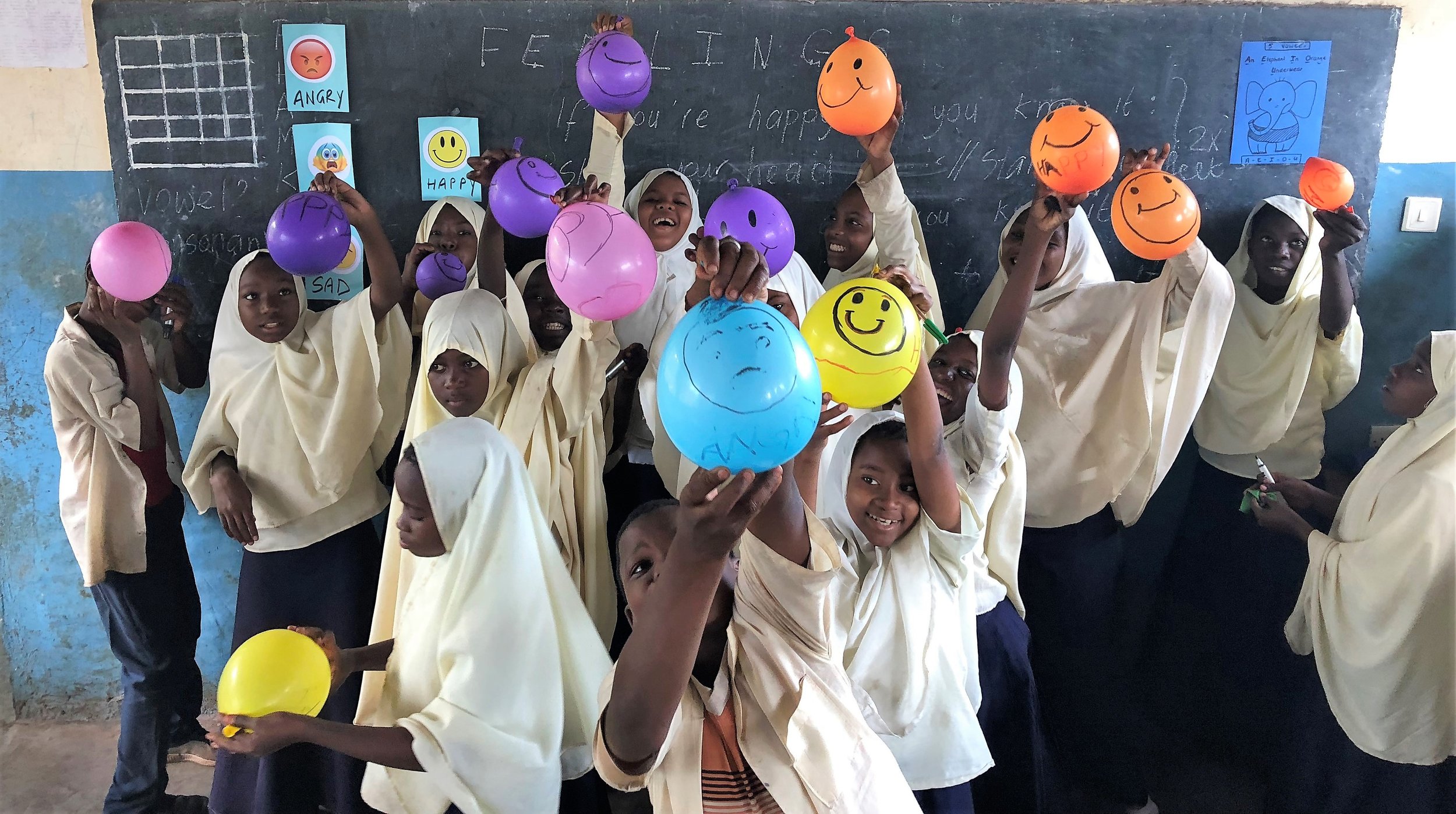
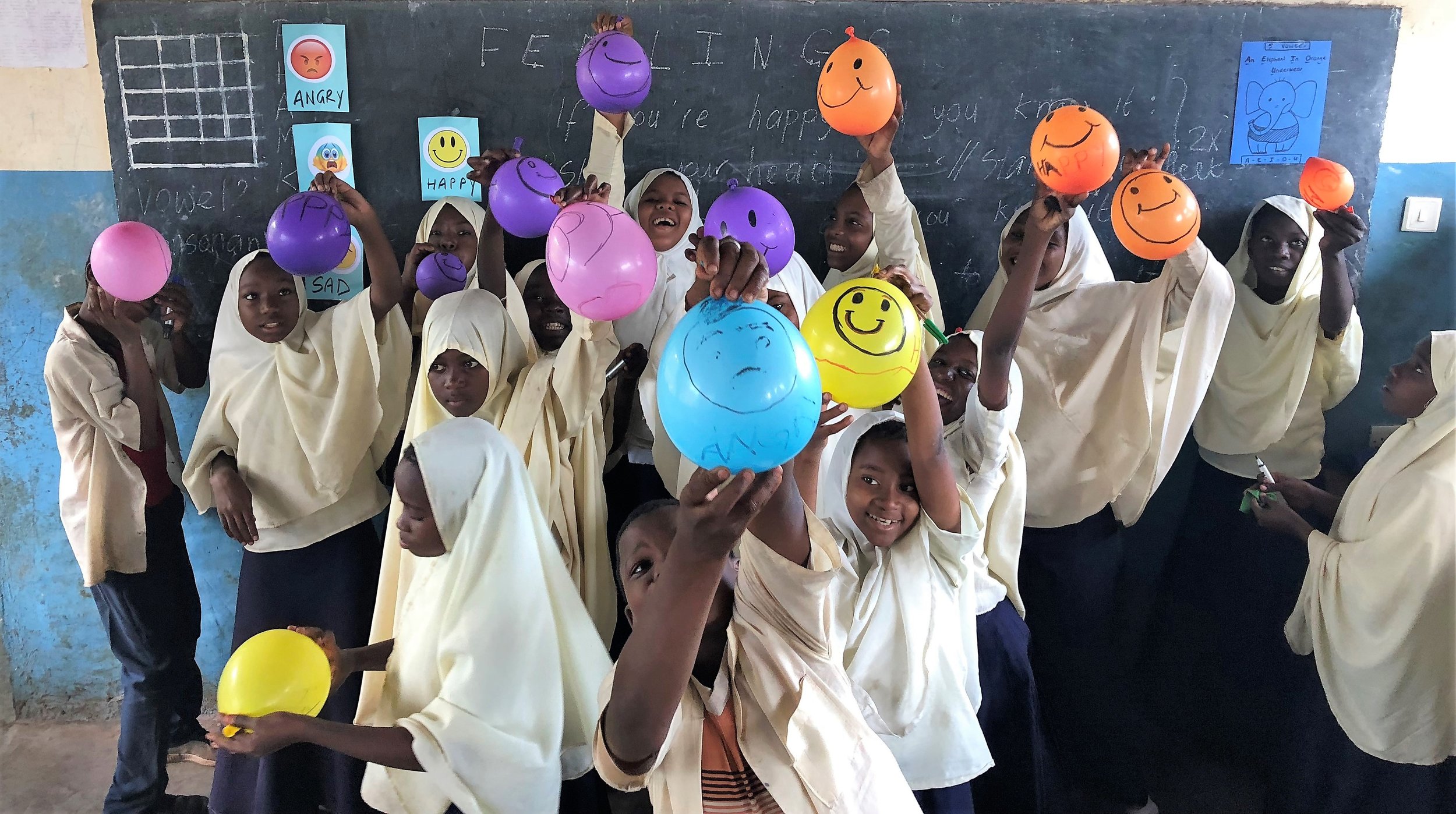
Last week we watched “Finding Nemo” spread over two days (after 60 minutes several kids fell asleep) and we discussed the film the next day. Besides listing the animals that we’d seen, we talked about how Nemo’s father felt when Nemo was lost.  We practised ‘Happy’, ‘Sad’, ‘Angry’ and ‘Scared’ and what it looks like as an expression on your face. I taught them the song: “If you’re happy and you know it, clap your hands/stamp your feet/turn around etc”.

The kids love to sing and make the hand movements and it was encouraging that they started to make suggestions themselves. We finished the class by blowing up a balloon and drawing one of the faces on it. I wasn’t surprised that most of the students chose a happy face, although I saw an angry and a sad face among them.

From next week onwards I’ll focus on how sentences are built. I want to help them understand the difference  between nouns, adjectives, verbs and adverbs. I hope that that will help them to build sentences themselves! It’s quite different compared to how sentences are built in Swahili (they combine a lot in one word, like subject, time and verb) whereas the English uses separate words, so it will be a big challenge for all of us.

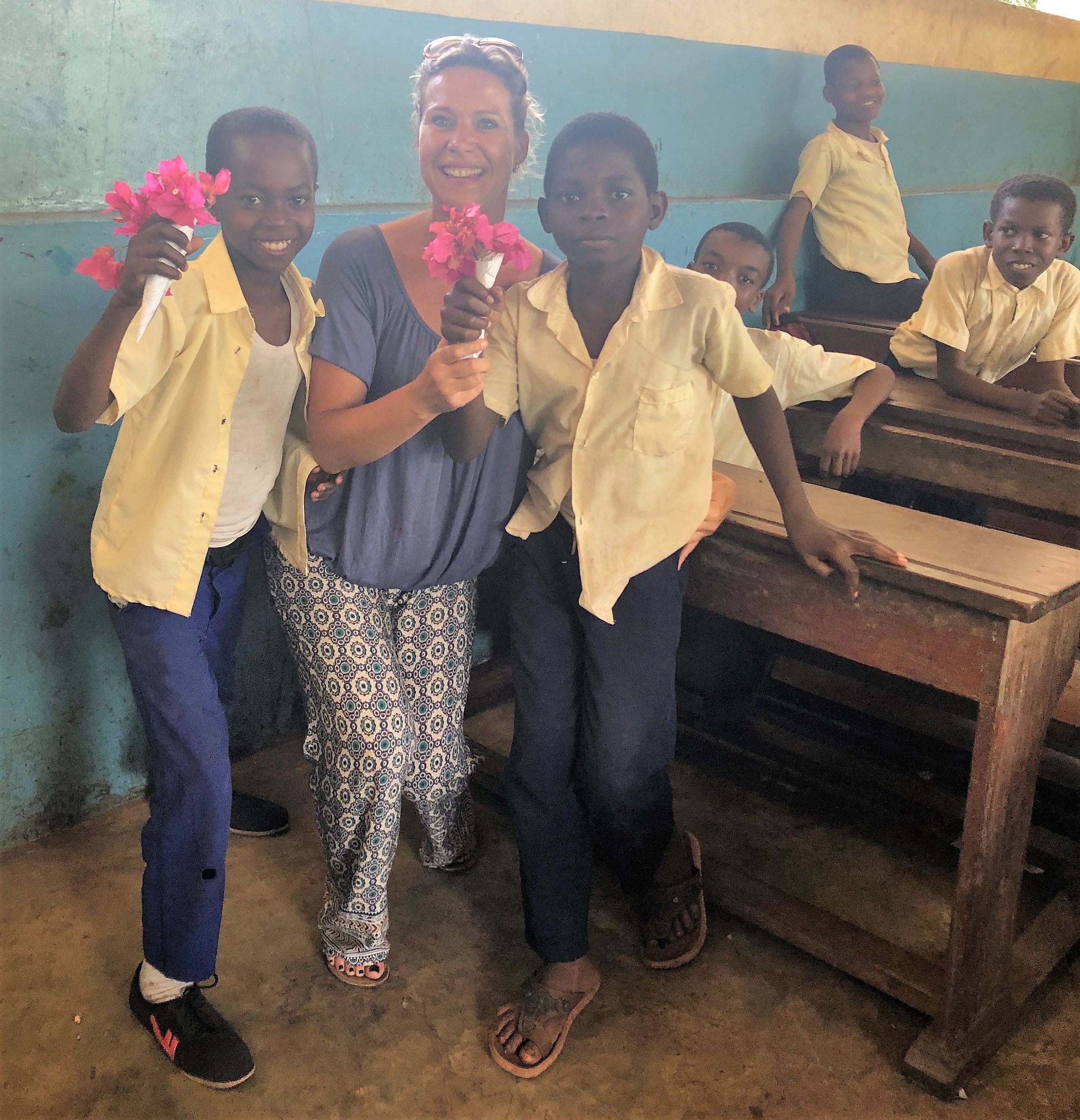
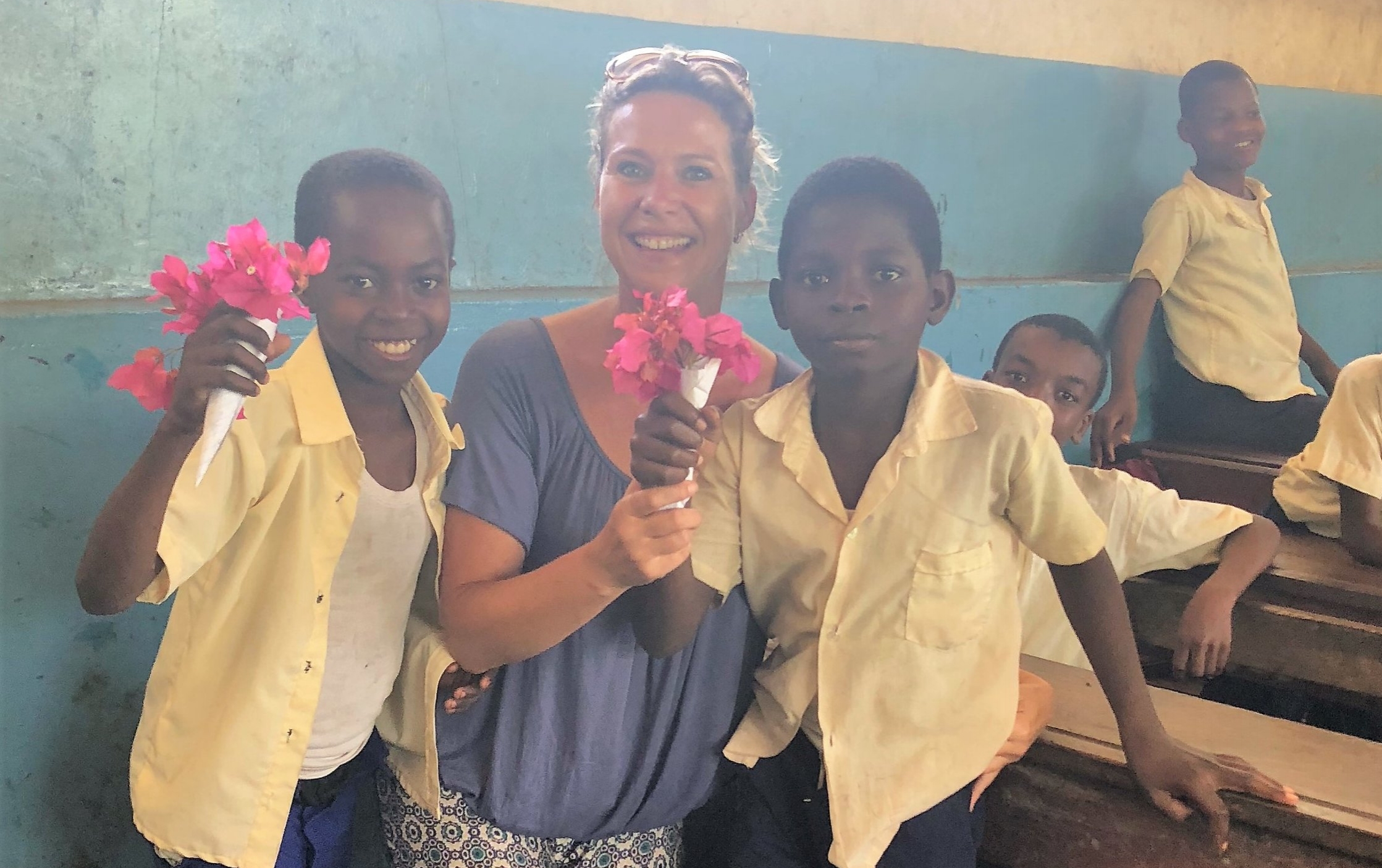
On the fourth day of teaching I was given bunches of flowers by two boys in my class, Hamis and Twahir…. my heart melted and I knew: I’m in the right place!

Thank you Jack and Lucie

Lucie and Jack have been in Unguja Ukuu for 2.5 months and they’ve just left to continue their world tour.  Here are Lucie’s thoughts on the experience and some photos from her last few days in Zanzibar.

I’ve really enjoyed my past 2 months with Safari English Club and I’m sad it’s coming to an end. I‘ve become really fond of the students as we’ve got to know each other and it’ll be hard to say goodbye. I’ve been working with Stina in the advanced class which has been great, having someone to bounce ideas off in class and plan sessions with. We started working on goal setting and understanding skills and qualities and we discovered that what we thought we might cover in 3/4 days would actually take a couple of weeks as there is quite a range of levels in the class. Over time we have got into a good routine of finding ways to extend and simplify what we have been teaching, though this can be a challenge and doesn’t always work out perfectly. We all muddle together and make it work as best we can. 

We’ve tried to incorporate creative activities such as role play, making vision boards, using drawing and collage which I think they have really enjoyed. My favourite days are always those where the students have had time up on their feet, mingling with each other, using the language they’ve been learning. They can be quite shy taking part in group discussions or answering questions in front of the class so I’m always happy to see how much they‘ve taken in during their lively mingles because you wouldn’t always know it otherwise! I think it’s so funny that as the teacher how you can leave the class with a completely different energy level depending on the reaction from the class. Hearing them confidently playing with the language amongst each other makes me leave with a buzz. I think it’s the same for them too.

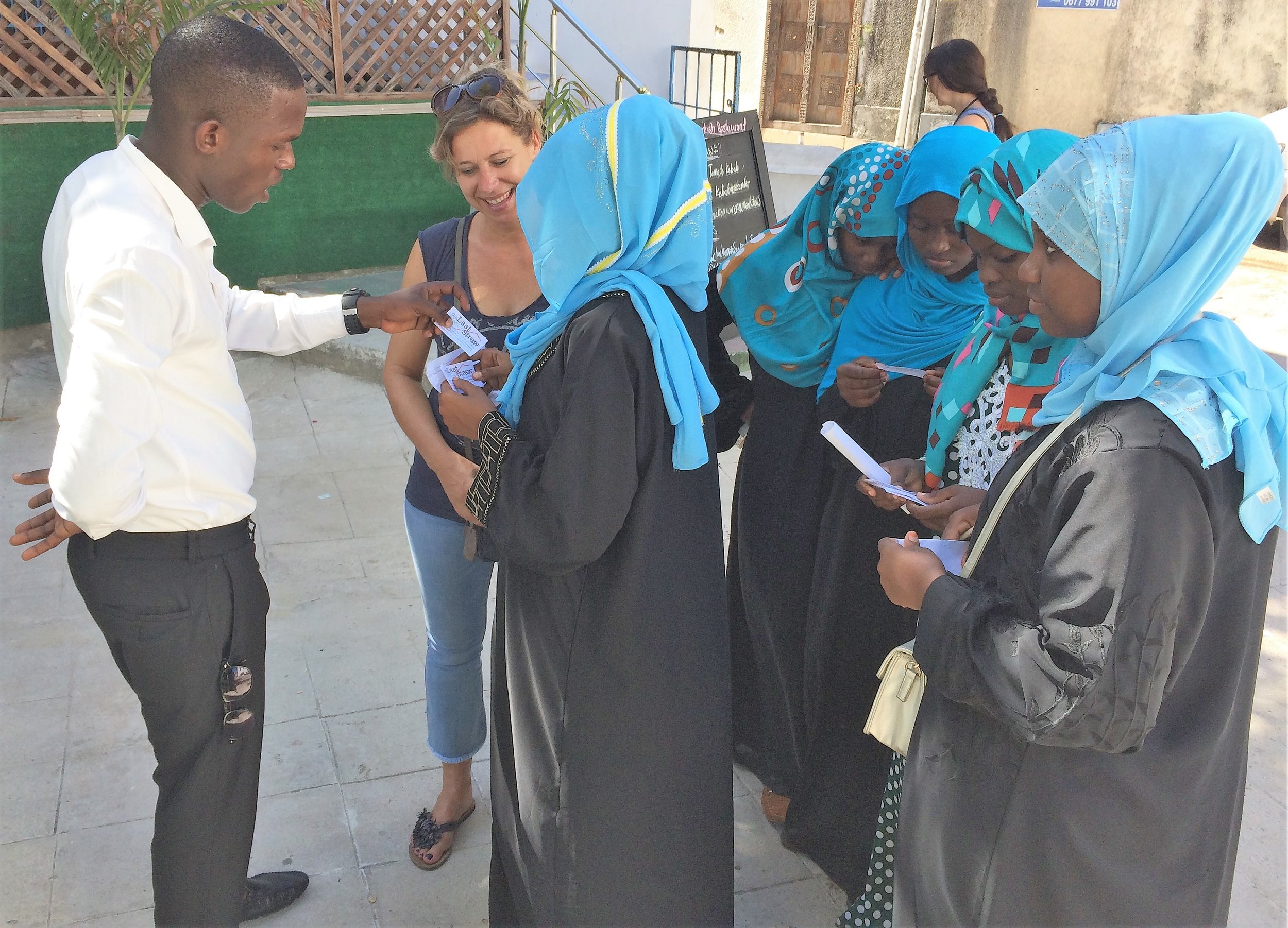
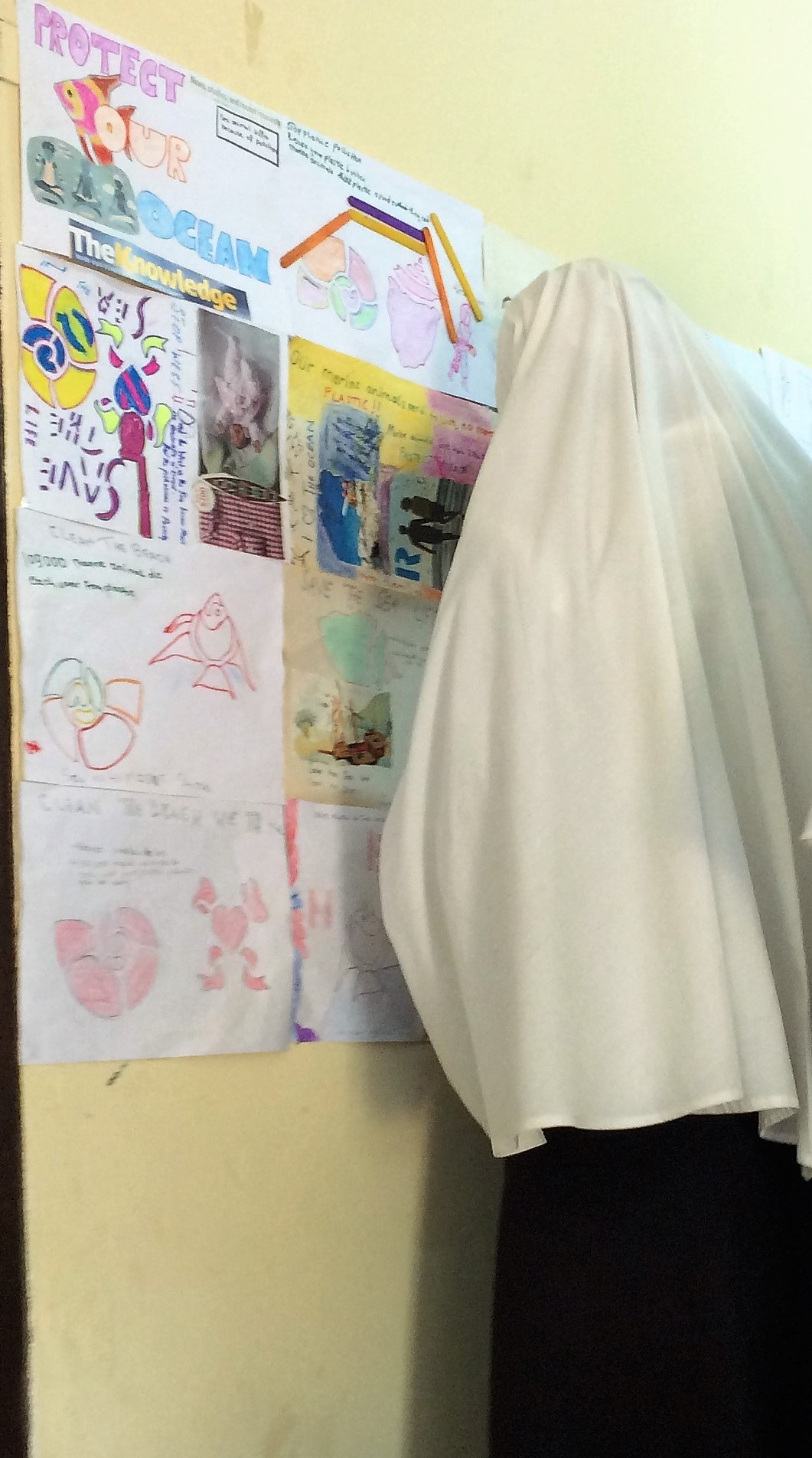
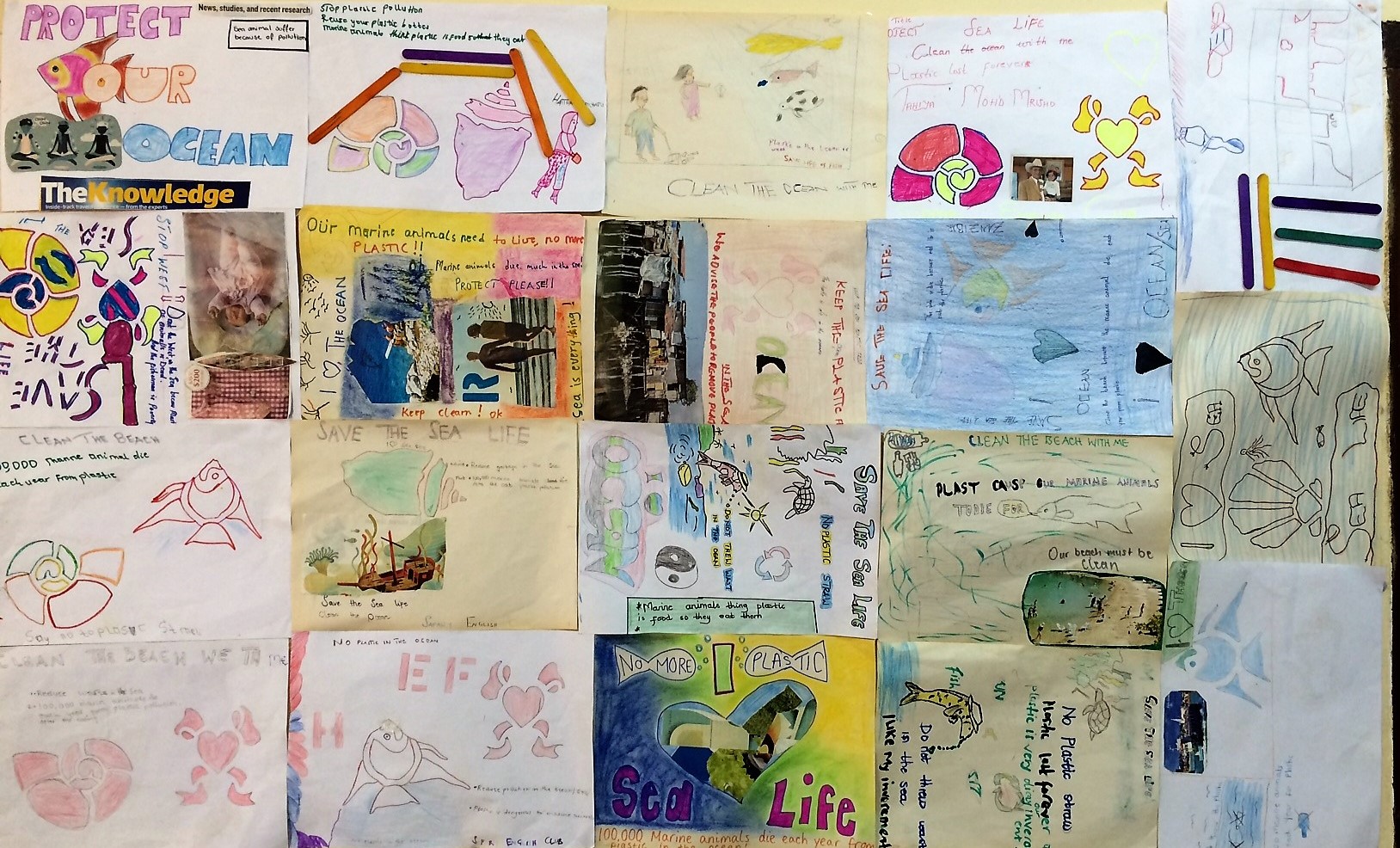
‘Project Sea Life’ grew organically after watching a documentary from Kenya about plastic pollution. The students were really interested in the topic and one thing rolled on to another. We enjoyed making posters about the issue which we then joined together as one big picture and we made a video where the students all chose something to say to the camera.  After we decided to continue the plastic pollution theme by doing a small ‘Reduce Plastic Waste Campaign’ in Stone Town with seven students who volunteered. I was so proud of the way they handled this experience. They spoke to members of the public (69 people in total!) at Forodhani Gardens to raise awareness on the issue in English and Swahili and then approached hotels and restaurants to encourage them to reduce their use of disposable plastics. They took it in their stride and supported each other when having conversations with hotel staff and management. They were amazing!

1.JPG

I’m glad I was able to be part of Safari English Club even for a short time, and encourage volunteers to keep coming and working with this curious and energetic group :)

Introducing Kristina, Lucie and Jack

5.JPG

We’re delighted that Zanzibar Schools Project has 3 experienced volunteers who’re generating lots of momentum now that the Ramadan is over. Kristina will be at ZSP for the next 6 months, which provides fantastic continuity in the important lead up to the public exams for the 12 and 13 year old students in Standard VI. Kristina’s a Danish student studying for a bachelor degree in Social and Special Education.  She’s previously worked in Mwanza, so appreciates Tanzanian culture, but she can see how different Zanzibar is due to the predominantly Muslim culture. She’s enjoying getting to grips with the ability of the kids and how to motivate the teachers to believe that they can succeed.

Recently Kristina ran a repeat English test on the new intake of 126 Standard VI students. We ran the tests for the first time in March to get a baseline on the new intake. The results are encouraging – on average the top group increased their scores by 40%.  But even more exciting is that the lowest group increased their scores by 30%. It’s particularly rewarding to see one girl increasing from scoring 0 to 33%! Maths was also tested but sadly the students are scoring on average 7%. We are trying to think of ways to improve this – possibly by employing a specialist local maths teacher.

The three month review also showed the link between achievement and attendance. There is a group of 30 students who are showing no improvement and frequent absence. Individual discussions are being held with this children to find out why they have poor attendance. They’re being put into a remedial class with Sadiq (our best local teacher) to motivate them to see that they can improve too. If not, they won’t be able to stay in Safari English Club. Everyone is told that lunch and tuition is provided ONLY in return for effort and attendance.  This may seem a bit harsh to First World readers, but it’s important not to create a “dependency culture” when free lunches are provided with “no strings attached”.

Jack and Lucie are British volunteers who’re taking time out from their working lives to travel around Africa.  They’ve been planning this trip for a long time and before leaving home they studied for CELTA English language teaching qualifications. Jack’s going to be particularly popular with the boys as he has a football training qualification and the boys are fluent in the international language of sport! Jack’s worked on volunteer projects with kids in West Africa and most recently was working in London as a Family Sustainment Officer working to prevent homelessness and sustain families across Westminster.  Lucie has been working with children, young people and at some points their families for the past 9 years, ranging between the ages of 2-16. She’s interested in the arts, enjoys dance and is looking forward to sharing her enthusiasms with the children in Unguja Ukuu.

Lucie and Kristina are working on plans for the advanced class…they’re planning on running a course on independent study and life skills with a view to developing the course to cover topics such as having a healthy mind, relationships and conflict resolution. Jack is planning a “getting to know you” session for Standard V. He’s taking over this class from Sadiq who’s going to be working with the students from Standard VI who need a bit more motivation and help with basic English language skills.

RTOJ9656 - Copy.JPG

I couldn’t resist putting in this photo of Feroz with the President Ali Shein, the 7th President of Zanzibar – he was visiting London recently and found time for tea with Feroz. Dr Shein was a student at Lumumba school in Zanzibar, the school that one of Safari English Club’s students joined in February.  

1.JPG

Reflections on leaving Zanzibar

From Andrew: In Kiswahili the word “Safari” means “journey” (it’s also a Tanzanian beer!). The children chose it for the name of the after school English club as the project funds occasional outings.  The idea is to introduce children to other parts of their island and to have a fun day where they learn new activities. Continuing to uphold this tradition, two outings for 100 students (plus helpers) were organised just before we left in mid-May. We’ve been fortunate to build a relationship with ISZ, the International School of Zanzibar, where the facilities are perfect for a school trip.

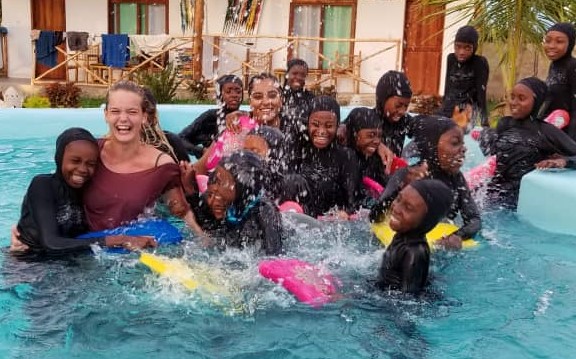
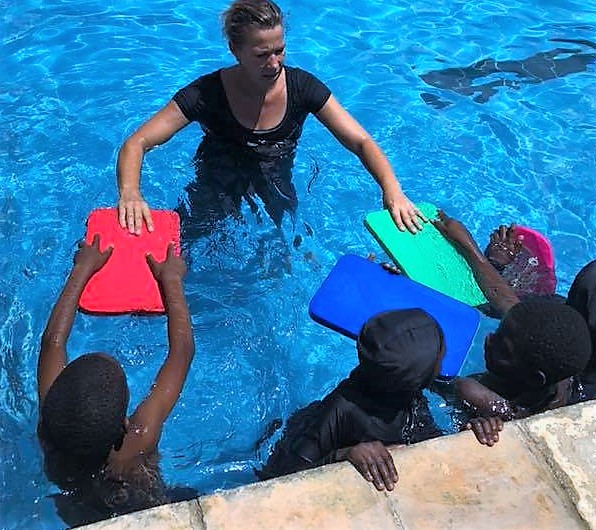
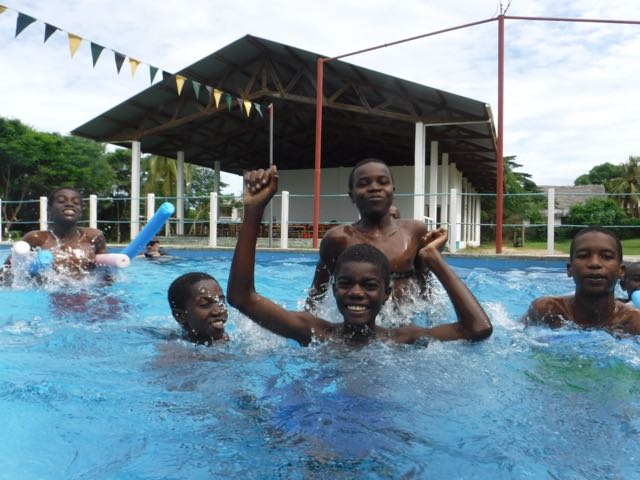
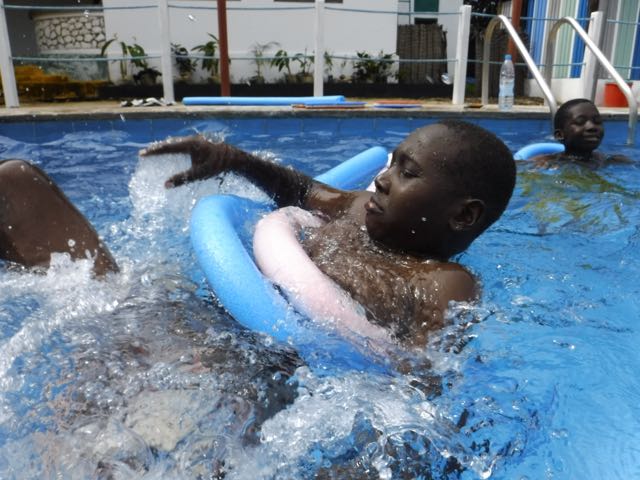
Students were those from the new Standard 6 intake, none of whom had been on a "Safari" before but they’d heard about it from their friends who have been in Safari English Club for a while. On the Saturday the weather was bright but on the Sunday it rained - not that that impacted the activities or the enjoyment of the students! Almost all spent about 30 minutes in the swimming pool. It was the first time they’d ever seen a pool, very few can swim and so, understandably quite a few were nervous at first. But with the use of floats and "noodles" they happily splashed around and tried to swim. The girls played rounders and used the swings and slides while the boys played football and basketball. Teacher Issa, other local teachers and senior students from the community assisting with crowd control, burkini management and other activities!  Thanks them and the International School for letting us use the facilities and to the volunteer lifeguards who assisted both days. 

Throughout this term I’ve been teaching the Advanced Class with a focus on preparing them to be Tour Guides. These tours are to be offered to guests at the small hotel in the village which is being refurbished.  We hope the tours will give the students "real live" English practice, new skills, as well as some income to the Safari English Club and the students. Two tours are planned: "The Village", which is historically important and "The School".  I’ve been trying to get the students to take and use notes, rather than writing everything they are going to say out in full.  This is a departure from their usual lessons, where they write out what is on the blackboard and a vital skill to learn. To give a focus to the activity we hoped we’d have a visit students from the International School where our students could practice on their counterparts from the International community. Very sadly on each of the 3 occasions that visits were planned they had to be cancelled at short notice as the roads were impassable due to flooding.   Nonetheless the Advanced Class has enjoyed and benefited from this Tour Guide Training and that visits will take place when the rainy season is over giving a chance to build further links with ISZ.    

IMG-9254.JPG

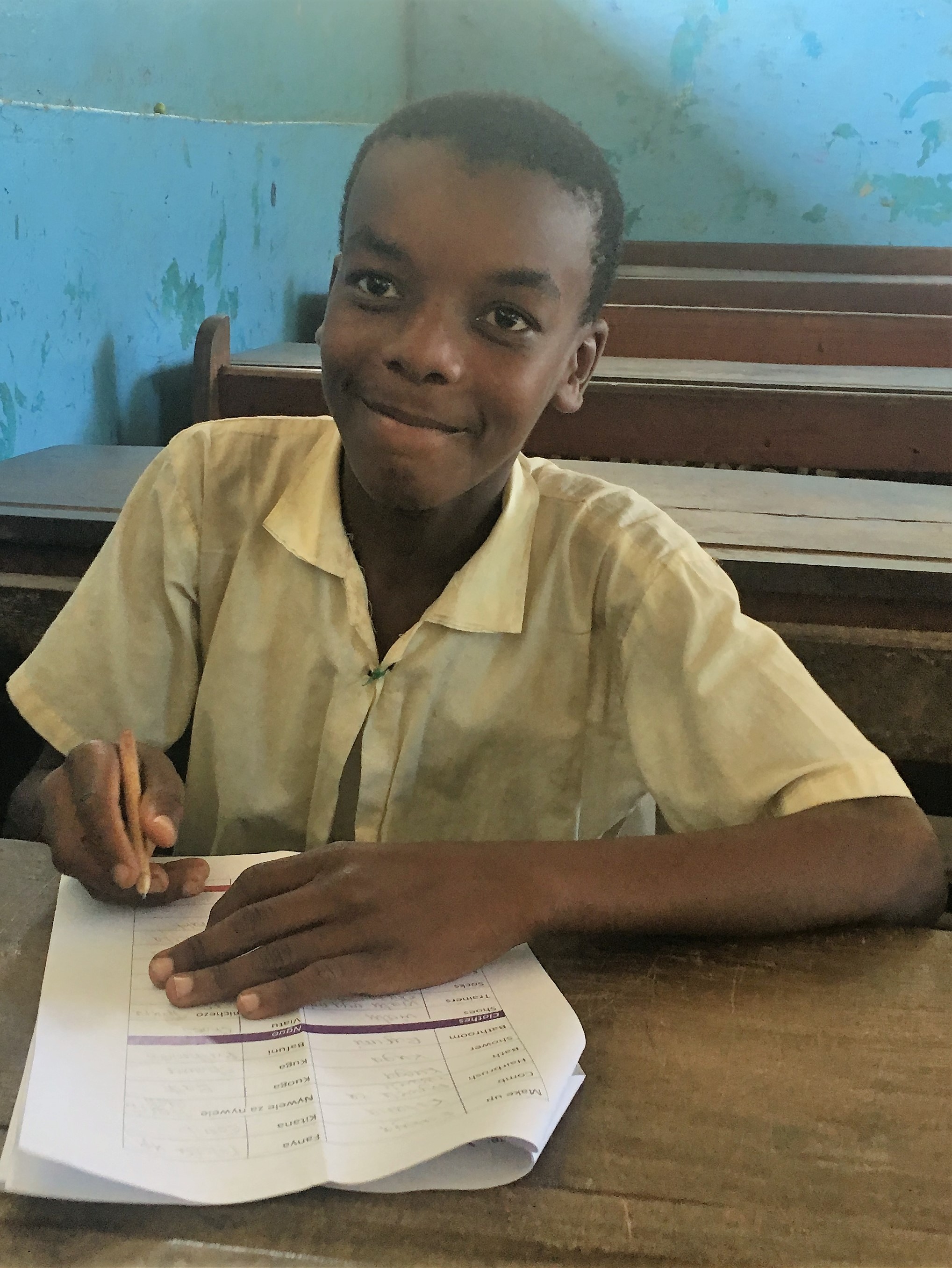
From Reneé: Teaching English at Safari English Club is one of the highlights of my year, particularly the 6D class! These students are so eager to learn English (and in some cases maths), I found myself wishing I could be their full time teacher! I’m not a teacher and I’m not able to stay on Zanzibar and teach indefinitely as 'life' calls for more amazing experiences and challenges! I had class D once a week and they were the most enthusiastic and eager out of the year group. Their faces light up when the 'penny dropps' and the wonder on those young faces when I gave them exercise books to work with (when learning the different body parts for example) is a memory I'll treasure forever! I know we shouldn’t have favourites, but there’s a boy called Ramahdan who managed to creep into a corner of my heart! His English was 'barely there' and his maths so basic, he couldn't or didn't understand 3+1=? He repeated after me (when I first asked him whist teaching dominos) 3+1+1 instead of 3+1=4....Ramahdan didn't understand the basics of adding and single digits at that! I wrote out by hand pages and pages of sums for him starting with the basics like 0+1=1, 1+1+2, 2+1=3 etc and the times table. I also wrote out counting in odd numbers, even numbers, counting in 5's and 10's. Ramahdan promised me he'd learn from the many pages (I had Sadiq interpret for me)! Do you know that around 3 weeks after giving him these pages, I could ask him random addition sums and he knew the answers! I cried when I asked him 5 sums in a row and he got them all right! His father even came to the school wanting to know about the 'mzungu' (white person) who was teaching his son English and Maths! I have to mention that Ramahdan got one of the highest marks for his English test on body parts out of his class. 

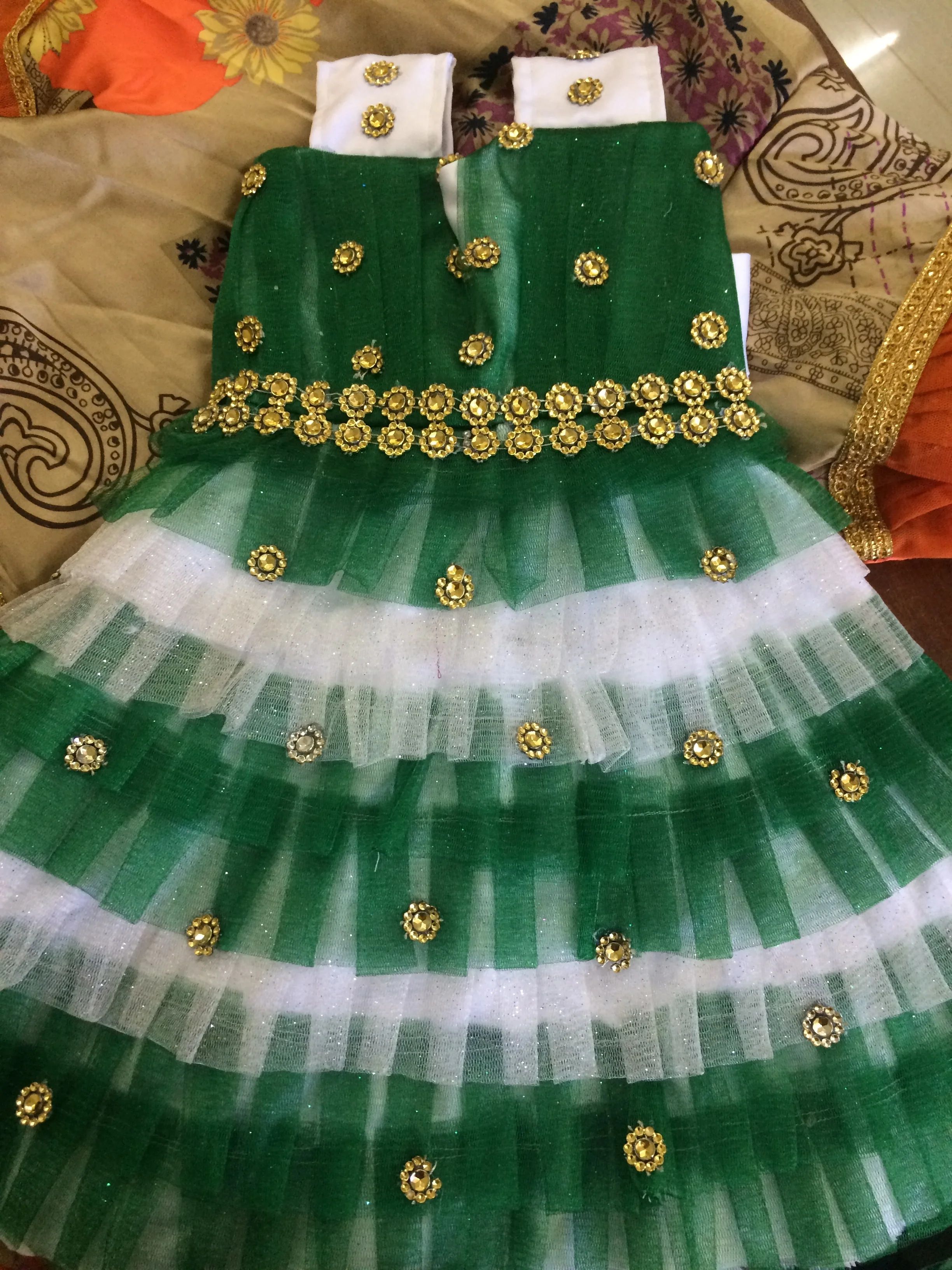
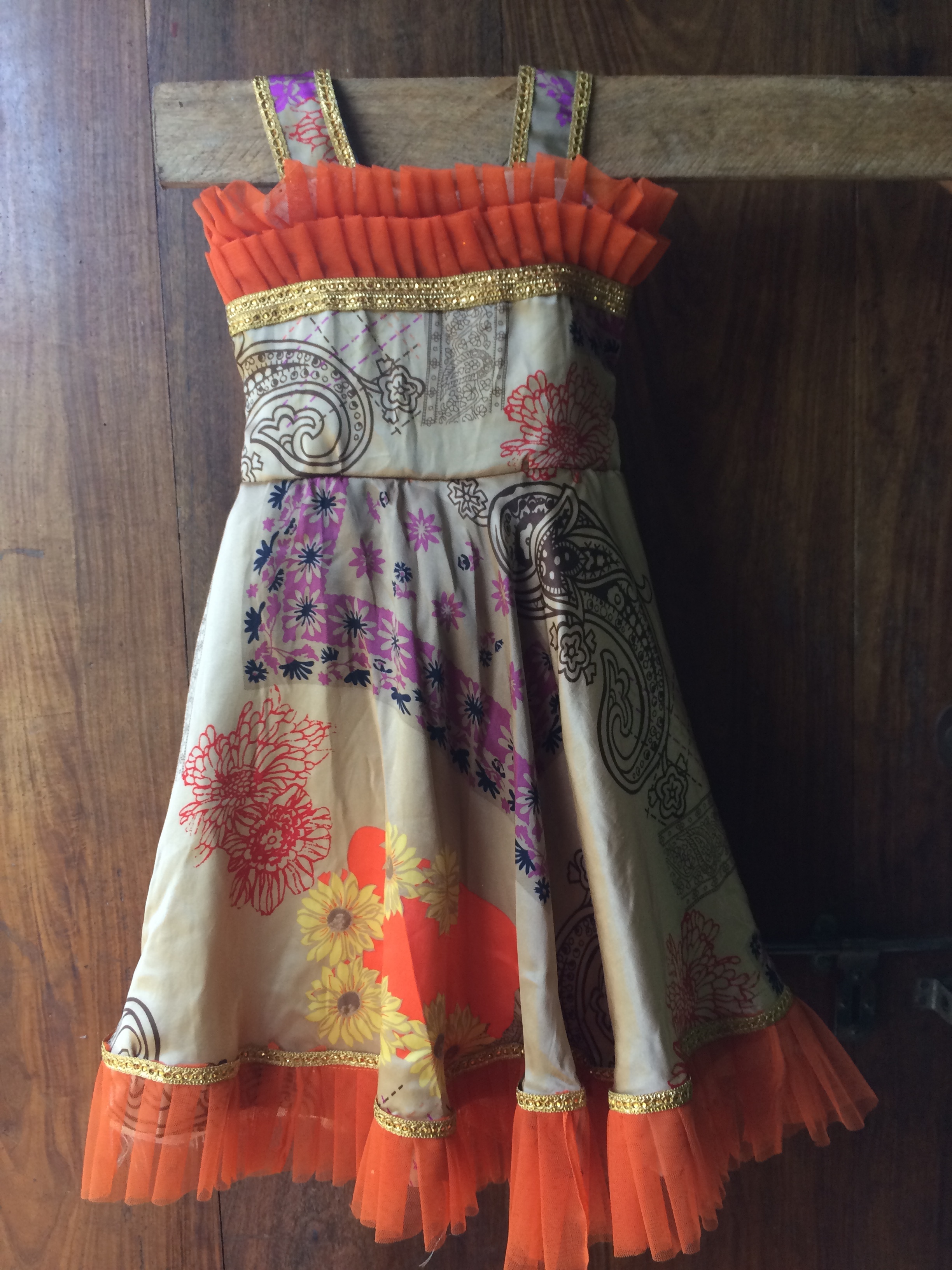
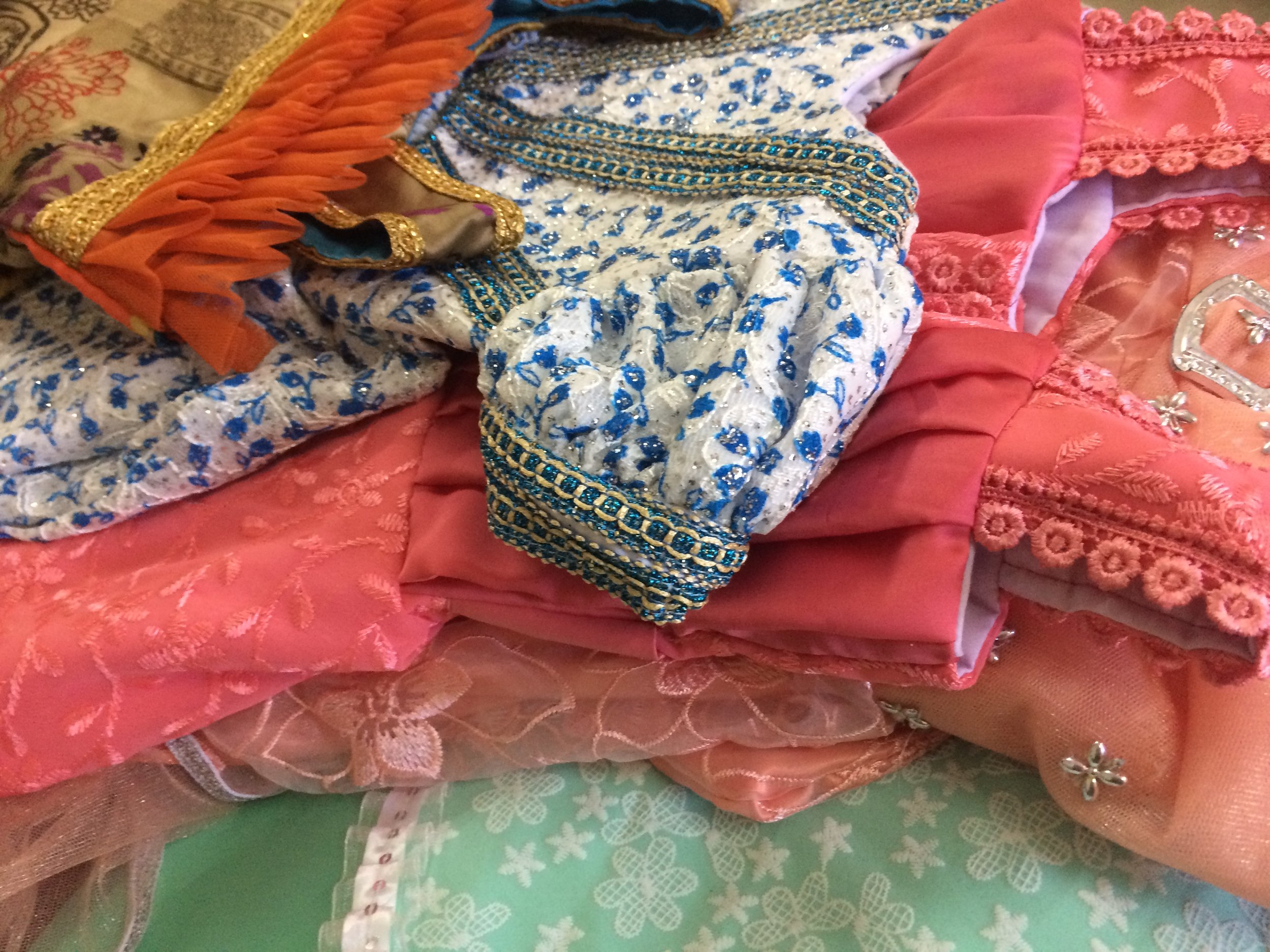
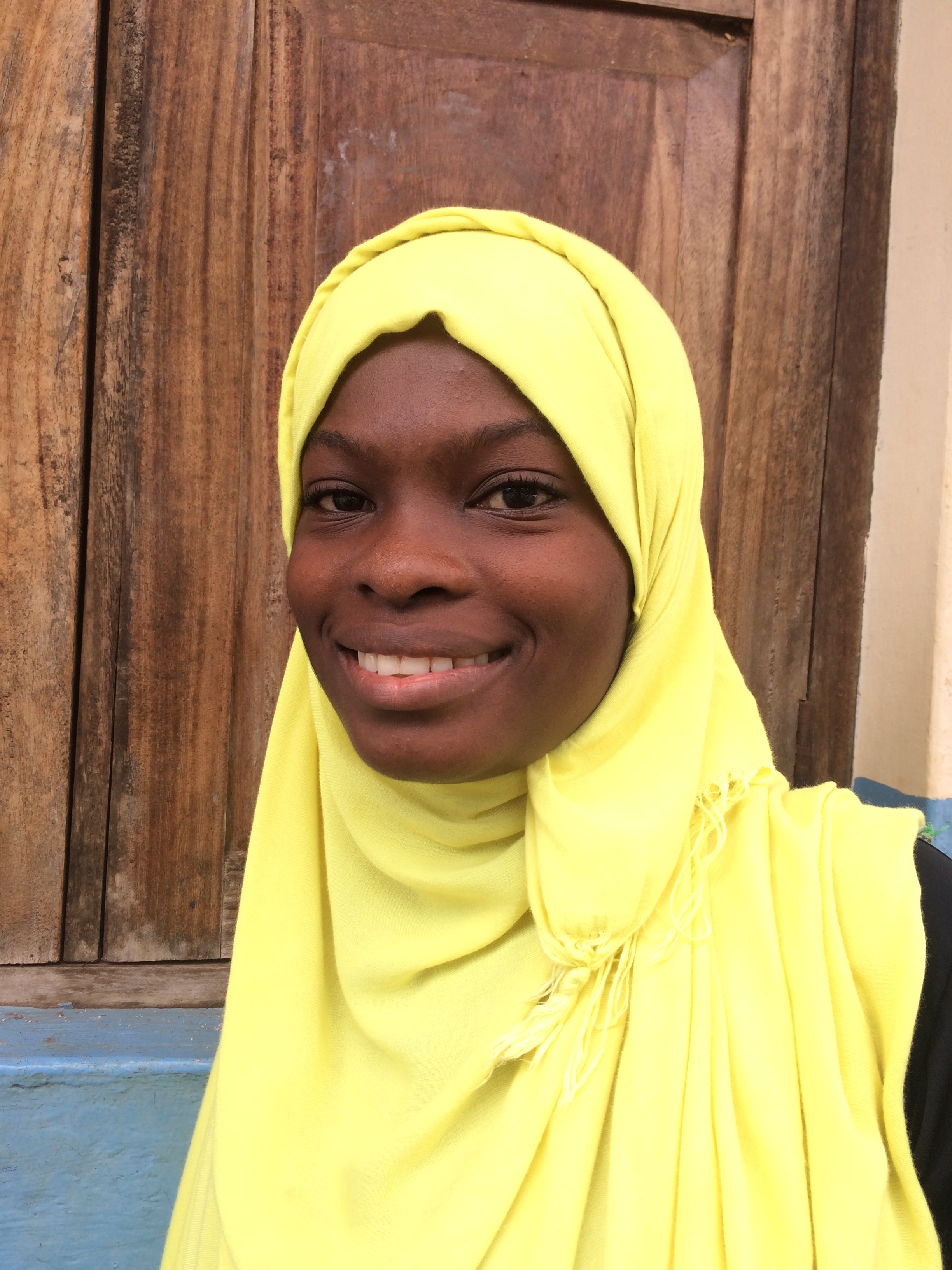
Sharifa is a young lady aged 22 who attends the advanced class when she can. Sharifa recently started her own sewing business. Susie (one of the previous volunteers) left some money for Sharifa to start her business. Sharifa has made dresses for girls and has successfully sold them; she has used the profit from her sales to buy more fabric which she turned into some lovely dresses and those dresses she is hoping to sell during Ramahdan. Business cards have been designed for her with a logo she has chosen. Sharifa knows she needs to find a few outlets where she can sell her dresses on a regular basis. Sharifa would very much like to become a full time seamstress/business woman and I have no doubt she will.